All species › Cuckoos › Cuckoos › Common Cuckoo
Common Cuckoo | Cuculus canorus
Koekoek | Cuco común
The call is familiar, the bird rarely seen. The Cuckoo is a slim, long-tailed brood parasite that places its eggs with small songbirds and leaves for Africa as early as June.
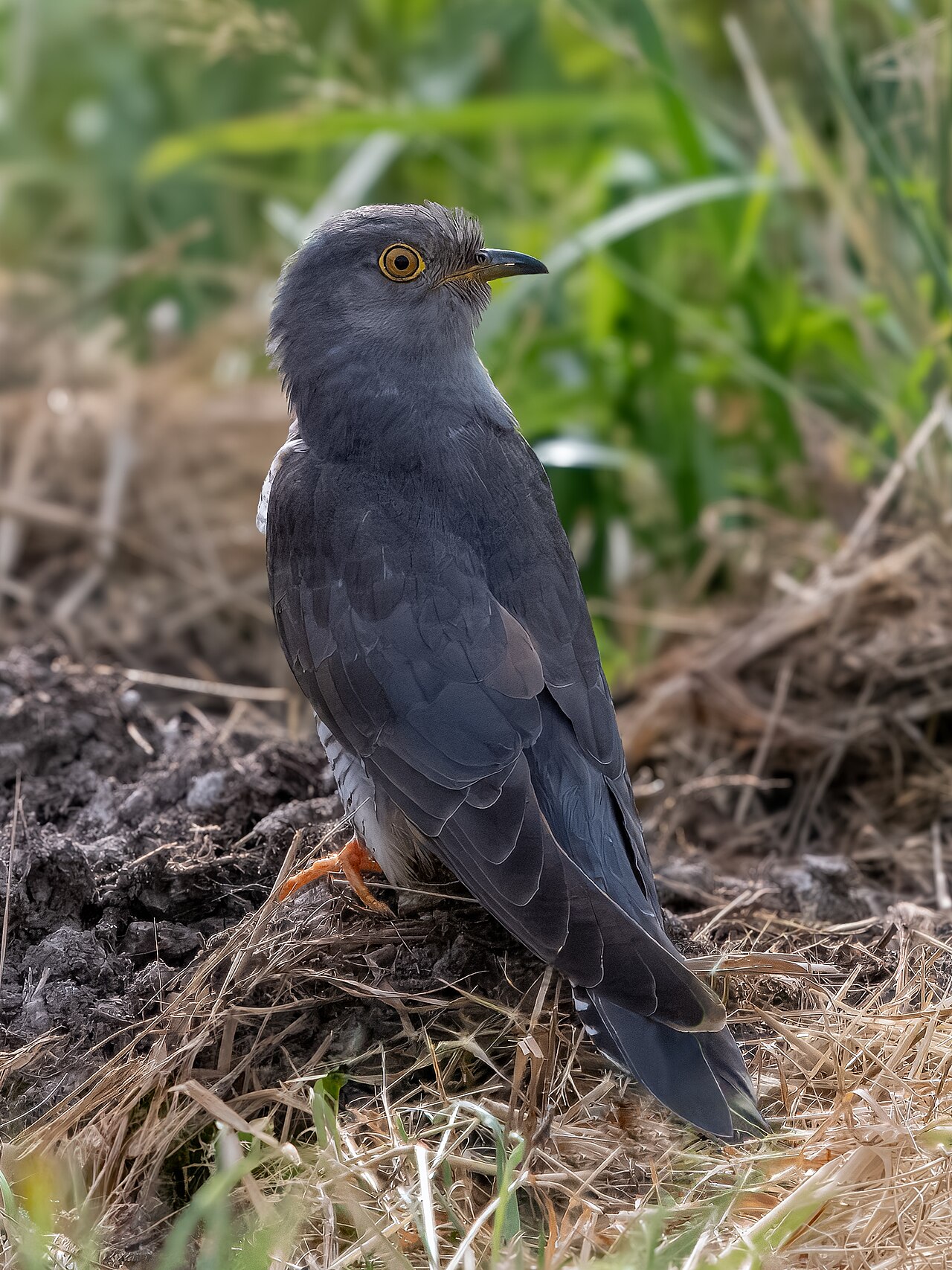
Click a thumbnail to switch the photo above.
Voice
The male gives the cuc-koo call from late April into June, sometimes stuttering or trisyllabic late in the season. The female sounds entirely different: a bubbling, laughing trill. Both are most active in the early morning.
Recording: Benoît Van Hecke — CC BY-SA 4.0 · Wikimedia Commons
Identification
Blue-grey upperparts, head and breast with finely barred white underparts. Yellow eyering, yellow legs and a slightly decurved bill. In flight it recalls a Sparrowhawk, but the wingbeats stay below the horizontal, the wings are more pointed and the head is held raised. Females also occur in a rufous (hepatic) morph.
Confusion species
Sparrowhawk: broader tail bands, rounder wings, typical flap-flap-glide and no yellow eyering. Hobby: far more pointed wings and faster, more powerful flight. At distance posture helps: a Cuckoo often perches low and horizontal with drooped wings and raised tail.
Habitat
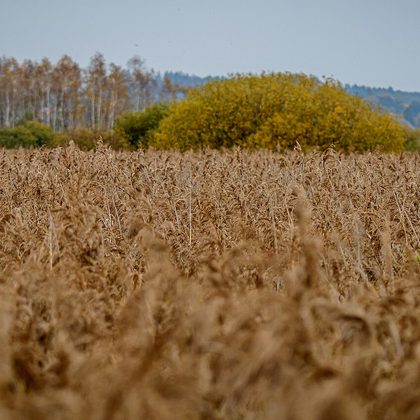
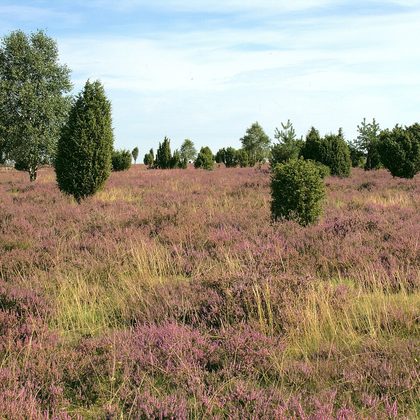
Half-open landscapes rich in host species: reed marshes (Reed Warbler), heath and dunes (Meadow Pipit), hedgerows and gardens (Dunnock). Needs song posts and a good supply of caterpillars, including hairy species other birds avoid.
Where the bird is most at home, classified with EUNIS — the European standard for habitats.



Range and movements
Breeds across almost all of Europe and Asia; winters in the rainforests of central Africa, where every population comes together — the Asian ones included. Tracked birds describe a clockwise loop: the spring return runs consistently west of the autumn outward journey. Birds from the British Isles and mainland western Europe go south by way of Iberia and the Apennine peninsula, those from central Europe and Fennoscandia by way of the Balkans. Adults leave from late June onwards, the young following in August without any parental guidance; they arrive in November and December and start back in February. That they really do find the way themselves has been shown by experiment: young birds released far from their route still reached Africa.
- Resident
- Breeding (summer)
- Passage
- dark = core range, pale = thinly spread
How and when to look
Late April to early June, early morning over reedbed or heath. Watch for alarming hosts: Reed Warblers or Meadow Pipits mobbing what looks like a raptor often betray a female Cuckoo prospecting for nests.
Conservation status
Not globally threatened (IUCN: Least Concern), but clearly declining in north-west Europe. The causes run through the chain: fewer large insects, declining host species and rising risks along the long migration route.
Scientific name
Cuculus canorus | Linnaeus, 1758
Linnaeus described the species in 1758 and placed it straight away in the genus where it still stands. He introduced the genus Cuculus in that same work. Cuculus is the Latin word for the cuckoo. canorus is Latin for 'melodious, tuneful', from canere 'to sing'. The specimen the first description was based on came from Sweden.