All species › Waterfowl › Ducks, geese and swans › Brant
Brant | Branta bernicla
Rotgans | Barnacla carinegra
Europe's smallest goose, barely bigger than a Mallard and so dark that a distant flock on the mudflats reads as a raft of ducks. Brant live on eelgrass, sea lettuce and saltmarsh turf, and are closely tied to the Wadden Sea.
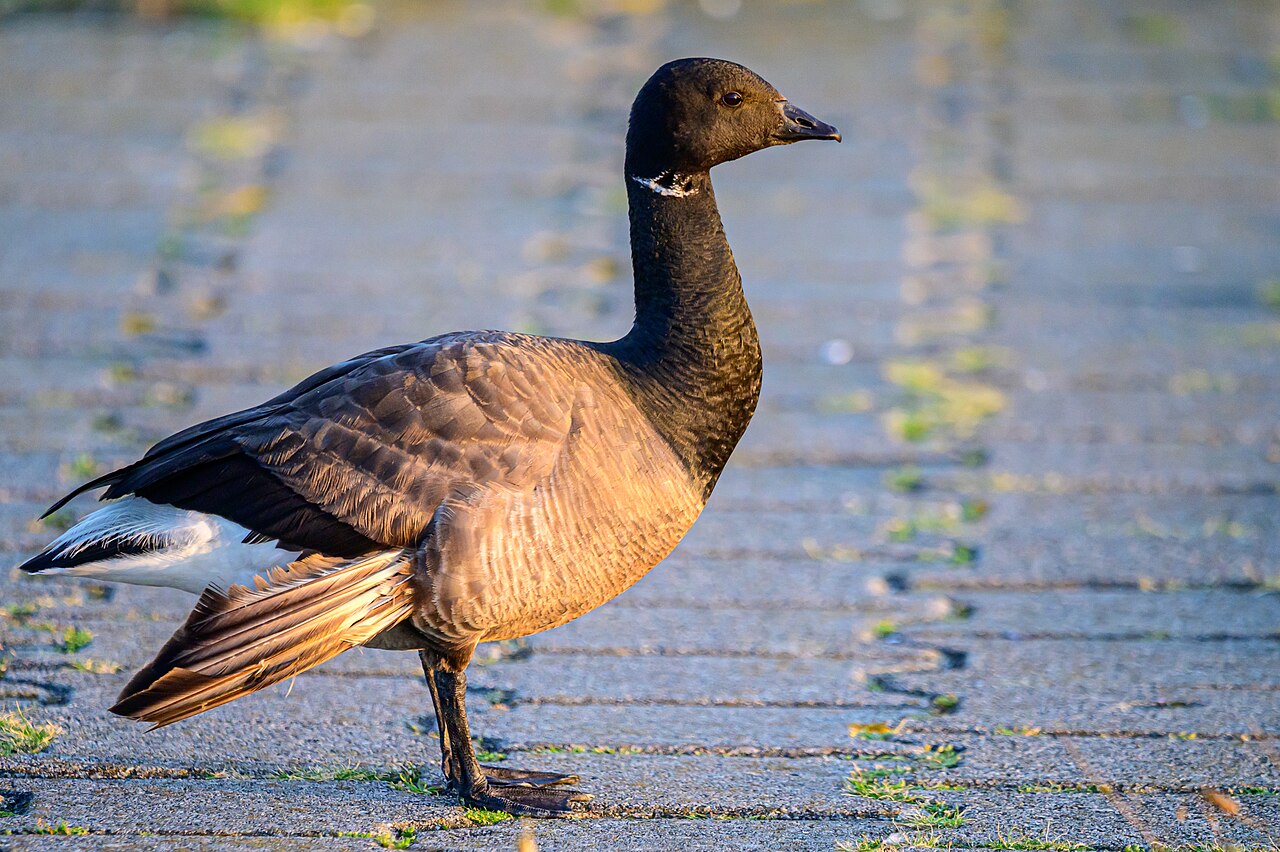
Click a thumbnail to switch the photo above.
Subspecies
Voice
The flight call is distinctive: a rolling, growling, faintly nasal rronk or rrot-rrot, which carries from a feeding flock as an unbroken rippling murmur across the flats. Heard from October to May, loudest when a flock lifts on a rising tide or as a Peregrine passes over.
Recording: Pascal Christe — CC BY-SA 4.0 · Wikimedia Commons
Identification
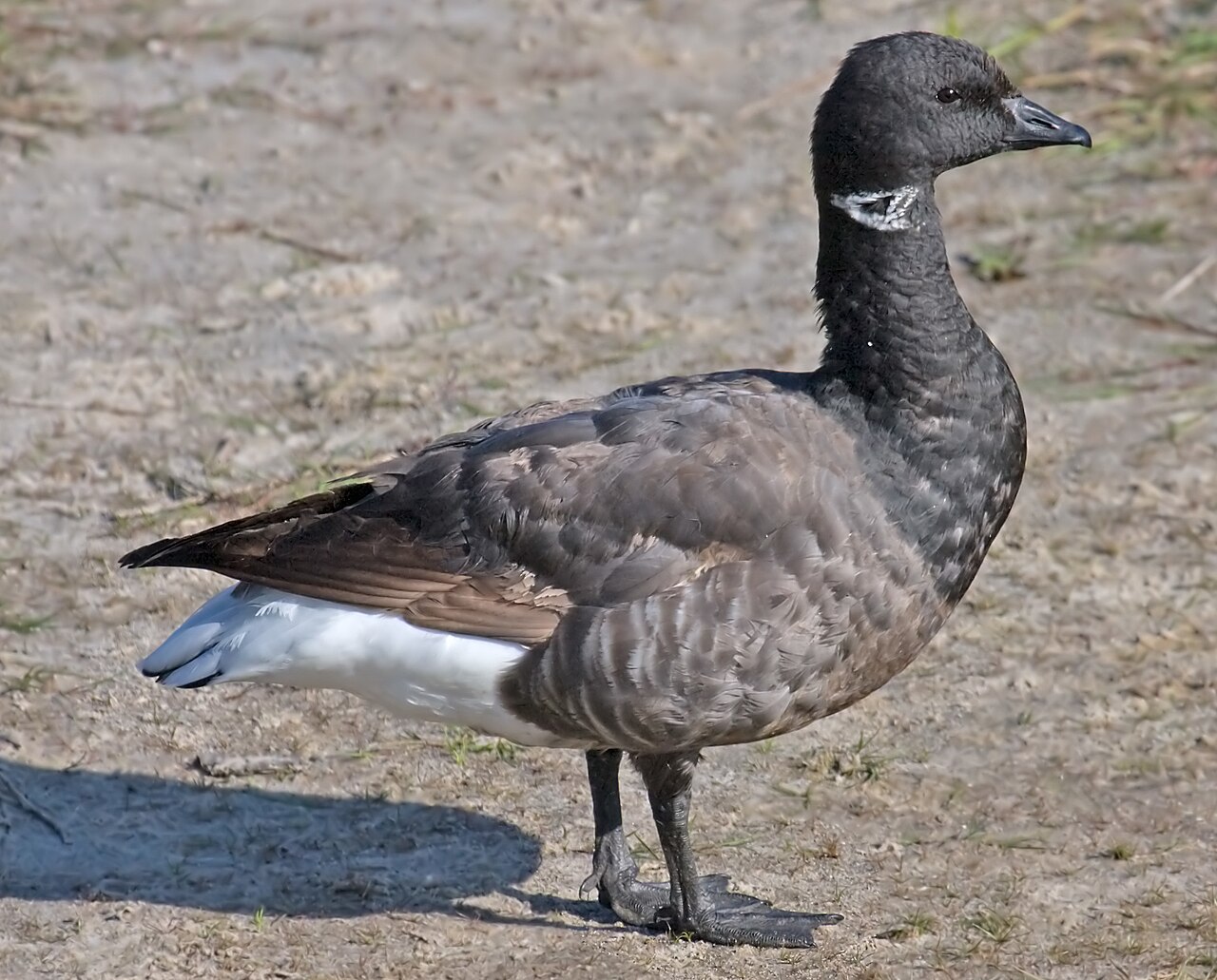
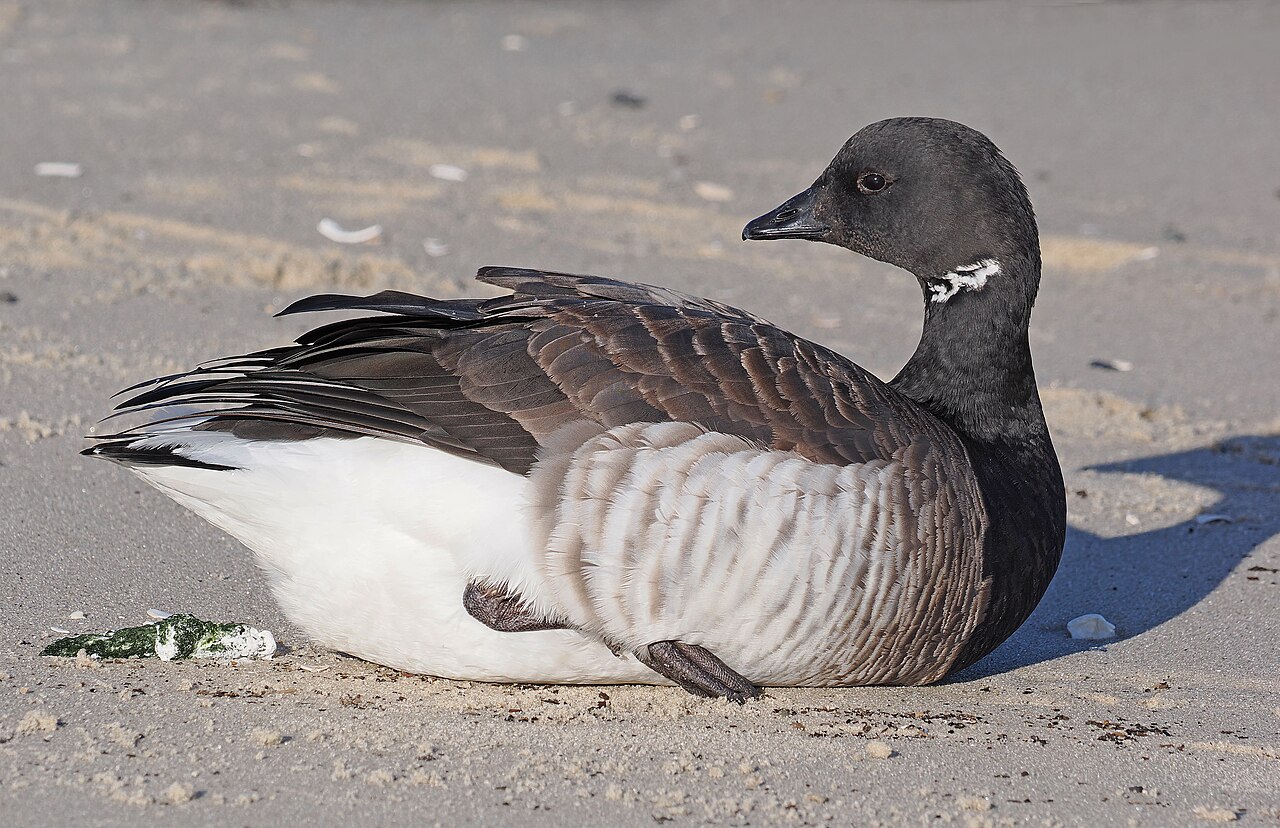
A compact, short-necked goose with an entirely black head, neck and breast, the only white on the foreparts a small streaky collar patch. Adults show crisp white flank edgings and a strikingly white rear end around the black tail. First-winters lack the neck patch and show obvious pale tips to the wing coverts.
Confusion species
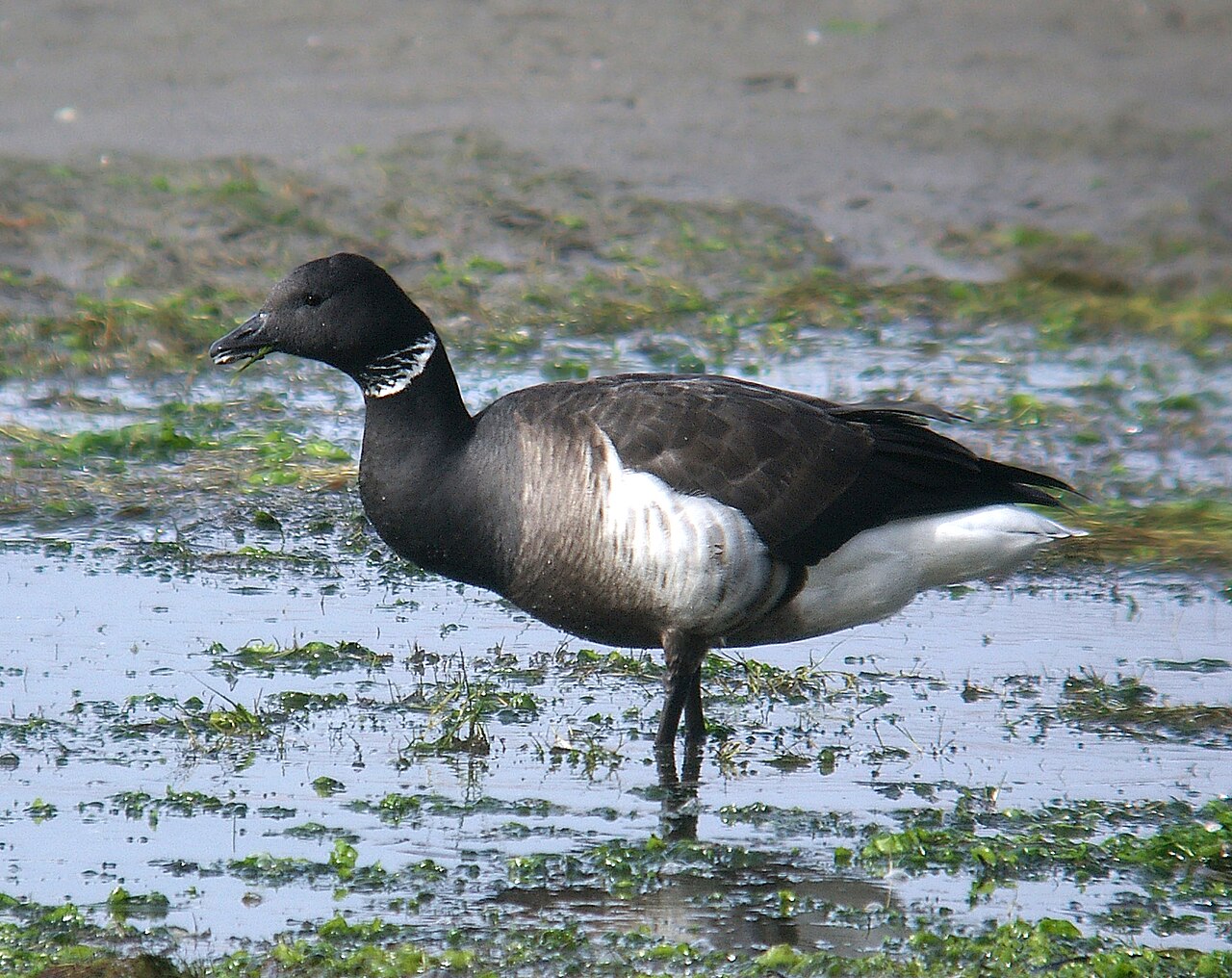
Barnacle Goose is larger and white-faced; Brent is almost wholly dark. Within the species the belly decides: dark-bellied bernicla has a dark grey belly that barely contrasts with the black breast, while pale-bellied hrota shows a creamy belly cut sharply against the black. The rare Black Brant nigricans from the Pacific turns up almost annually in small numbers along the North Sea: black-bellied, but with a large gleaming white flank patch and a broad neck collar that meets at the front.
Habitat
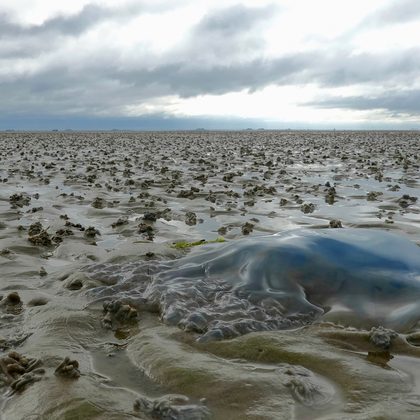
Strictly coastal outside the breeding season: intertidal flats with eelgrass and gutweed, saltmarsh, and adjoining brackish grassland and inner polders. Flocks graze the flats at low water and move onto saltmarsh and grass fields as the tide covers them. Breeds on arctic tundra in Siberia, close to the coast.
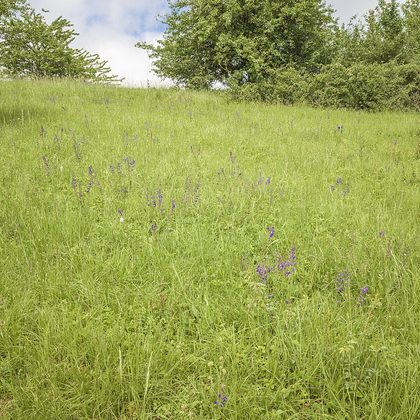
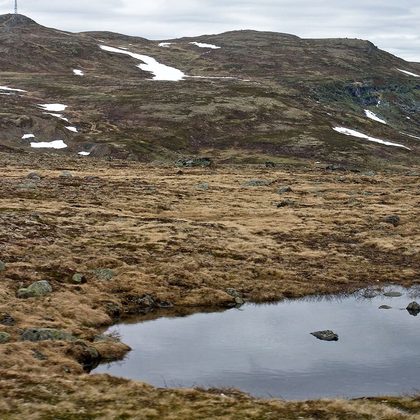
Where the bird is most at home, classified with EUNIS — the European standard for habitats.
Range and movements
Dark-bellied birds breed on Taimyr and winter from the Wadden Sea to Brittany, with the southern North Sea coast as the core; pale-bellied birds from Svalbard and Greenland winter in Jutland, on the island of Ireland and in Northumberland. In Iberia the Brent is a scarce winter visitor, mainly in the Bay of Cádiz and along the Cantabrian coast.
- Resident
- Breeding (summer)
- Winter
- Passage
- dark = core range, pale = thinly spread
How and when to look
Go to Texel, Terschelling or the Frisian saltmarshes in April, when the birds are fattening for migration and flocks are at their biggest. Come around low water and scan the eelgrass beds; on Schiermonnikoog and in the Dollard they can feed right up to the dyke. Check every flock for Red-Breasted Goose.
Conservation status
Not globally threatened (IUCN: Least Concern). The population recovered strongly after protection in the 1970s but has been declining again since the turn of the century. Breeding success swings with the lemming cycle on Taimyr; loss of eelgrass beds, disturbance on saltmarsh and rank vegetation reduce food, and sea-level rise threatens the intertidal flats in the longer term.
Scientific name
Branta bernicla | (Linnaeus, 1758)
Linnaeus described the species in 1758 as Anas bernicla; because it was later moved to another genus, the author and year stand in brackets. The genus Branta was introduced in 1769 by Scopoli. Branta is a Latinised form of Old Norse brandgás, 'burnt goose', that is, black goose. bernicla is Medieval Latin for 'barnacle', from the old belief that these geese grew from barnacles. The specimen the first description was based on came from Sweden.