All species › Waders, gulls and terns › Sandpipers and snipes › Black-Tailed Godwit
Black-Tailed Godwit | Limosa limosa
Grutto | Aguja colinegra | Uferschnepfe | לימוזה מצויה | Barge à queue noire
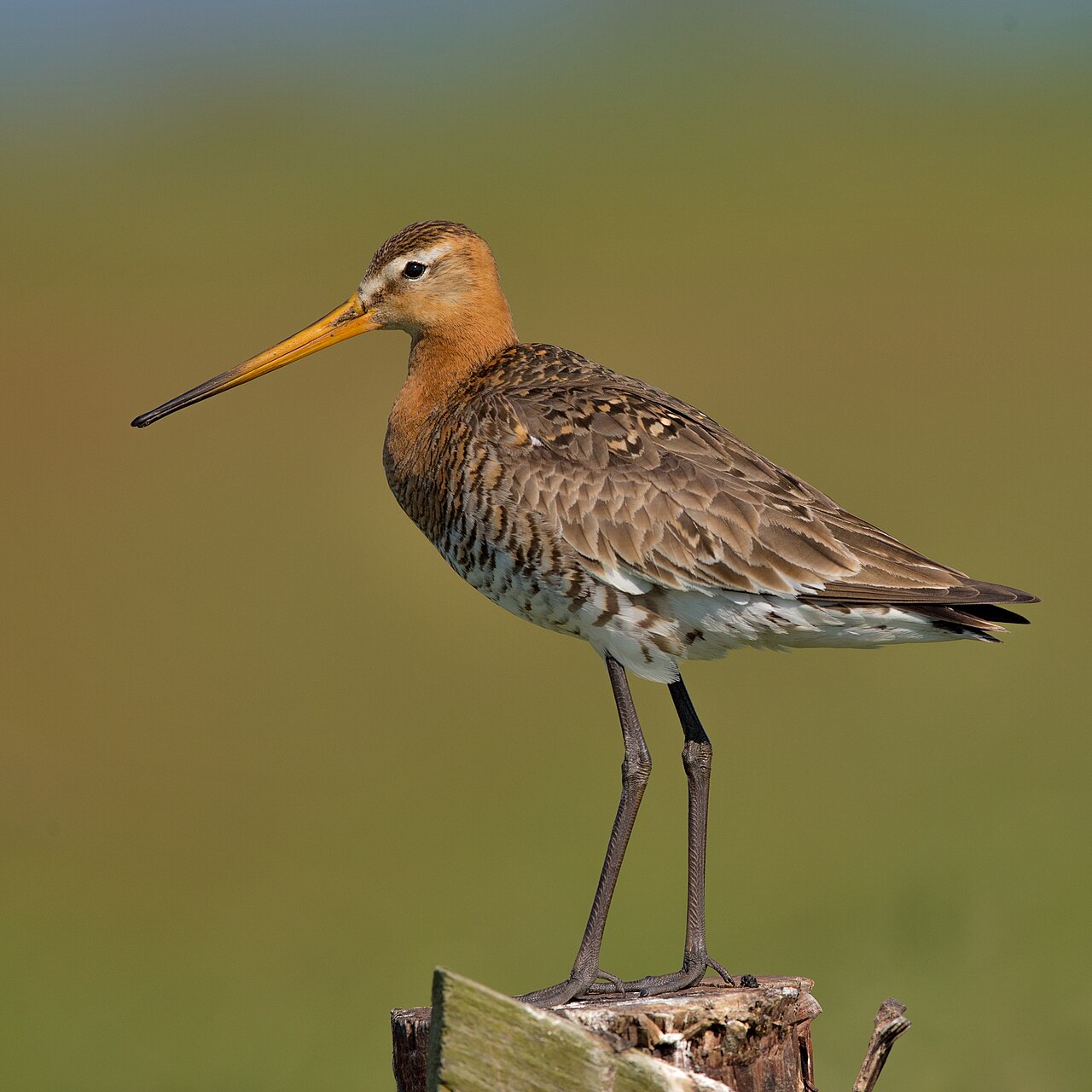
The Black-Tailed Godwit is a characteristic meadow bird: long bill, long legs and a loud, calling display flight over herb-rich grass. A large share of the world population breeds in the polders of north-west Europe.
Click a thumbnail to switch the photo above.
Voice
A loud, nasal grutto grutto in display flight, the source of the Dutch name, plus a weeta-weeta when alarmed over a nest. Mostly March to June; wintering flocks give a short, soft kwet.
Recording: Pascal Christe — CC BY-SA 4.0 · Wikimedia Commons
Identification
Slender, long-legged wader with a very long, straight to slightly upturned bill with a pink base. Recognised in flight by the broad white wing bar, white rump, black tail band and legs trailing far behind. Breeding birds show a rusty orange head, neck and breast with barred flanks; females are larger, longer-billed and duller. Winter plumage is plain grey-brown.
Confusion species
Bar-Tailed Godwit has an upturned bill, shorter legs, no white wing bar and a barred tail, with a white wedge up the back in flight. Icelandic birds, subspecies islandica, are shorter-billed and shorter-legged with deeper rufous reaching the belly, and occur mainly on the coast. Curlew has a decurved bill.
Compare sandpipers, snipes and allies: bill, legs, wing bar and rump
Habitat
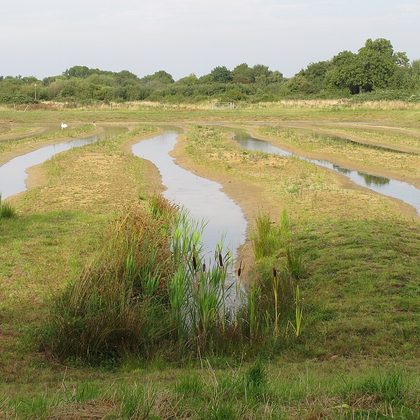
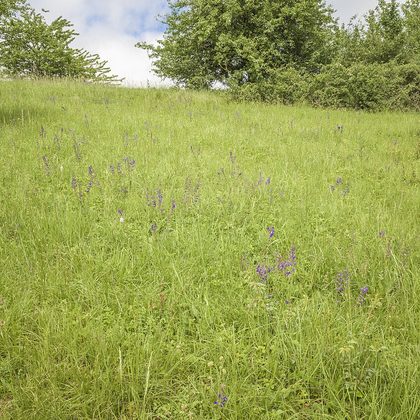
Damp, herb-rich grassland with a high water table and an open horizon, including shallow flooded fields kept wet throughout the spring for the purpose. Outside the breeding season on mudflats, saltmarsh, rice fields and shallow brackish lagoons, where it probes the mud up to the base of the bill.
Where the bird is most at home, classified with EUNIS — the European standard for habitats.


Range and movements
Breeds from western Europe into eastern Europe, with its stronghold in the peat meadows of the Low Countries. Continental birds head south-west and gather in Iberia in February and again in July and August: the rice fields of Extremadura and the Doñana marshes are indispensable staging grounds on the way to and from West Africa, where they winter in the coastal wetlands of West Africa and in the Inner Niger delta. About a sixth stay on in the Bay of Biscay, and a growing number now winter in Iberia itself. The Icelandic subspecies does something else: it winters along the coasts from the British Isles to Iberia and refuels in spring in the British Isles and the Low Countries.
- Resident
- Breeding (summer)
- Winter
- Passage
- dark = core range, pale = thinly spread
How and when to look
Mid-March to May, just after sunrise beside a wet, shallow-flooded field in the peat meadows of north-west Europe; watch for the song flight with its rocking wingbeats. In January and February at dawn in the Extremaduran rice fields, when returning birds mass before the jump north, and in March in Doñana when water levels are low.
Conservation status
Near Threatened globally. Drainage, early and repeated mowing, uniform ryegrass swards and predation mean too few chicks fledge. Recovery depends on wet, herb-rich grassland with delayed mowing and on protecting the Iberian staging sites.
Scientific name
Limosa limosa | (Linnaeus, 1758)
Linnaeus described the species in 1758 as Scolopax limosa; because it was later moved to another genus, the author and year stand in brackets. The genus Limosa was introduced in 1760 by Brisson. Limosa is Latin for 'muddy', from limus 'mud'. The specific name repeats the genus name. The specimen the first description was based on came from Sweden.