All species › Waterfowl › Ducks, geese and swans › Barnacle Goose
Barnacle Goose | Branta leucopsis
Brandgans | Barnacla cariblanca
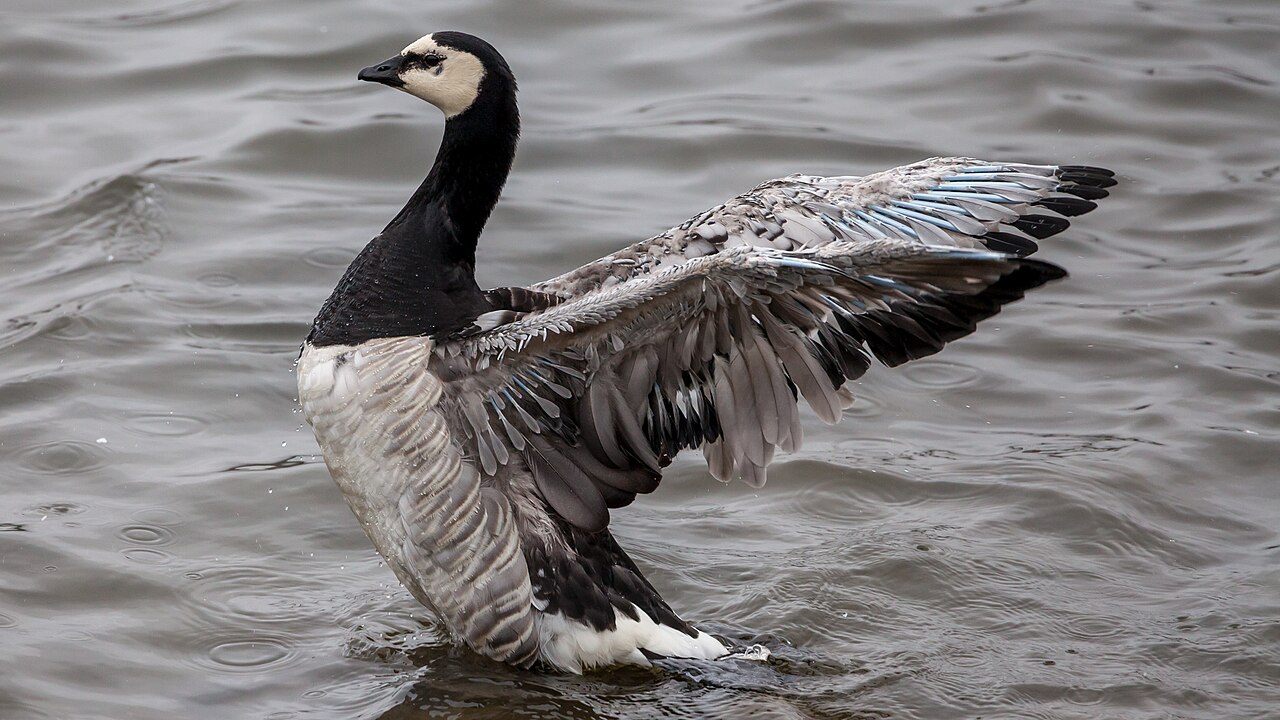
The Barnacle Goose is Europe's most sharply patterned goose, black, white and silver-grey, with a yapping call that rolls across the saltmarsh. Once a pure winter visitor, it is now also a common breeder around the southern North Sea; in Iberia it remains a rarity among flocks of grey geese.
Click a thumbnail to switch the photo above.
Voice
A high, short yapping kyak or kwaf; in big flocks these merge into a continuous yelping babble like a distant pack of small dogs. Heard above all as flocks drop in or lift off the saltmarsh, October to April, and often at night over roosts.
Recording: Pascal Christe — CC BY-SA 4.0 · Wikimedia Commons
Identification
Small, compact black goose with a creamy white face, black crown, neck and breast, and a short black bill. The upperparts are silver-grey with crisp black and white bars, giving a barred, blocky look. In flight: short neck, fast beats and a very white rear with a narrow black tail band.
Confusion species
Brent Goose is darker, lacks the white face and shows only a small white neck patch above a uniform dark belly. Canada Goose is far bigger and brown, with a white chinstrap rather than a whole white face. At distance judge tone: Barnacle reads black-and-white, Brent black-and-brown.
Habitat
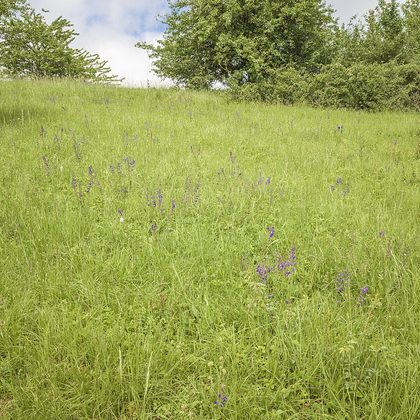
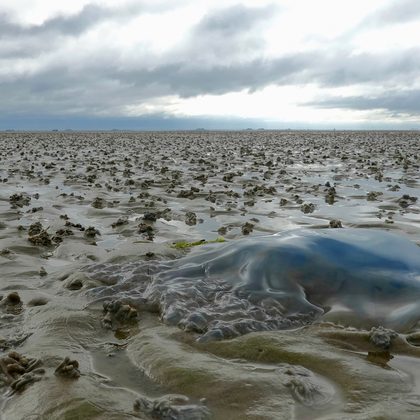
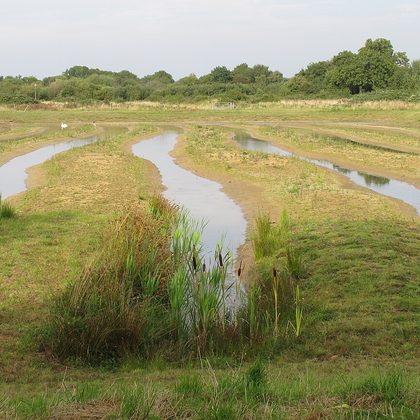
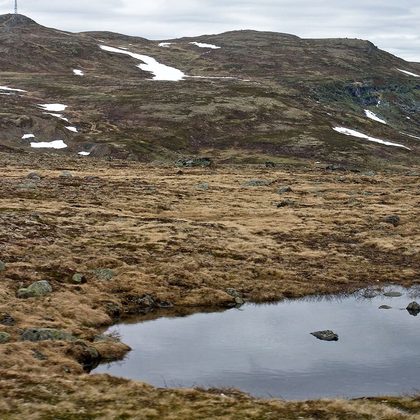
In winter saltmarsh, salty grassland, inland polders and sea dykes, roosting on tidal flats and shallow water. Traditionally breeds on Arctic cliff ledges; the fast-growing breeding populations around the southern North Sea and the Baltic use marsh islets, sandbanks and grazed waterside land, where a moat of water replaces the cliff.
Where the bird is most at home, classified with EUNIS — the European standard for habitats.
Range and movements
Breeds in Greenland, Svalbard and Novaya Zemlya, with fast-growing populations around the Baltic and the southern North Sea. Winters in north-west Europe, the southern North Sea coast being the main area in Europe. In the Mediterranean rare, mainly in northern Iberia, where escapes must be ruled out.
- Resident
- Breeding (summer)
- Winter
- Passage
- dark = core range, pale = thinly spread
How and when to look
November to March along the Wadden and North Sea coasts: drive the sea dyke, stop at the first yapping flock and scan its edges for oddities. Incoming birds form loose wavering lines rather than tidy V-formations, often the first clue overhead. In Iberia, work bird by bird through the wintering geese of the Cantabrian marshes.
Conservation status
Not globally threatened (IUCN: Least Concern). Strongly increased through protection, warming of the breeding grounds and nutrient-rich grassland, with new colonies far outside the Arctic range. As a result, grassland damage and the goose-management debate now dominate discussion, where once the concern was protecting a vulnerable species.
Scientific name
Branta leucopsis | (Bechstein, 1803)
Bechstein described the species in 1803 as Anas leucopsis; because it was later moved to another genus, the author and year stand in brackets. The genus Branta was introduced in 1769 by Scopoli. Branta is a Latinised form of Old Norse brandgás, 'burnt goose', that is, black goose. leucopsis is Greek, from leukos 'white' and opsis 'face': 'white-faced'. The specimen the first description was based on came from Germany.