All species › Waterfowl › Ducks, geese and swans › Bar-Headed Goose
Bar-Headed Goose | Anser indicus
Indische gans | Ánsar indio
A high-altitude goose from central Asia which crosses the Himalaya on migration, and in Europe seen only as a feral bird. The two black bars across the white head make it unmistakable.

Click a thumbnail to switch the photo above.
Voice
A clear, low, nasal honking, aang-aang, less raucous than the calls of Greylag. In flight a repeated disyllabic hong-ha. Feral birds can be heard all year, most often on flights between roost and feeding fields in the morning and evening.
Recording: Akasmita — CC BY-SA 4.0 · Wikimedia Commons
Identification
A pale grey goose with a snow-white head and neck crossed by two black horseshoe bars over the hind crown. A white line runs down the side of the neck to the shoulder. Bill and legs are yellow to orange with a black nail. Juveniles lack the bars, show a grey crown and a dark bill base, but stay just as pale.
Confusion species
No European goose resembles the adult. Juveniles, with their pale plumage, briefly recall a young Snow Goose or a domestic goose; then check the grey crown, the yellow bill without a grinning patch and the pale, low-contrast wings. Hybrids with Greylag Goose occur and can be genuinely deceptive.
Habitat
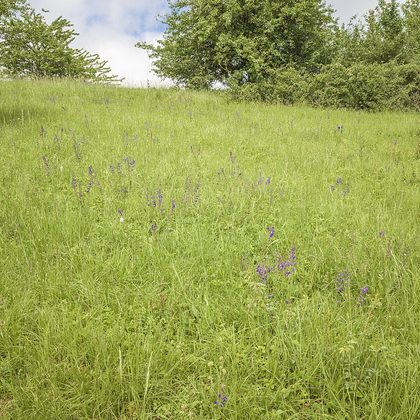
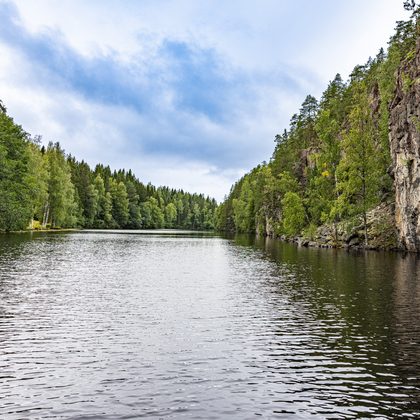
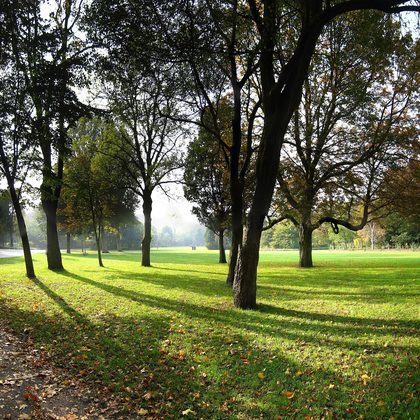
In Europe on grassland and arable beside lakes and rivers, almost always with Greylag and Barnacle Geese, and also on town lakes and in parks. In its native range it breeds colonially beside high-altitude mountain lakes on the Tibetan Plateau, well above the treeline.
Where the bird is most at home, classified with EUNIS — the European standard for habitats.

Range and movements
In the wild it breeds in central Asia, from the Tian Shan and the Mongolian Plateau to Tibet, and winters on the Indian subcontinent, crossing the Himalaya at extreme altitude. All birds in the map area are escapes or birds bred from them, with small breeding groups in the Low Countries, central Europe and Scandinavia. In the Mediterranean region only single escaped individuals occur.
- Resident
- Breeding (summer)
- Winter
- Passage
- dark = core range, pale = thinly spread
How and when to look
Possible all year, but easiest from June to September at moulting sites along the big rivers and on the lakes and floodplains of the Low Countries and the adjoining North European Plain, wherever many Greylags gather. Scan mixed goose flocks for a conspicuously pale bird; the moment it lifts its head the matter is settled.
Conservation status
Not globally threatened (IUCN: Least Concern). In its native range the species is numerous and broadly stable, though avian influenza, disturbance at breeding colonies and abstraction of water from highland lakes are local threats. The feral European population stays small but persists; hybridisation with Greylag Goose is the main objection to its presence here.
Scientific name
Anser indicus | (Latham, 1790)
Latham described the species in 1790 as Anas indica; because it was later moved to another genus, the author and year stand in brackets. The genus Anser was introduced in 1760 by Brisson. Anser is the Latin word for 'goose'. indicus is Latin for 'of India', after the species' winter quarters on the Indian subcontinent. The specimen the first description was based on came from India and Tibet.