All species › Cuckoos › Cuckoos › Yellow-billed Cuckoo
Yellow-billed Cuckoo | Coccyzus americanus
Geelsnavelkoekoek | Cuclillo Piquigualdo
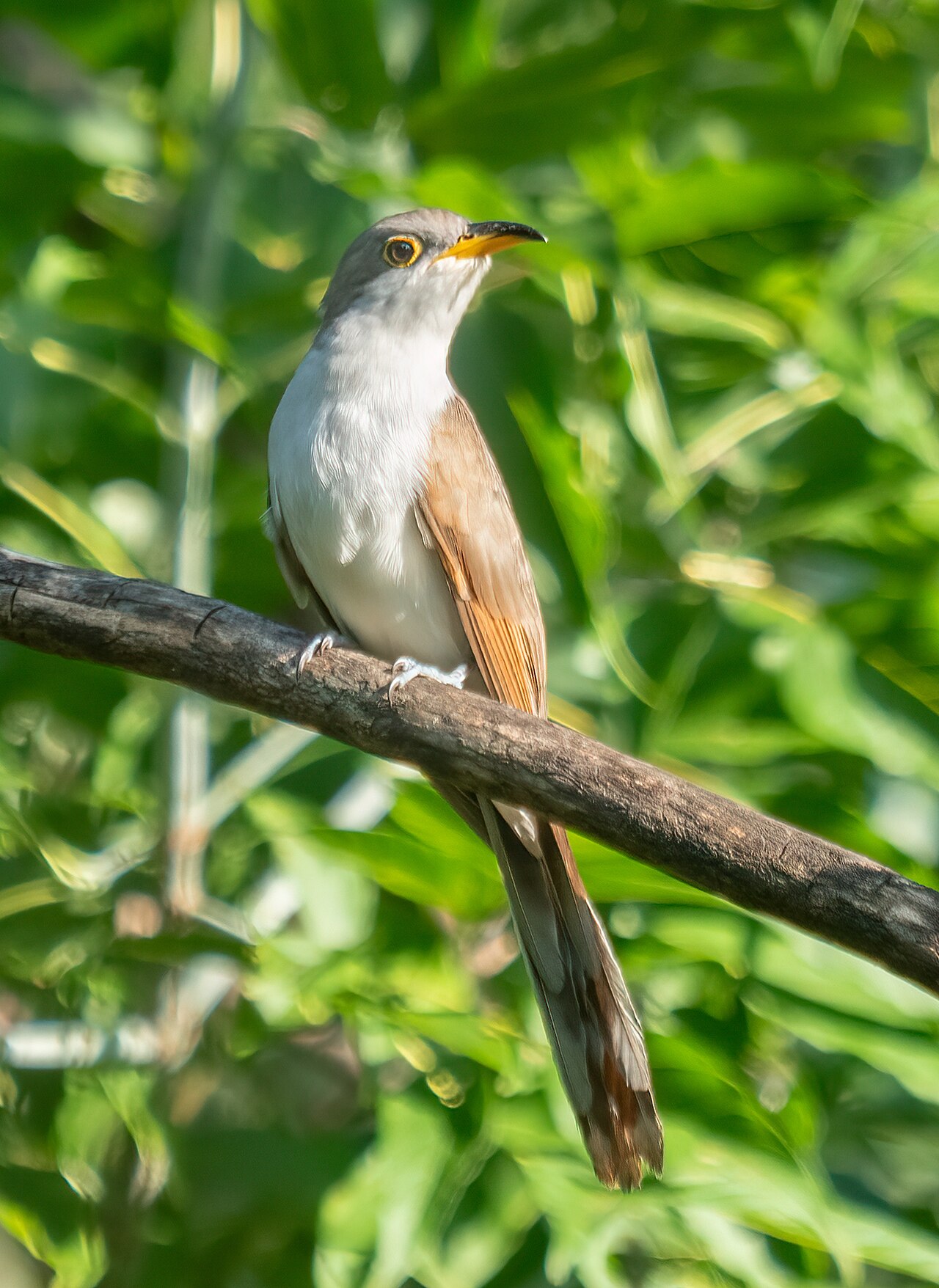
The Yellow-billed Cuckoo is a slim, long-tailed summer bird heard far more often than it is seen: warm brown above, white below, with a yellow lower mandible and rufous flashing in the flight feathers. It is the bird of the caterpillar outbreak — a single individual eats thousands in a season, hairy species included, which most birds refuse. Unlike the Common Cuckoo of Europe it raises its own young, in a loose saucer of twigs.
Voice
The best-known call is a wooden, knocking kow-kow-kow-kow that slows and drops as it goes, as though the bird were running down; it often comes on heavy, overcast afternoons, which is where the old name rain crow comes from. There is also a drawn-out, hollow coop-coop-coop with long pauses between notes, which carries well through dense foliage. Both are given from cover, usually halfway up the canopy, and the singer stays motionless while calling. In autumn it falls almost completely silent.
Recording: David Tattersley — CC BY-NC-SA 4.0 · Rio Grande City, Starr County, Texas, United States · xeno-canto
Identification
Slim and elongated, with a long tail, warm brown upperparts and clean unmarked white underparts. The bill is slightly curved and largely yellow with a dark upper edge, and a narrow yellow ring surrounds the eye. In flight a rufous panel flashes in the primaries, the best mark at a distance. The underside of the tail carries three broad white blocks between broad black bands, so that from below the tail looks strongly banded. Flight is fast, straight and low, with deep beats of the pointed wings; male and female cannot be told apart.
Confusion species
Black-billed Cuckoo has an all-dark bill, a red eye-ring, no rufous in the wing, and only narrow white tips beneath the tail instead of broad blocks. Mangrove Cuckoo shares the yellow bill base but has a black mask through the eye and a distinctly buff belly. At a distance, perched and against the light, the cuckoo is taken for a Mourning Dove, which has a short bill, a small head and a pointed white-edged tail.
Habitat
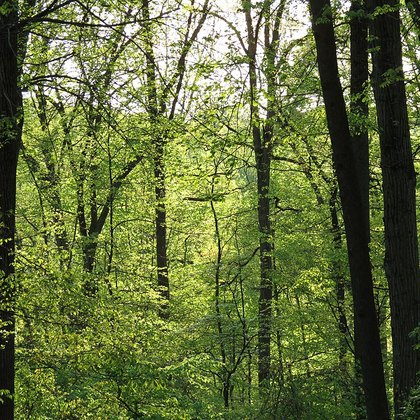
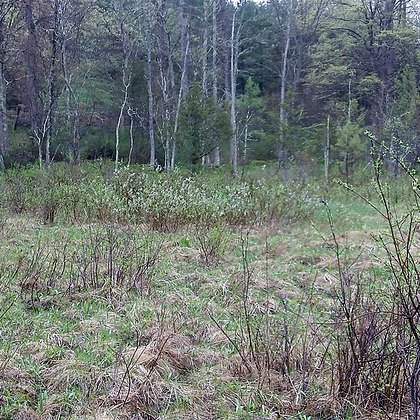
Deciduous woodland and scrub with a dense understorey, by preference near water: hedgerows, overgrown orchards, willow and dogwood thickets and the margins of stream valleys. In the Southwest it is tied almost entirely to the gallery woodland of willow and cottonwood along rivers and to dense stands of mesquite, a habitat largely gone from that region. It avoids closed conifer forest, open farmland and dry bare slopes. It needs large unbroken blocks of cover; narrow scraps are barely used.
Where the bird is most often found, arranged by the USNVC — the vegetation classification of the United States and Canada — and CMECS for sea and coast.


Range and movements
Breeds across nearly all of the eastern United States north to southern Ontario, with a thin and badly fragmented occupation of the Southwest and the western river valleys; it also breeds in northwestern Mexico and in the Greater Antilles and the Bahamas. It is a long-distance nocturnal migrant that winters in South America as far as northern Argentina, beyond this map. In the west of its range it disappeared with the riverside woodland during the twentieth century; in California and along the Colorado only a fraction remains of what was there around 1900.
- Resident
- Breeding (summer)
- Winter
- Passage
- dark = core range, pale = thinly spread
Where and when to look
Look for it on a sultry June or July afternoon along a stream valley with thick cover, and listen first: the knocking kow-kow-kow gives it away without anything moving. Then follow the sound and search the middle storey for a long, horizontal, motionless shape; it will not flush until you are close, and then the rufous in the wing shows. Caterpillar years produce the most birds in the same place.
Conservation
The IUCN rates the species as of least concern (LC); the world population is estimated at about 9.6 million birds, but numbers fell by roughly a third between 1966 and 2019. The western population has been singled out for protection because of the wholesale loss of riverside woodland. Collisions with tall structures during nocturnal migration take their toll as well, and pesticides remove the caterpillars the species lives on.
Scientific name
Coccyzus americanus | (Linnaeus, 1758)
Linnaeus described the species in 1758 as Cuculus americanus; because it was later moved to another genus, author and year stand in parentheses. The genus Coccyzus was introduced by Vieillot in 1816, from Greek kokkuzo ('to call like a cuckoo'). The species name simply means 'of America'. Linnaeus gave the type locality as 'Carolina', which is read as South Carolina.