All species › Waterfowl › Ducks, swans and geese › Whooper Swan
Whooper Swan | Cygnus cygnus
Wilde zwaan | Cisne cantor
Whooper Swan is a Eurasian species that reaches North America only at its edge: in the western Aleutians, on islands that lie closer to Kamchatka than to mainland Alaska. In 1996 and 1997 a pair bred there for the first time, on Attu, the westernmost of the Near Islands — the only confirmed breeding record on American soil. Beyond the Aleutians and the far west of Alaska it is seldom recorded, and then only as an isolated vagrant.
Voice
The English name Whooper is itself an echo of the call: a loud, ringing ahng-ahng-ahng or whoop-whoop, lower and fuller than Tundra Swan's but with less metallic tone than Trumpeter Swan's. Flocks call almost continuously in flight and on take-off, and at rest keep up a low, muffled murmuring. In display pairs stretch the neck upward and call in duet with the bill held wide open, behaviour rarely observed in the Aleutians themselves but well documented across the Eurasian part of the range.
Recording: Stanislas Wroza — CC BY-NC-SA 4.0 · Kaamanen, Finland · xeno-canto
Identification
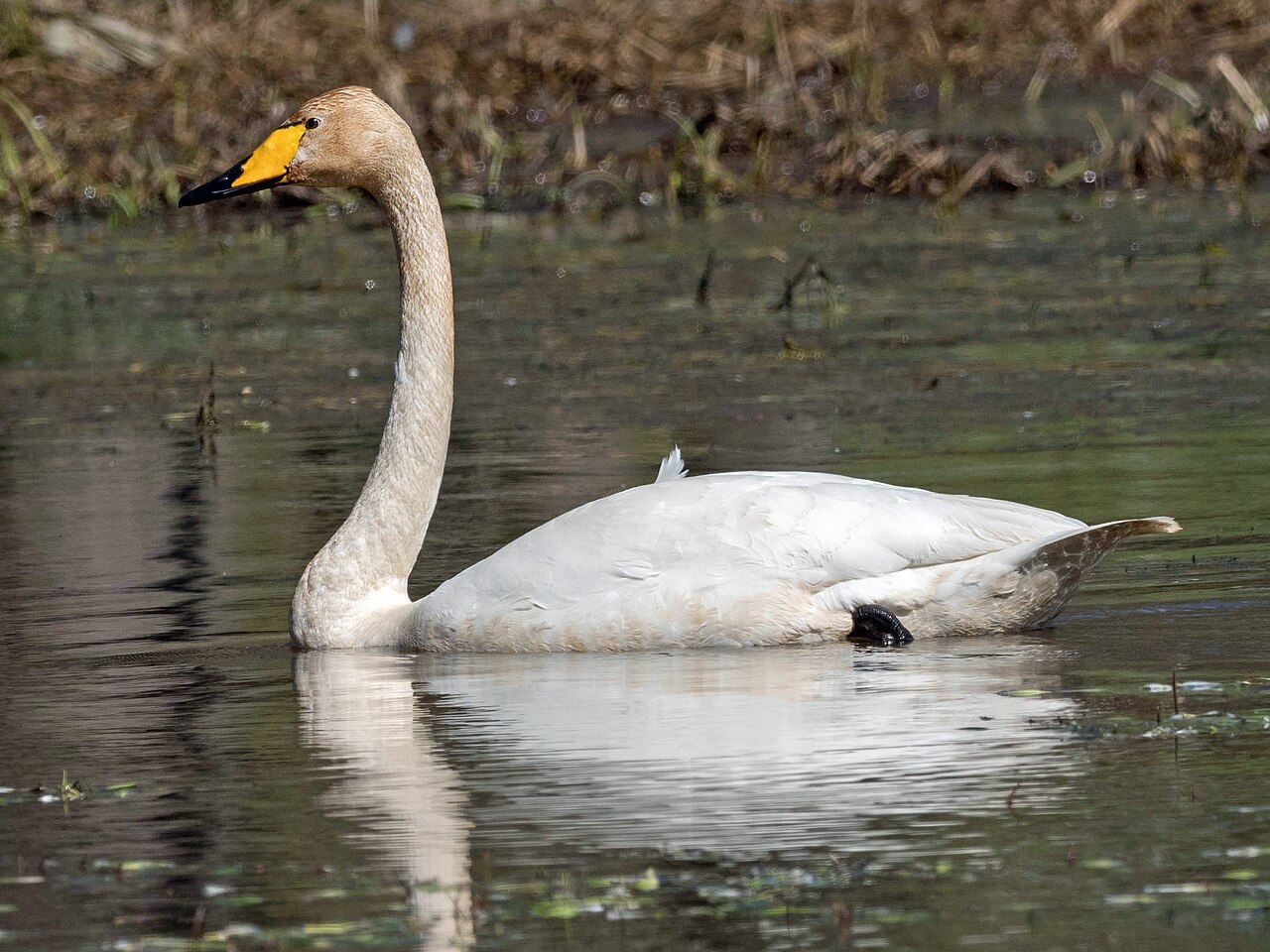
An adult Whooper Swan is entirely white with a black bill whose base is yellow over a large area; the yellow runs forward in a wedge past the nostril, clearly farther than in Tundra Swan. The neck is long and held straight, without Mute Swan's curve, and the head has a flat forehead without that species' knob. The cygnet is dingy grey with a pink bill base that yellows gradually, and does not reach adult plumage until its second year. In flight the swan shows the straight neck and the even, slightly unhurried wingbeat shared by all the large swans.
Confusion species
Tundra Swan has far less yellow on the bill, limited to a small spot in front of the eye that is not even present on every bird; Whooper Swan instead has an extensive yellow wedge reaching past the nostril. Trumpeter Swan lacks any yellow, with an entirely black bill and a straight, gradually rising forehead line. Mute Swan has an orange bill with a black knob and a curved neck. Because all four species can overlap in the Aleutians and Alaska, a swan there cannot be named with confidence without a clear view of the bill.
Habitat
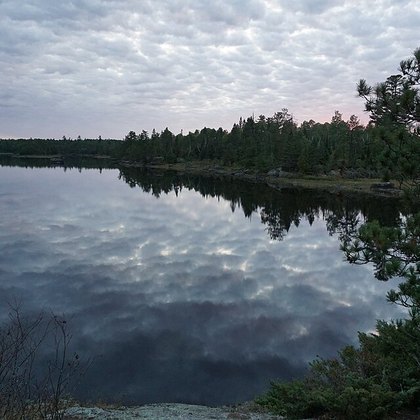
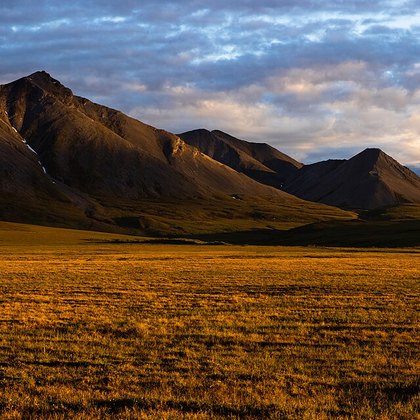
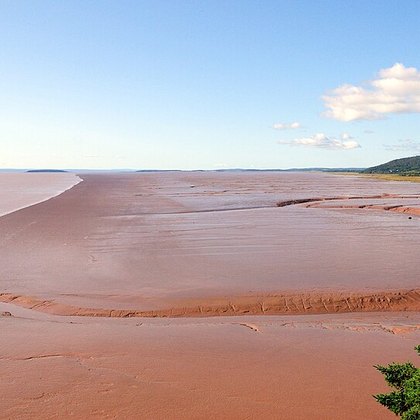
In the Eurasian part of its range Whooper Swan breeds on shallow lakes and bogs in taiga and tundra and winters on estuaries, farmland and open water; the one confirmed American breeding record, on Attu, took place on a shallow tundra pool, comparable to Tundra Swan's breeding habitat. Birds appearing in the Aleutians in winter are seen mainly on sheltered bays and coastal waters between the islands. Farther east in North America it has barely been recorded at all.
Where the bird is most often found, arranged by the USNVC — the vegetation classification of the United States and Canada — and CMECS for sea and coast.

Range and movements
The breeding range lies in Scandinavia, Iceland and across the full width of Siberia to the Bering Sea; the nearest populations breed on Kamchatka and the Commander Islands, a short distance from the western Aleutians. From there a few birds cross to Attu and the Near Islands every year, where small numbers are seen in winter and where, in 1996-1997, the only confirmed breeding record outside Eurasia took place. Farther east in Alaska and south along the Pacific coast as far as California, individual birds have been recorded, but those numbers are too low and too irregular to count as an established range; some of those southern records may also involve birds that escaped from captivity.
Where and when to look
The western Aleutians, above all Attu, are the only place in North America with a real chance of Whooper Swan, mainly in winter; for most visitors to this continent the species is practically out of reach. If you see a swan farther east or south that you take for a Whooper Swan, check carefully first whether it might instead be a bird that escaped from a private collection.
Conservation
The species is listed as Least Concern (LC) and its world population is estimated in the hundreds of thousands, almost entirely in Eurasia. The North American share is so small and so marginal that it plays no part in the species' conservation status; for this continent it is better described as an edge of the range than an established population.
Scientific name
Cygnus cygnus | (Linnaeus, 1758)
Linnaeus described the species in 1758 as Anas cygnus, among the ducks; because it was later placed in another genus, author and year stand in parentheses. The genus Cygnus was introduced by Bechstein in 1803 and is a Latinisation of Greek kyknos, 'swan'; the species name repeats that meaning. The type locality was later restricted to Sweden, out of the broad original range Linnaeus gave.