All species › Passerines › Thrushes and allies › Swainson's Thrush
Swainson's Thrush | Catharus ustulatus
Dwerglijster | Zorzalito de Swainson
Swainson's Thrush is the most numerous of the five North American Catharus thrushes and the only one with a full buff eyering and buff cheeks. It breeds in conifer forest from Alaska to Newfoundland and in the western mountains, and migrates at night to Central and South America; on passage it is known by its short call in the dark.
Voice
The song is a series of fluting notes spiralling upward over some two seconds, each phrase a little higher than the last and growing thinner and fainter at the end. That rising course separates it from the descending song of the Veery. The call is a short, rising whit like a water drop; the nocturnal flight call is a thin, high heep audible over towns on clear autumn nights.
Recording: Jeff Stewart — CC BY-NC-SA 4.0 · Cavan-Monaghan (near Millbrook), Peterborough County, Ontario, Canada · xeno-canto
Identification
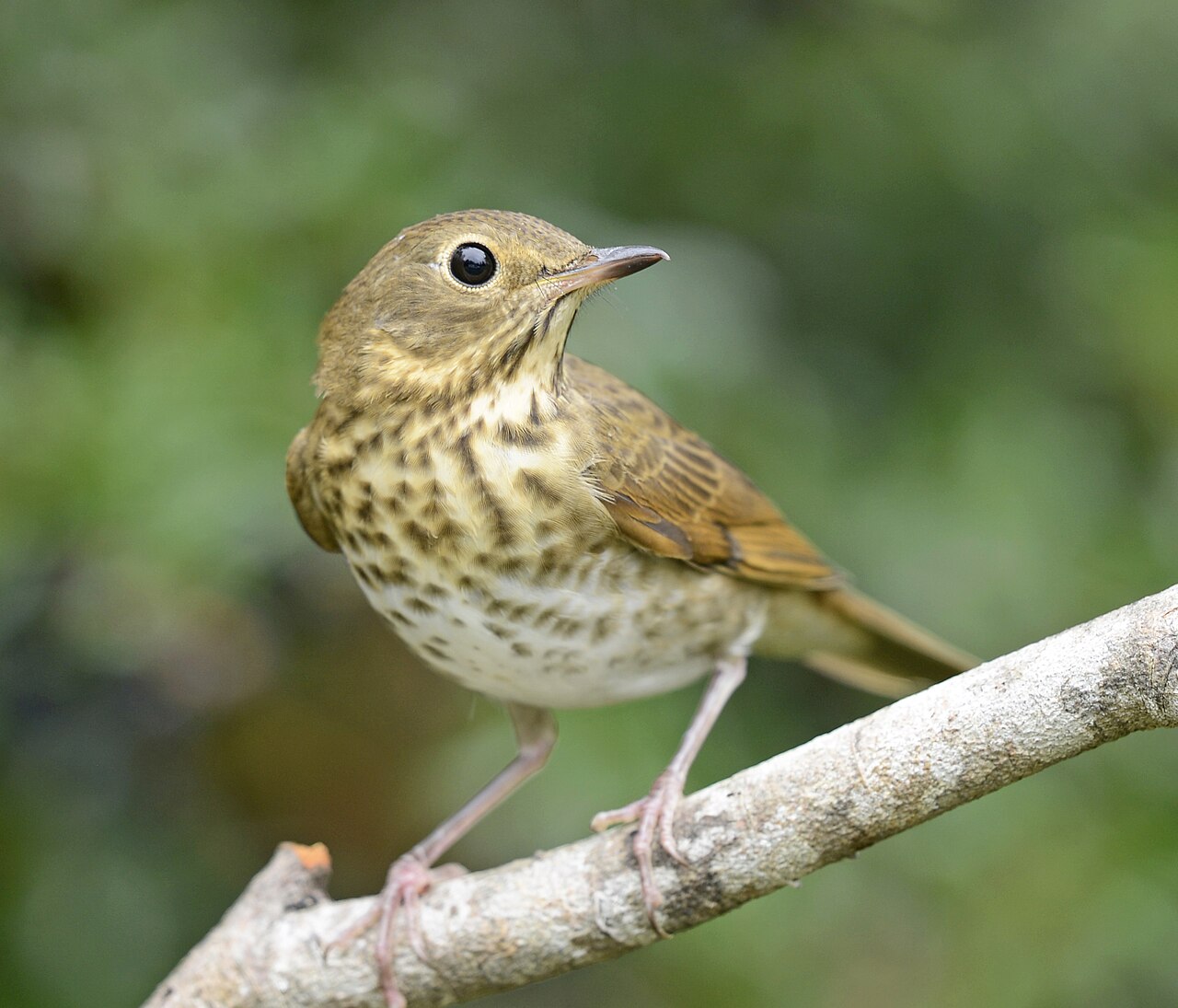
The upperparts are plain olive-brown, redder in birds of the Pacific coast. The face is washed buff, with a broad, complete buff eyering running forward into a buff loral patch — spectacles visible at a distance. The upper breast is buff with small, faint grey-brown spots fading towards the flanks; the flanks are grey and the belly white. The legs are pink. In flight a pale band shows across the underwing between two darker zones.
Confusion species
Gray-cheeked Thrush and Bicknell's Thrush lack the buff tone: their eyering is narrow, greyish and often incomplete, and the cheek is grey. Veery is more rufous above, barely spotted and with a poorly marked eyering, and sings downward rather than upward. Hermit Thrush has a rufous tail contrasting with an olive-brown back and cocks its tail on landing, which Swainson's does not. In good light the full buff spectacles are the quickest mark.
Habitat
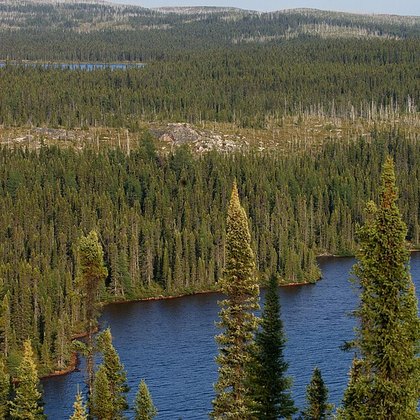
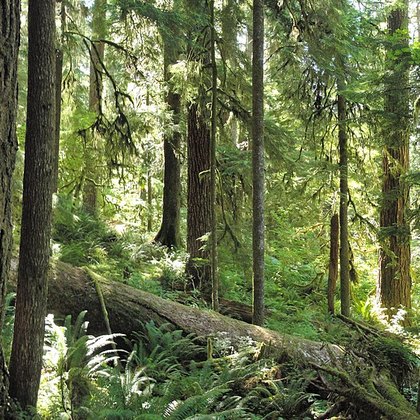
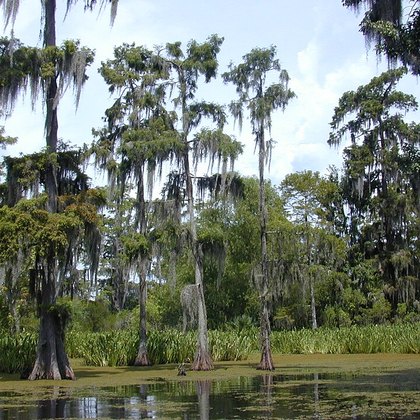
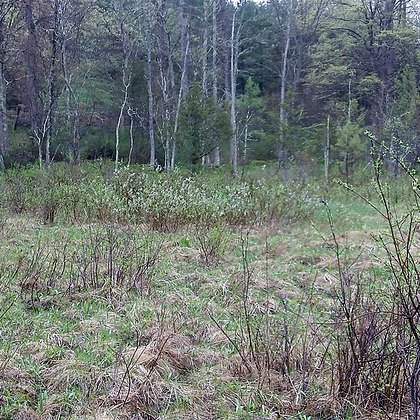
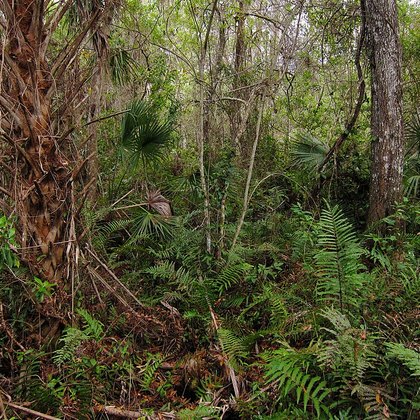
Moist conifer forest with dense undergrowth, from boreal spruce and pine to the montane conifer forest of the Rockies and the Cascades. On the Pacific coast it also breeds in deciduous alder and maple woodland along streams and in dense scrub on cut-over ground. Swamp forest and stream valleys with willow and alder are core habitat. On migration it uses almost any thicket or city park; in winter it occupies tropical forest, forest edge and shade-coffee plantations.
Where the bird is most often found, arranged by the USNVC — the vegetation classification of the United States and Canada — and CMECS for sea and coast.

Range and movements
The breeding range covers nearly the whole boreal belt, from Alaska and Yukon across Canada to Newfoundland and Nova Scotia, and south along the Rockies to Colorado and Utah and along the Pacific coast to central California; in the east it reaches New England, Michigan and the Adirondacks. Almost the entire continent south of that is passage ground. Coastal russet-backed birds winter from western Mexico to Costa Rica; inland birds travel on to Panama and northern South America, as far as Bolivia and Argentina.
- Breeding (summer)
- Winter
- Passage
- dark = core range, pale = thinly spread
Where and when to look
Stand outside on a clear, calm evening in September and listen for the thin, high heep calls passing overhead: they are almost always Swainson's Thrushes on migration. By day a stream valley with dense undergrowth repays a visit in May; do not look in the canopy but on a low branch at eye level, where the buff face stands out at once against the green.
Conservation
Partners in Flight puts the world population at about 120 million birds, and the Breeding Bird Survey shows a fairly steady course between 1966 and 2019; the species scores 10 out of 20 on the Continental Concern Score. The heaviest mortality falls on migration: of all birds found in studies at communication towers in Minnesota, Illinois and West Virginia, Swainson's Thrush was the most numerous species, and collisions with windows and tall buildings take many more. On the breeding grounds grazing, development and disturbance play a part, and the short breeding season makes the species sensitive to them.
Scientific name
Catharus ustulatus | (Nuttall, 1840)
Nuttall described the species in 1840 as Turdus ustulatus, from a specimen taken in the forests of the Columbia at Fort Vancouver, Washington; because it was later moved to another genus, author and year stand in parentheses. The species name ustulatus is Latin for 'scorched', from urere 'to burn', after the brown tone of the upperparts. The genus Catharus comes from Greek katharos 'pure, clean'. The English name honours William Swainson; the Dutch name refers to the small size relative to the thrushes of the genus Turdus.