All species › Owls › Owls › Snowy Owl
Snowy Owl | Bubo scandiacus
Sneeuwuil | Búho nival
The Snowy Owl is North America's heaviest owl and the only one likely to be sitting out in the middle of a snow-covered field in broad daylight. It nests on the ground on the high-arctic tundra, and in good lemming years it sends thousands of young birds far south — as far as Texas and Bermuda.
Voice
Away from the breeding grounds it is all but silent: a wintering bird is seen, not heard. On the tundra the male gives a deep, booming hoo... hoo, two to six notes that carry for kilometres across open country and mark out his territory. The female hoots rarely and at a higher pitch. Disturbed at the nest, both give a barking krufff-guh-guh-guk, along with cackling, hissing and bill-snapping; young birds beg with a thin whistle.
Recording: Tero Linjama — CC BY-NC-SA 4.0 · Ähtäri, Southern Ostrobothnia, Finland · xeno-canto
Identification
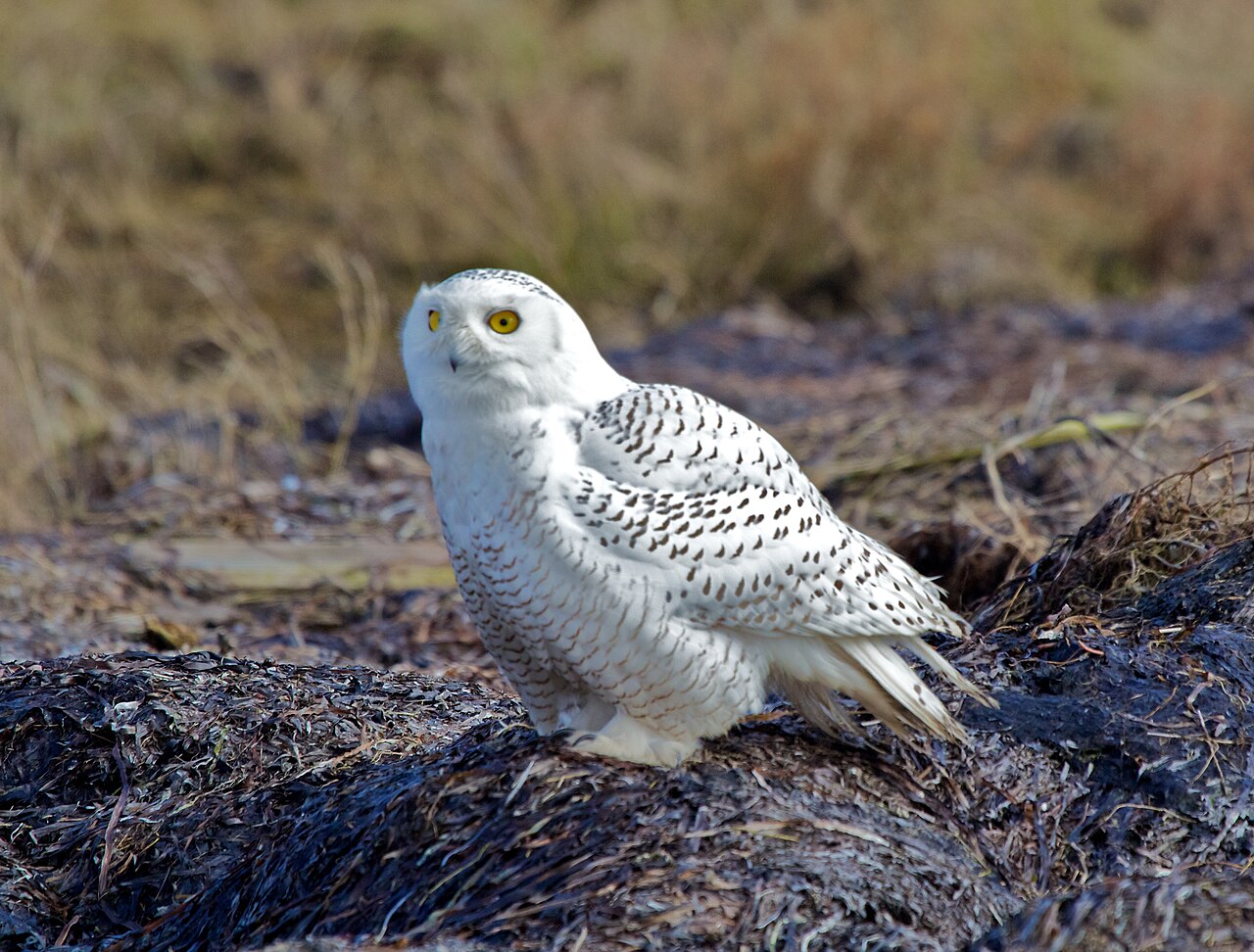
A heavy, round-headed owl without ear tufts, the small black bill sunk deep in white feathering and the eyes a piercing yellow. Old males are close to pure white; females and young birds are white with dense dark barring, heaviest on young females. In nearly every bird the crown, face and throat stay white, and that is what separates the silhouette from everything else. The flight is low, powerful and almost gull-like, with slow beats and long glides.
Confusion species
Great Horned Owl (Bubo virginianus) in its pale prairie form shows a great deal of white, but always has ear tufts, a barred dark underside and a closed facial disc. A white-morph Gyrfalcon sits just as white on a post, but has a pointed falcon's head, dark eyes and pointed wings. American Barn Owl looks snow-white from below in headlights, but weighs a fraction as much and has a heart-shaped face and black eyes.
Habitat
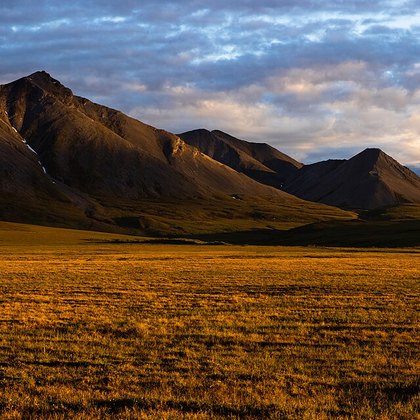
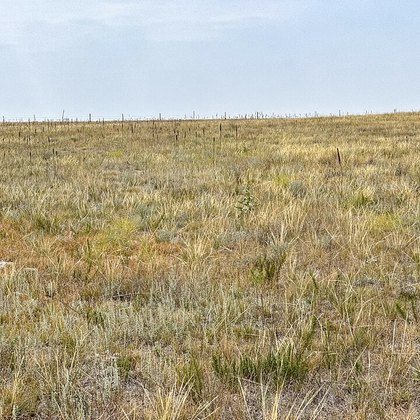
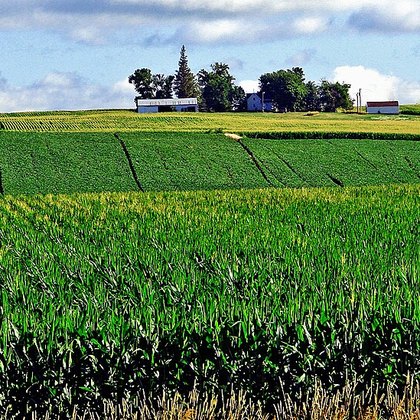
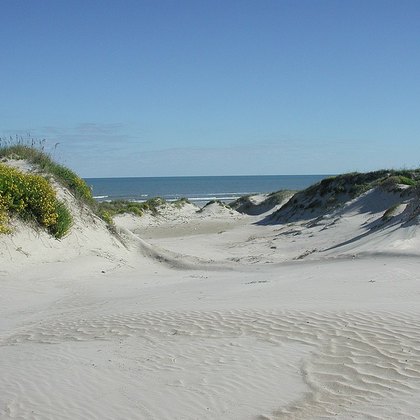
Breeds on open high-arctic tundra, on a dry rise with a view — a boulder ridge, a pingo, a river bank. In winter it seeks out the landscape that most resembles it: flat farmland, coastal dunes, dykes, harbour jetties and above all airfields, where short grass and voles bring the same birds back year after year. It avoids woodland entirely.
Where the bird is most often found, arranged by the USNVC — the vegetation classification of the United States and Canada — and CMECS for sea and coast.

Range and movements
Breeds in arctic Alaska, the Canadian Arctic Archipelago, the Nunavut coast and northern Greenland, where it reaches Peary Land; on Greenland the ice cap confines it to the ice-free northern and north-eastern fringe. Outside the breeding season it is nomadic: satellite tags show birds nesting on Baffin Island one year and a thousand kilometres away the next, and part of the population moves north instead, wintering on the pack ice and hunting ducks and auks at open leads. Southward it reaches the Great Lakes and New England in ordinary winters, and Texas, Florida and Bermuda in irruption years.
- Resident
- Breeding (summer)
- Winter
- Passage
- dark = core range, pale = thinly spread
Where and when to look
Look by day and from a distance: scan the horizon of a flat field with a telescope for a white lump that does not fit the pattern — a Snowy Owl will sit motionless on the ground or on a low post for hours. Airfields and sea dykes produce most winter records. Keep well back: an owl flushed again and again burns energy it cannot spare at this latitude.
Conservation
Listed as Vulnerable (VU) since 2017. Recalculation showed the world population to be far smaller than long assumed — some 14,000 to 28,000 adults — and roughly a third has gone over the last quarter century. The cause lies in the north: milder winters disrupt the lemming cycles on which its breeding success entirely depends. In the south, wintering birds are killed by vehicles, rodenticides and power lines.
Scientific name
Bubo scandiacus | (Linnaeus, 1758)
Linnaeus described the species in 1758 as Strix scandiaca, among the owls in the broad sense; because it was later moved to Bubo, author and year stand in parentheses. The genus Bubo was introduced by Duméril in 1805. Bubo is the Latin word for the eagle-owl, an imitation of its call; scandiacus is New Latin for 'of Scandinavia'. Linnaeus gave the type locality as 'Habitat in Alpibus Lapponiae', the Lapland fells, and worked from a drawing by Rudbeck rather than from a specimen. The species long stood in a genus of its own, Nyctea, until DNA work returned it to the eagle-owls.