All species › Owls › Owls › Short-eared Owl
Short-eared Owl | Asio flammeus
Velduil | Búho campestre
The Short-eared Owl is the owl of the open field: it hunts in daylight, low and buoyant over grass and marsh, with a flight that suggests a large moth more than a bird of prey. It is one of the most widely distributed birds in the world, breeding from arctic tundra to the Hawaiian Islands.
Voice
For an owl it is quiet, and most of its sound belongs to courtship. The male then gives a series of a dozen or more soft, quickly repeated hoo notes, from the ground, from a low post or high in the air during his display flight. In that same flight he claps his wings together beneath his body, a dry rattle like a hand slapping a thigh. At the nest both parents bark, scream and whine, and the female adds a chicken-like clucking. Disturbed birds snap their bills.
Recording: Kevin Guille — CC0 · Birky, Lyubeshivs'kyi district, Volyn Oblast, Ukraine · xeno-canto
Identification
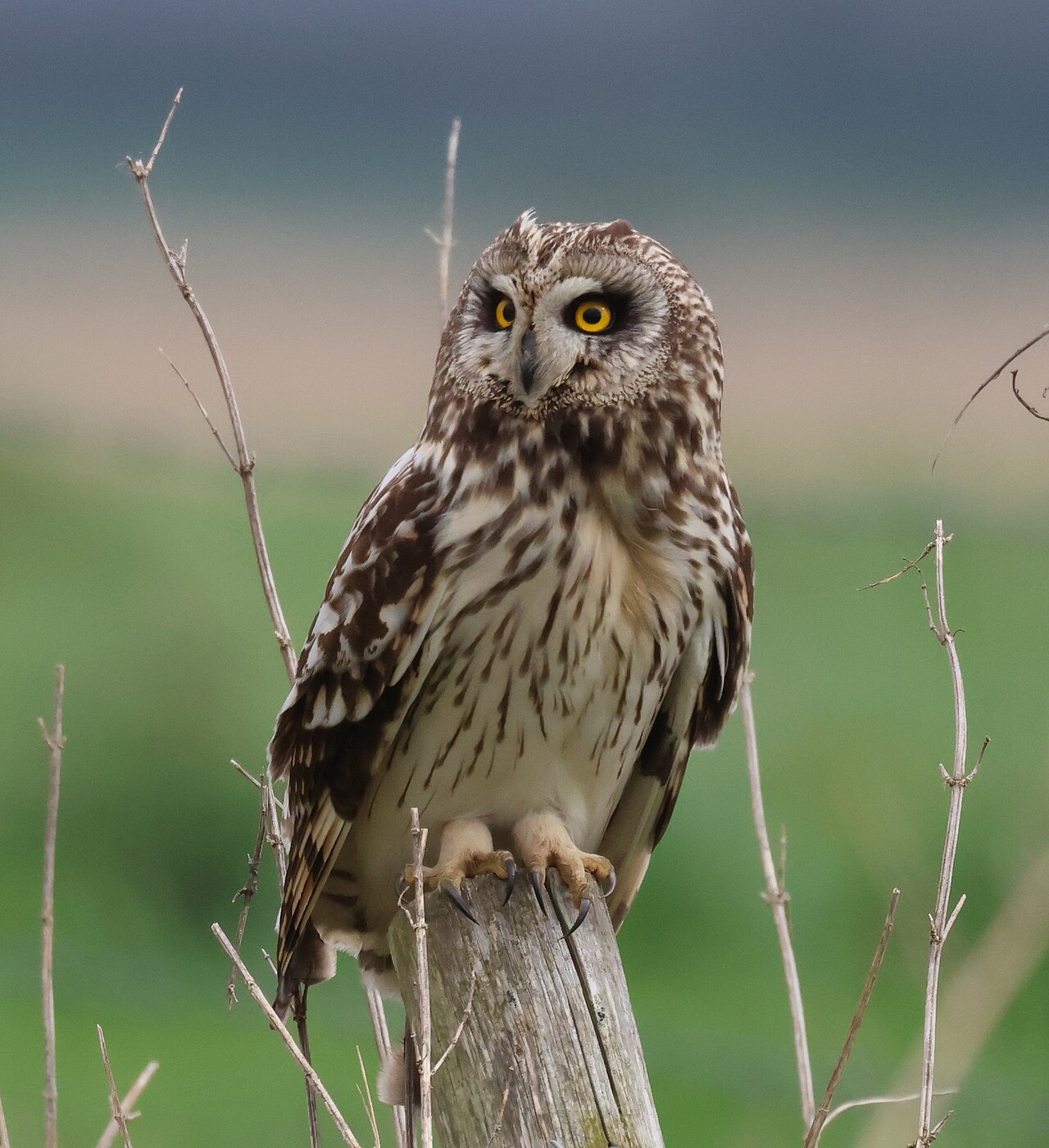
A medium-sized owl with long, broad, rounded wings and a short tail. The plumage is pale buff to brown, heavily streaked on breast and belly, with a pale facial disk in which yellow eyes are set off by a black rim. The ear tufts of its name are so short that they are usually invisible. Two marks settle it in flight: a dark comma at the wrist of the pale underwing and a pale patch on the primaries of the upperwing. Females average darker and warmer than males, which are paler and greyer. The flight is a series of stiff beats of the rounded wings alternating with glides — buoyant, low, and turning back again and again over the same piece of grassland.
Confusion species
Long-eared Owl is the most similar: it is slimmer, has long ear tufts, orange rather than yellow eyes and fine cross-barring on the belly as well as streaks, and it hunts at night; in flight it lacks the white trailing edge to the wing and the solidly dark wingtip. Northern Harrier quarters the same fields in the same way, but has narrow wings held in a shallow V, a long tail and a white rump. American Barn Owl is whiter below, has dark eyes in a heart-shaped face and hunts in the dark. Rough-legged Hawk hovers over the same ground but is far bulkier, with a banded tail ending in a broad dark band.
Habitat
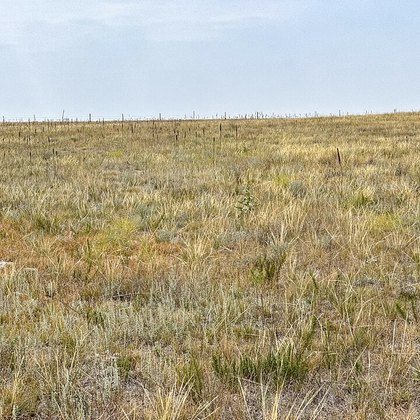
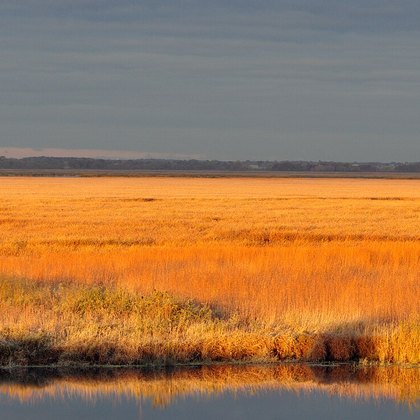
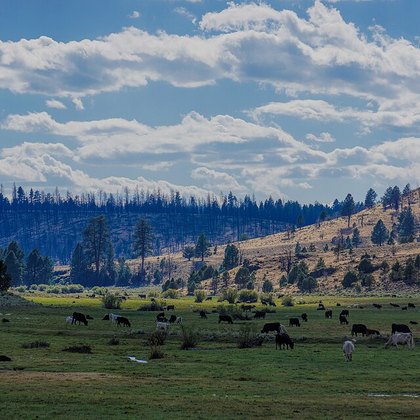
Large, unbroken open country with low vegetation: prairie, coastal grassland, heath, wet meadow, sedge marsh, sagebrush (grey-green wormwood scrub of the dry western interior), savanna, tundra, dunes and farmland. In winter add woodlot clearings, salt marsh, landfills and quarries. It is one of the few owls of the region that nest on the ground (like the Snowy Owl), in a scrape the female makes herself and lines with grass and down — which asks for ground without too many mammal predators and without mowing machines. Unlike most owls it is active by day and at dusk, because the voles it lives on are too.
Where the bird is most often found, arranged by the USNVC — the vegetation classification of the United States and Canada — and CMECS for sea and coast.


Range and movements
Breeds in Alaska, northern Canada and the northern United States, wintering south to the Gulf Coast and central Mexico; in the west and around the Great Lakes many birds stay all year. Settled island populations live on Cuba, Hispaniola and Puerto Rico and in the Hawaiian Islands, where it is called the pueo. Its movements are not fixed migration but follow the rodents: in a good vole year dozens of pairs will suddenly breed where there was nothing the year before. In eastern North America it declined sharply as a breeding bird during the twentieth century as hay meadows and large grasslands disappeared.
- Resident
- Breeding (summer)
- Winter
- Passage
- dark = core range, pale = thinly spread
Where and when to look
In winter go to a large, unbroken grassland or salt marsh an hour before sunset and stay in one spot: Short-eared Owls leave their ground roost at a fairly fixed time and then begin quartering low back and forth. Watch the wingbeat — stiff, slow and buoyant — and look for the dark comma on the underwing. Where one hunts there are often more; in vole-rich winters they roost by the dozen together in a single rough field.
Conservation
The IUCN lists the species as Least Concern (LC). Partners in Flight puts the breeding population at about 2.3 million birds. Across North America as a whole the trend since 1966 is fairly stable, but Canadian numbers are clearly falling, and the species is listed as a common bird in steep decline. The causes are loss and fragmentation of grassland to agriculture, grazing, recreation and development: it needs large, undivided tracts of open ground.
Scientific name
Asio flammeus | (Pontoppidan, 1763)
Pontoppidan described the species in 1763 as Strix Flammea; because it was later placed in another genus, author and year stand in parentheses. The genus Asio is the Latin name Pliny used for an owl with ear tufts. flammeus means 'flaming' or 'flame-coloured', after the warm yellow-brown of the plumage. The type locality is Sweden.