All species › Passerines › Wrens › Sedge Wren
Sedge Wren | Cistothorus stellaris
Zeggewinterkoning | Cucarachero culibarrado
The Sedge Wren is a small, short-billed wren of wet hayfields and shallow sedge meadows. It is one of the most nomadic territorial birds in North America: ground that holds dozens of singing males one year may be empty the next.
Voice
The song lasts one and a half to two seconds and opens with three or four high, staccato chip notes, followed by a dry, even rattle on one pitch. Males improvise their songs rather than learn them, so each individual has its own version; in countersinging with a neighbour they switch types rapidly. Singing goes on at night as well, and continues late into summer. The call is a dry, short chep, often in series.
Recording: Bill Pyle — CC BY-NC-SA 4.0 · Sam Rayburn Res.--Ebenezer Park, Jasper Co., Texas, United States · xeno-canto
Identification
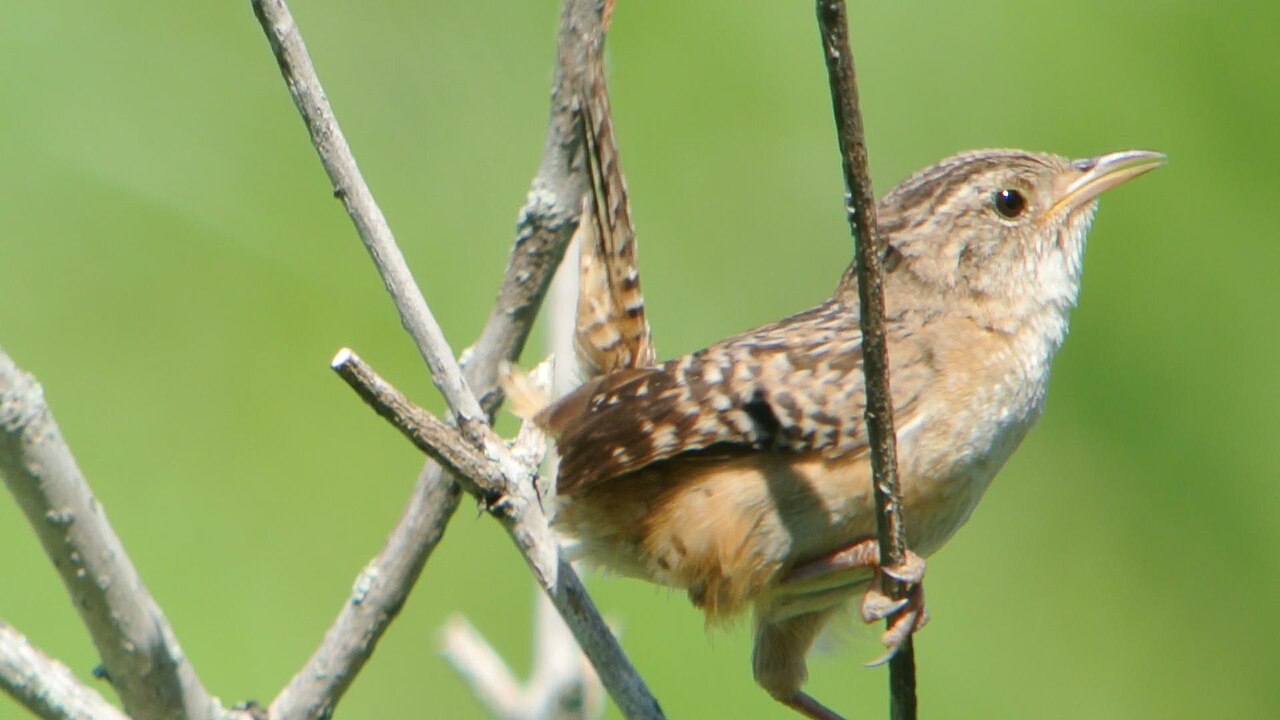
Small and compact, with a short, thin bill — brown above, yellow below — and pink legs. Crown and back are warm tawny-brown with fine black and white streaking that continues onto the crown. The eyebrow is pale buff and vague rather than sharply white. The rump is orange-brown and the short tail tawny with black bars, often held cocked. Throat and belly are white, flanks buff. Juveniles show less head streaking and a paler breast. The bird stays low in the vegetation and flies up only briefly and low before dropping back in.
Confusion species
Marsh Wren, the nearest relative, has a longer bill, a sharply drawn white eyebrow, a plain unstreaked brown crown and a black back panel with white streaks; its song is a loud rattling jumble rather than chips followed by one even trill. Habitat separates the two as well: Sedge Wren keeps to shallow sedge and grassland, Marsh Wren to deeper, reed-grown marsh. Northern House Wren has neither a streaked crown nor a streaked back. For a bird that stays out of sight, song is the most reliable character.
Habitat
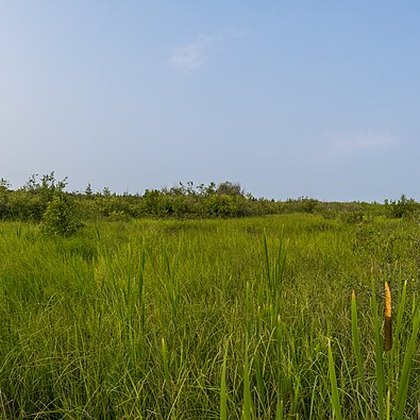
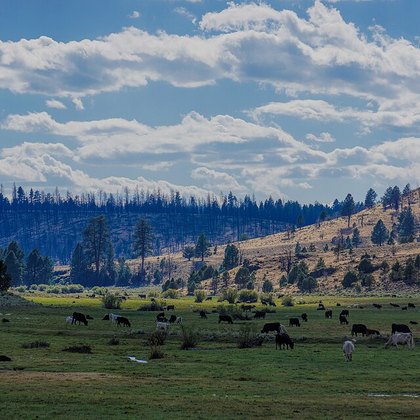
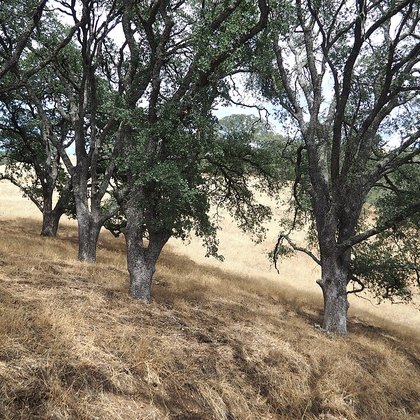
Dense, tall growth of sedges and grasses in wet meadows, flooded hayfields, bog edges and retired cropland, with the odd shrub interspersed; deep reed marsh with open water it avoids. Outside the breeding season it uses pine savanna, dry prairie, the edges of salt marsh and roadside verges — almost any place with enough cover and insects. The male builds several ball-shaped nests of grass and sedge, on the ground or up to a metre in the vegetation; the female chooses one and lines it with fine grass, feathers and fur.
Where the bird is most often found, arranged by the USNVC — the vegetation classification of the United States and Canada — and CMECS for sea and coast.




Range and movements
Breeds from southern Alberta, Saskatchewan and Manitoba east to southern Ontario, Quebec and New Brunswick, and south west of the Appalachians to Missouri and northern Arkansas. Winters from southern Arkansas and eastern Texas along the whole Gulf Coast to Florida and the southern Atlantic seaboard, and in a narrow belt of northeastern Mexico. The species shifts breeding sites according to water levels and breeds late as well: part of the population moves in midsummer and then starts a second brood on the central plains and in Iowa.
- Resident
- Breeding (summer)
- Winter
- Passage
- dark = core range, pale = thinly spread
Where and when to look
Stand at the edge of a wet hayfield at sunrise or in the last hour of light in June or July and listen for the run of chips followed by a dry rattle; the bird itself rarely shows. Come back in July or August, when many males only then sing in places that held nothing in May. Separating it from Marsh Wren goes quickest on song and on the streaked crown.
Conservation
The IUCN lists the species as Least Concern (LC). Partners in Flight puts the United States and Canada breeding population at 5.4 million birds. The Breeding Bird Survey shows a decline of about 3.35 per cent per year between 1993 and 2015, some fifty-four per cent in total, although the nomadic habit is hard to survey and blurs the trend. The loss of wet meadows and sedge marsh to drainage is the main pressure, followed by mowing of hayfields during the nesting season and collisions on nocturnal migration. Several states list the species as endangered or of special concern.
Scientific name
Cistothorus stellaris | (Naumann, 1823)
Johann Friedrich Naumann described the species in 1823 as Troglodytes stellaris, from material from Carolina; because it later moved to another genus, author and year stand in parentheses. Jean Cabanis introduced the genus Cistothorus in 1850, from Greek kistos 'shrub' and thouros 'leaping', after the way the birds move through the vegetation. The species name stellaris is Latin for 'starred' and refers to the white streaks on back and crown. The species was long treated as part of the widespread Cistothorus platensis; it is now kept separate.