All species › Passerines › New World sparrows › Sagebrush Sparrow
Sagebrush Sparrow | Artemisiospiza nevadensis
Nevadagors | Chingolo de Nevada
The Sagebrush Sparrow is the sparrow of the large unbroken sagebrush plains of the Great Basin and the Columbia Basin. It would rather run between the shrubs than fly, holding the tail raised as it goes, and sings from the top of a sage bush. Until 2013 it was treated as one species with Bell's Sparrow.
Voice
The song is a short, abruptly starting series of two or three high thin notes followed by a lower, slightly buzzy closing phrase, over in a few seconds and delivered from a shrub top. It carries across the open flat further than the size of the bird suggests. The call is a thin, clear tink, often in series as two birds follow one another through the shrubs.
Recording: Richard E. Webster — CC BY-NC-SA 4.0 · Jakey Valley, White Pine County, Nevada, United States · xeno-canto
Identification
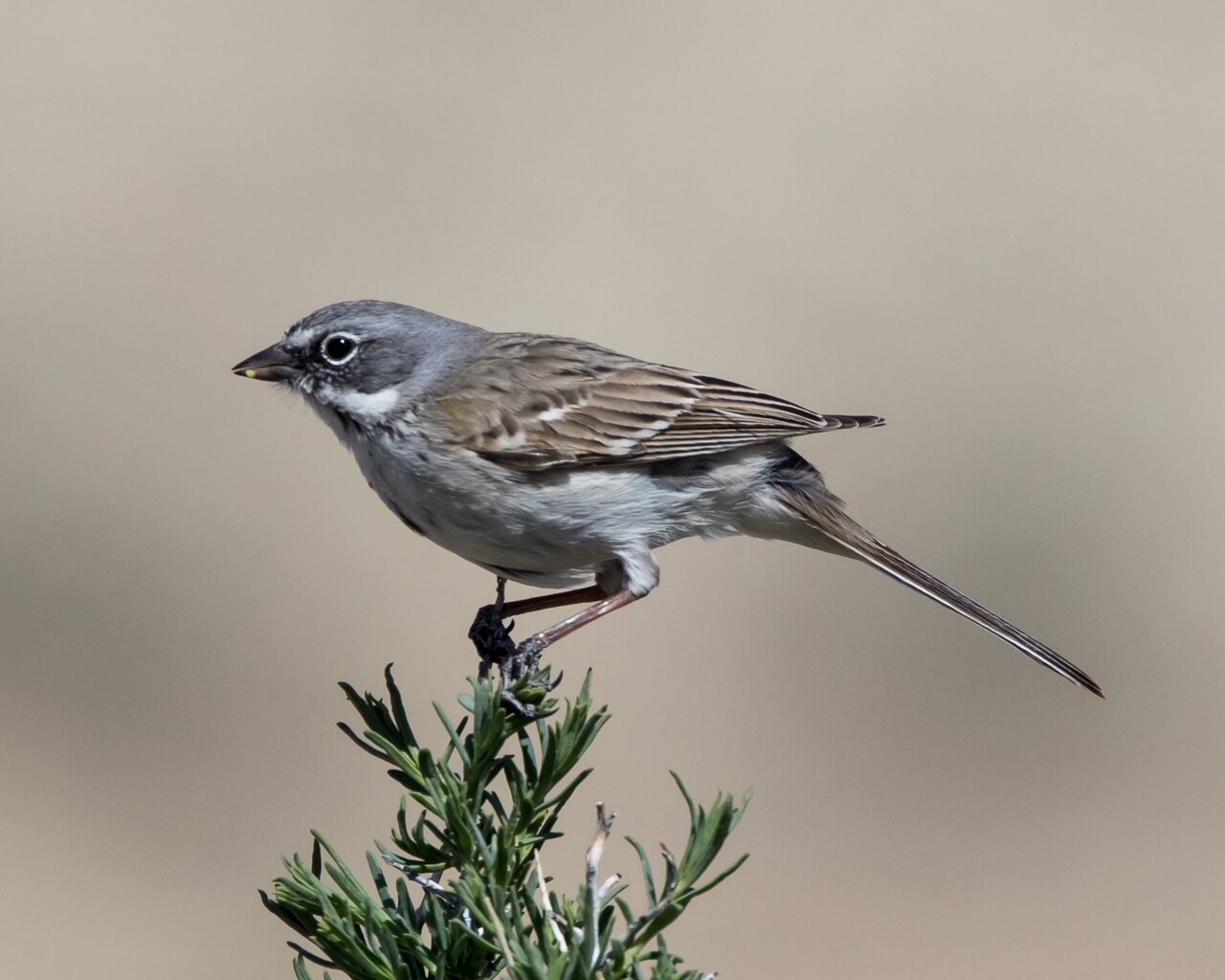
A small, long-tailed sparrow with a grey head, a white eye-ring, a white spot before the eye above a dark lore and a narrow dark malar stripe. The back is sandy brown with clear dark streaking; the underparts are white with a single dark spot in the centre of the breast and fine streaking along the flanks. The tail is long and dark and is held up while the bird walks. Male and female look alike. Birds in the western part of the range are paler and greyer than those in the east.
Confusion species
Bell's Sparrow is the only real confusion species and differs in three points: the head is a darker, more contrasting grey, the malar stripe is broader, blacker and sharply drawn, and the back is nearly unstreaked to faintly streaked rather than clearly streaked. Sagebrush Sparrow is paler, sandier and more finely marked overall. In winter, when both occur in the same desert scrub, the distinction often cannot be made with certainty and the region the bird comes from decides it. Black-throated Sparrow has a black throat and a sharp black-and-white face pattern without a breast spot.
Habitat
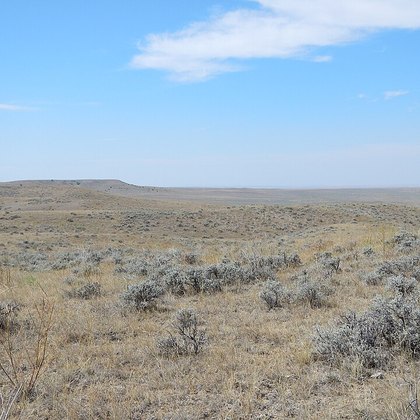
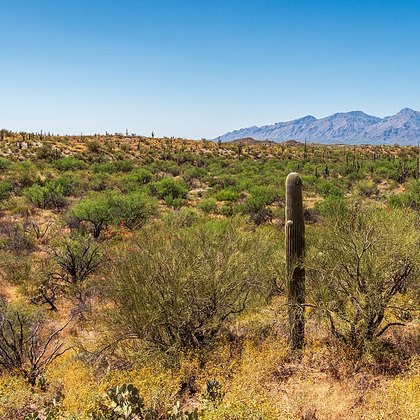
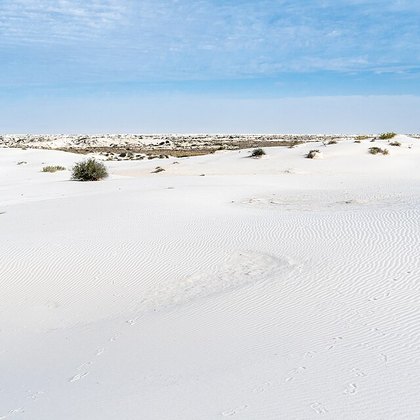
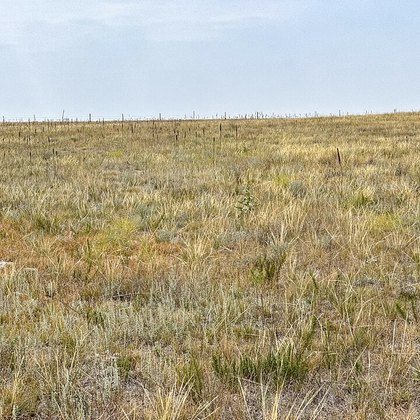
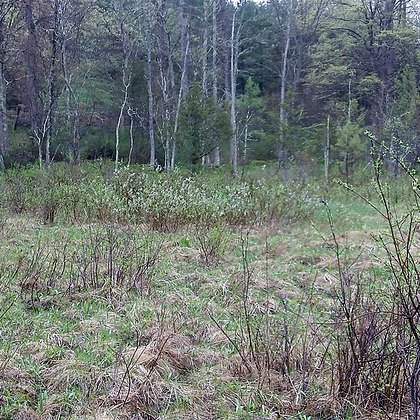
Strongly tied to big sagebrush (Artemisia tridentata) in extensive, little-disturbed flats, and in addition to mixed shrubland with bitterbrush (a dry western steppe shrub), saltbush and greasewood. It holds large territories for a sparrow and returns to the same site year after year. On migration and in winter it uses dry grassland, desert scrub and yucca and cactus flats.
Where the bird is most often found, arranged by the USNVC — the vegetation classification of the United States and Canada — and CMECS for sea and coast.
Range and movements
Breeds in the interior western United States: from eastern Washington and southern Oregon through Idaho, Nevada and Utah to western Wyoming, western Colorado and southwestern Montana, and in eastern California. Almost the whole population leaves; winter is spent in the deserts of Arizona, southern New Mexico, west Texas and northern Mexico, with Sonora and Chihuahua as the core. In southern and western Nevada a small number stays all year. The division among Mexican states is given as an approximation.
- Resident
- Breeding (summer)
- Winter
- Passage
- dark = core range, pale = thinly spread
Where and when to look
Go to an unbroken sagebrush flat at sunrise in April or May and look for the singing birds on the shrub tops; later in the day they drop to the ground and show only as a running silhouette between the bushes. Then watch for the raised tail — that behaviour identifies the species even at distance.
Conservation
The population is estimated at at least 5.4 million birds and the species is listed as Least Concern (LC), but it is a Tipping Point species on the yellow alert list (State of the Birds report 2025, the biennial North American status report). The pressure lies in the ecosystem of the sagebrush (grey-green wormwood scrub of the dry western interior) itself: fires returning more often through introduced cheatgrass (an introduced annual grass that crowds out the sagebrush steppe), conversion to cropland, grazing and fragmentation by roads and energy development all reduce the unbroken flats the species depends on. Small, isolated patches of sagebrush are little used.
Scientific name
Artemisiospiza nevadensis | (Ridgway, 1874)
Ridgway described the form in 1874 as Poospiza belli nevadensis, from a specimen from the West Humboldt Mountains in Nevada; raised to species rank and moved to another genus, author and year stand in parentheses. The genus Artemisiospiza was introduced in 2011 and combines Artemisia, the plant genus of wormwood and sagebrush, with Greek spiza 'finch'. Nevadensis means 'of Nevada', after the type locality. The English name names the plant, the Dutch name the state.