All species › Waders, gulls and terns › Sandpipers and allies › Ruff
Ruff | Calidris pugnax
Kemphaan | Combatiente
Ruff is the wader with the greatest difference between the sexes: the male is a quarter larger than the female and in spring carries a ruff and two head tufts whose colour comes out differently in almost every bird. On a communal display ground those males stand side by side in three recognisable versions. It does not breed in North America: it comes here from across the ocean, in small numbers every year, chiefly in late summer.
Voice
This is one of the quietest waders; even on the display ground the performance goes on almost without voice. What you hear is at most a short, gruff, low note without clear shape, usually as a bird takes off or is driven away. There is no song to recognise and no fixed flight call of the kind the shanks have. Watch a flock on a flooded meadow and the sound of the place proves to come from the other species. On the display ground posture, wingbeat and the raising of the ruff do the work the voice does elsewhere.
Recording: Stanislas Wroza — CC BY-NC-SA 4.0 · Neljan Tuulen Tupa, Finland · xeno-canto
Identification
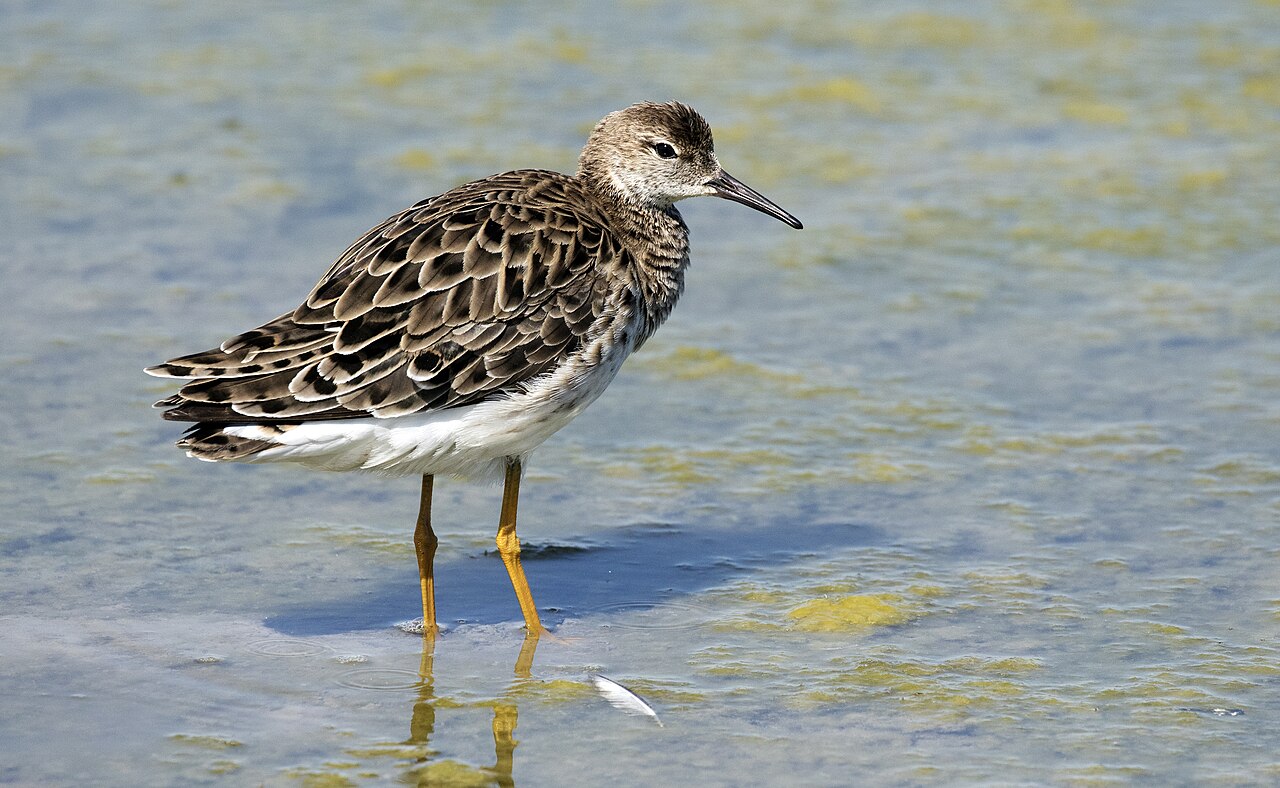
The breeding male has a broad ruff around the neck and two tufts on the head, black, white, rufous or barred, with bare, yellow to orange warty facial skin; the female is much smaller and plain grey-brown with dark feather centres. Outside the breeding season both are grey-brown with neat pale feather edges, with a small head, a short, slightly curved bill and long legs that are orange, yellow or greenish. Juveniles are warm buff below without streaking, with scaly upperparts and a dark crown. Three kinds of male stand together on the display ground: most are independents with a dark or patterned ruff that hold a spot of their own, about one in ten is a satellite with a white ruff that is tolerated on another bird's spot, and a very few are faeders, males in the plumage of a female. In flight a narrow white stripe runs along the wing and, above all, two white ovals show on either side of the dark rump. It walks steadily and somewhat hunched, with the head drawn in.
Confusion species
Lesser Yellowlegs (Tringa flavipes) has a straight, thin bill, a slimmer neck and a white rump instead of two white ovals. Buff-breasted Sandpiper (Calidris subruficollis) is smaller and shorter-legged, plain buff below, and shows white under the wing in flight but nothing on the rump. Pectoral Sandpiper (C. melanotos) has a sharp border between streaked breast and white belly, which Ruff lacks. With a large male, confusion with Greater Yellowlegs (Tringa melanoleuca) can occur: that bird is longer-billed, noisy, and wades up to the belly.
Habitat
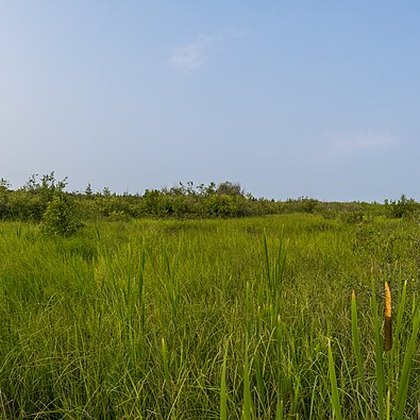
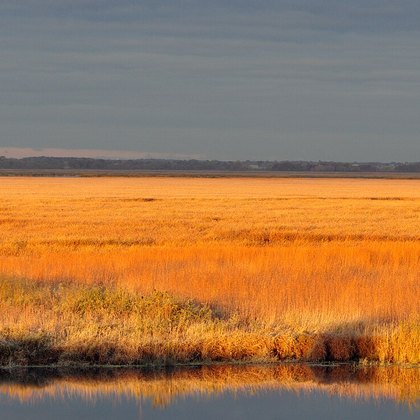
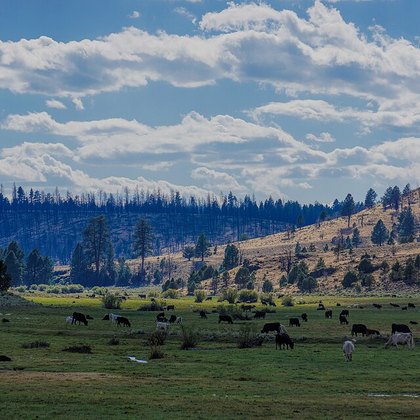
On migration and in winter this is a bird of shallow fresh and brackish water with short vegetation: flooded meadows, sedge marsh, the drying margins of pools and lakes, rice fields, salt pans and sewage ponds. It finds food walking and picking at the waterline and probes only shallowly; in winter it takes seeds and rice alongside insects and worms. It uses dry ground as well, from short grassland to arable fields, as long as water is near. It breeds in wet meadows, peat bogs, river plains and coastal tundra across northern Eurasia. In North America it is usually found on a flooded field or an impoundment, seldom on open mud.
Where the bird is most often found, arranged by the USNVC — the vegetation classification of the United States and Canada — and CMECS for sea and coast.


Range and movements
The breeding range runs from Scandinavia and northern Ukraine eastward across the whole of Siberia; it winters from southern Europe through the whole of Africa and eastward across southern Asia to Japan and the Philippines. Of all the waders of Eurasia this is one of the most regular visitors to North America: a few dozen arrive each year, on both coasts, more often in autumn than in spring, and less often inland. The autumn birds are nearly all juveniles, appearing in August and September; in spring they are adults in or approaching breeding plumage. In western Alaska it is present in small numbers every year and nesting has been recorded on a single occasion. In western Europe the breeding range has shrunk sharply within a century.
Where and when to look
Look for it in August and September on a flooded field, an impoundment or a sewage works, among Lesser Yellowlegs. Watch for a bird with a small head on a long neck, a short curved bill and orange-yellow legs, walking more calmly than the rest. When it flies, the two white ovals beside the dark rump settle it. Watch the size too: two Ruffs side by side can differ so much that they look like two species.
Conservation
The Red List holds the species as Least Concern (LC); the world population runs into the millions, but the trend is downward. In western Europe the decline is steep: drainage of wet meadows, earlier and more frequent mowing and fertiliser have brought the number of breeding pairs in countries such as the Netherlands and Germany down to a fraction of what it was, and the weight of the breeding population now lies in Russia. On the way, hunting counts as well, above all in West Africa, where the birds gather in large numbers on rice fields. For North America none of this touches a breeding stock, but it does decide how many visitors come across.
Scientific name
Calidris pugnax | (Linnaeus, 1758)
Linnaeus described the species in 1758 as Tringa Pugnax, in the first volume of the tenth edition of the Systema Naturae; since it was placed in the genus Calidris, author and year stand in parentheses. pugnax is Latin for 'combative', from pugnare, 'to fight', after the mock fighting of the males on the display ground. For a long time the species stood in a genus of its own, Philomachus, from the Greek philos, 'fond of', and machē, 'battle', which repeats the same image. The type locality was given as Europe and later restricted to Sweden. The English name Ruff refers to the collar of the male; the Dutch name kemphaan, 'fighting cock', refers to the same mock combat as pugnax.