All species › Passerines › Nuthatches › Pygmy Nuthatch
Pygmy Nuthatch | Sitta pygmaea
Dwergboomklever | Trepador enano
The Pygmy Nuthatch is the smallest nuthatch in North America and is tied to the open pine forest of the West, above all to ponderosa pine. It lives in parties the year round, breeds with helpers at the nest, and in winter roosts with dozens of birds packed into a single cavity.
Voice
The voice is an incessant, high pit-pit or ti-di, often in short runs and from several birds at once, so that a party produces a continuous piping high in the pines. Excitement turns it into a fast, chattering rattle. There is no song in the ordinary sense; the contact call itself serves as the territorial signal. The sound carries far and usually betrays the birds before you see them.
Recording: Greg Irving — CC BY-NC-SA 4.0 · Hog Ranch Road (near Wenas / Cascade Camp), Kittitas County, Washington, United States · xeno-canto
Identification
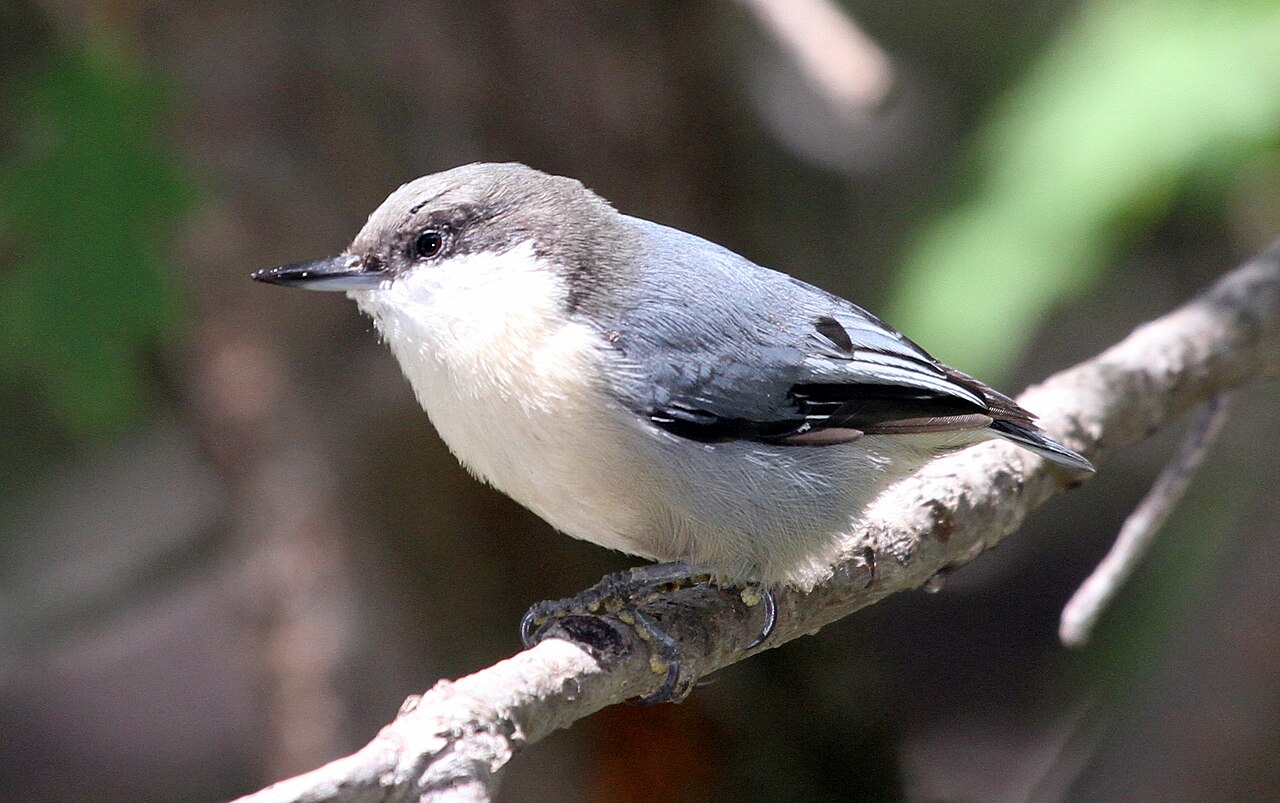
A small, short-tailed nuthatch with a grey-brown cap running down to just below the eye, a dark eye-line and blue-grey upperparts. The underparts are dingy white to buff, the throat white. A small pale spot usually shows on the nape at the edge of the cap. The bill is straight and sharp, the tail short with a white band that shows mainly in flight. The sexes are alike. It climbs in all directions over trunk and branches and often hangs upside down from needle clusters.
Confusion species
Brown-headed Nuthatch is almost identical in shape, but has a warmer brown cap and lives in the pine forests of the Southeast — the two ranges nowhere meet. The best separation from Red-breasted Nuthatch is the cap: on Pygmy Nuthatch it is dull grey-brown and extends below the eye, while Red-breasted has a black cap, a white supercilium and rusty underparts. White-breasted Nuthatch is much larger, with a black cap and a white face.
Habitat
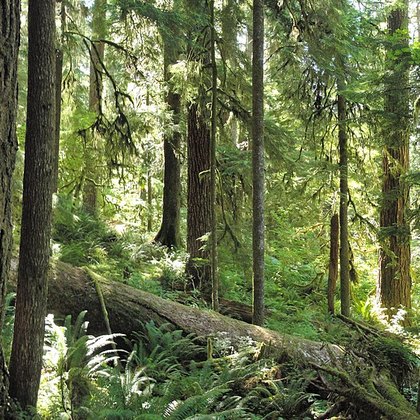
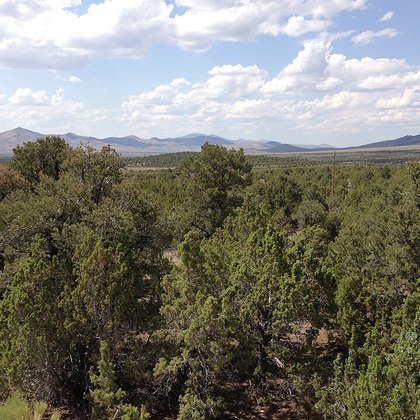
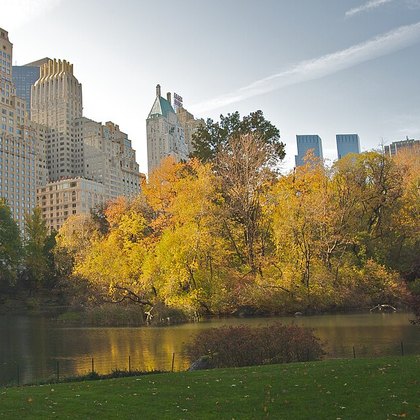
Open, mature pine forest of long-needled species, first of all ponderosa pine, and also Jeffrey pine and, in California, Monterey and bishop pine. It needs coarse old trees and dead snags, since every nest and roost is in an excavated or existing cavity. In the mountains it occurs above three thousand metres. Planted and naturalised pines in parks and cemeteries along the California coast count as well.
Where the bird is most often found, arranged by the USNVC — the vegetation classification of the United States and Canada — and CMECS for sea and coast.
Range and movements
A resident of the West, from southern British Columbia through the mountains of Washington, Oregon, Idaho and Montana south to California, Nevada, Utah, Colorado, Arizona and New Mexico, with eastern outposts in the Black Hills of South Dakota, the Pine Ridge of Nebraska and the mountains of West Texas. In Mexico it follows the Sierra Madre Occidental from Sonora, Chihuahua and Durango southwards and also occupies the pine forests of the central volcanic belt; in Baja California it lives in the Sierra de Juárez and the Sierra San Pedro Mártir. It does not migrate, but drops a little lower in hard winters.
- Resident
- Breeding (summer)
- Winter
- Passage
- dark = core range, pale = thinly spread
Where and when to look
Walk in open ponderosa forest and listen upwards: the unbroken piping of a party in the crowns is the first thing you pick up. Then look for the moving specks right at the top, for it forages much higher than the other nuthatches. On winter evenings it is worth watching a dead snag just before sunset: the whole party then files into the same roost cavity.
Conservation
Partners in Flight puts the world population at about 3.3 million birds and gives the species a low concern score; numbers have been stable over the long term. The pressure is on forest structure: logging of old trees, removal of dead snags and the suppression of natural fire make the forest denser and poorer in cavities. Where old, open ponderosa forest is managed with fire the species holds its ground; in Baja California and central Mexico the populations are small and isolated from one another.
Scientific name
Sitta pygmaea | Vigors, 1839
Vigors described the species in 1839 as Sitta pygmaea, from a specimen taken at Monterey in California; as it still stands in the same genus, author and year go without parentheses. Sitta is Greek sittē, the name Aristotle used for a nuthatch. The species name pygmaea is from Greek pygmaios 'dwarfish', after its size: at nine to eleven centimetres this is the smallest nuthatch of the continent. The English and Dutch names say the same thing.