All species › Waders, gulls and terns › Plovers and lapwings › Northern Lapwing
Northern Lapwing | Vanellus vanellus
Kievit | Avefría europea
The Northern Lapwing is the black-and-white field bird of Eurasia, with a thin upswept crest and broad, round wings that separate it in flight from every other wader. In North America it is a vagrant: it only ever blows in, almost always in late autumn or winter, and then sometimes dozens at a time. Newfoundland lies on the same latitude as Ireland and catches the greater part of the records.
Voice
The call is a nasal, far-carrying pee-wit, from which the Dutch name kievit is taken (as is the English peewit) and which on the wet meadows there is the sound of spring. In display flight, on swinging, tumbling wingbeats, it turns into a hoarse, drawn-out cher-weet cherry-weet, with the audible throb of the wings underneath it. Disturbance at the nest brings a hard, repeated kweet as the bird turns low over the intruder's head. Vagrants in North America are usually silent: they stand alone or in twos and threes and call only as they take off.
Recording: Petter Westberg — CC BY-NC-SA 4.0 · Degerfors, Degerfors Municipality, Örebro County, Sweden · xeno-canto
Identification
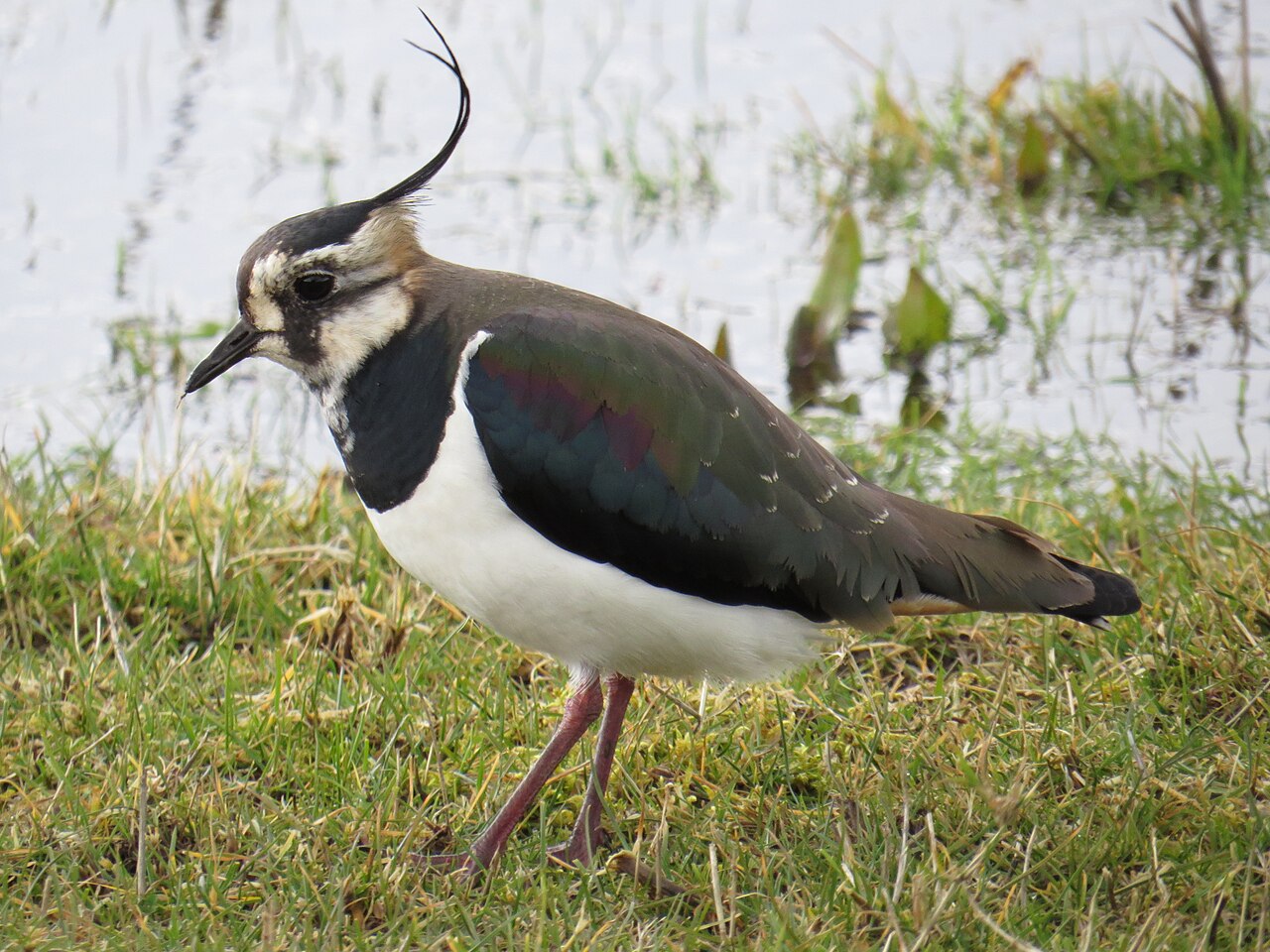
A medium-sized wader with a long, thin, upcurved crest of a few narrow feathers, obvious even at distance. From above it looks black, but in sunlight the back and wing coverts are dark green with a purple and bronze gloss; throat and breast are black, the belly white and the undertail coverts warm rust. The female has a shorter crest and usually some white in the black throat; in winter both sexes take on a buff face and pale feather edges on the back. Juveniles have a short crest and clearly scaled upperparts. In flight the wings are broad, blunt and rounded at the tip, black below with a white rear body, and the beat is slow and rocking.
Confusion species
No other wader in the guide area has a crest, and none has wings as broad and round-ended; once the bird has been seen in flight it is not confused again. On the ground and at distance it can suggest a Black-bellied Plover (Pluvialis squatarola), but that bird is speckled grey rather than glossy dark, has no crest, shows black axillaries and has pointed wings. American Golden-Plover is slimmer, spangled gold-brown and also pointed-winged. A winter-plumaged lapwing on a distant stubble field is the most often overlooked: it then looks brown and crestless, and only the wing shape as it flushes settles the matter.
Habitat
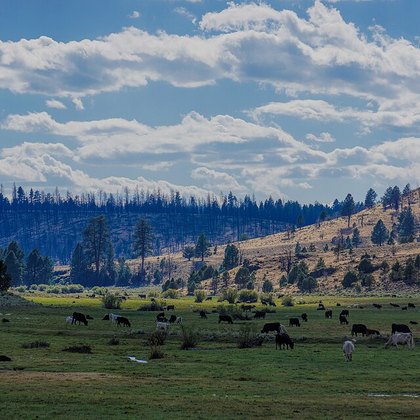
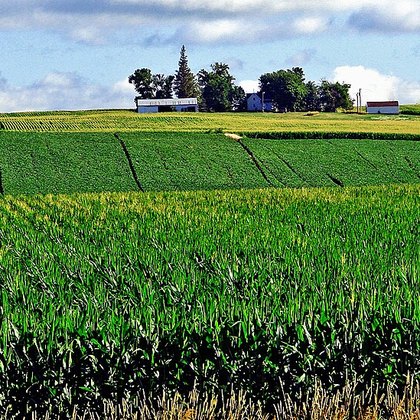
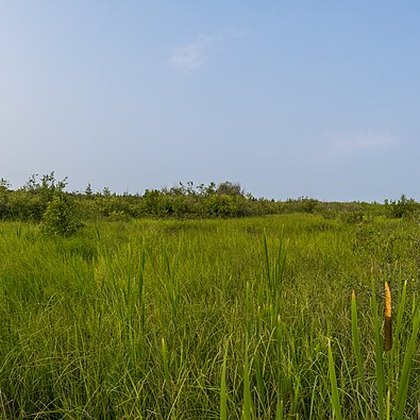
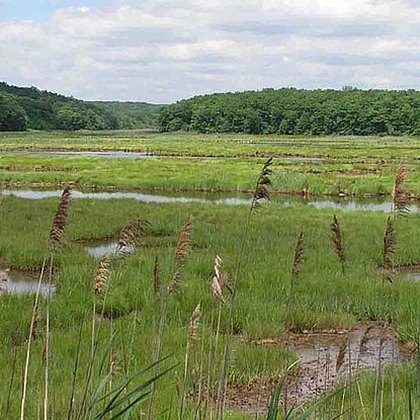
On its breeding grounds it is a bird of open, low and damp country: wet meadows, grazed coastal marsh, drained peat polder and fields with a short or newly sprouting crop. In North America the birds turn up in exactly that kind of ground near the coast — grazed fields, stubble, airfield grass and golf courses, usually within a few kilometres of the sea. It avoids woodland, tall grass and steep slopes, and needs a flat surface it can see across. In hard frost it moves to tidal flats and to fields where the ground is still open.
Where the bird is most often found, arranged by the USNVC — the vegetation classification of the United States and Canada — and CMECS for sea and coast.
Range and movements
The Northern Lapwing breeds across temperate and subarctic Eurasia, from Ireland and the Iberian Peninsula to south-eastern Russia and north-eastern China, and winters from North Africa and western Europe east to Japan and northern Vietnam. In North America it is a vagrant that arrives almost only on an easterly: in a strongly negative North Atlantic Oscillation the winds over the ocean reverse, and birds on their way to Ireland and Britain are carried west instead. That produced influxes in December 1927, when hundreds arrived, in January 1966, in 1996–1998, in 2012–2013 and in 2021–2022. Records run from Newfoundland and Labrador in the north to Virginia in the south, with outliers to Ohio, Florida and Bermuda, and fall almost entirely between November and March.
Where and when to look
Watch in the weeks after a long spell of hard easterly wind across the North Atlantic, usually from late November to January, and then work the grazed fields and coastal stubble of the Avalon Peninsula in Newfoundland. A lapwing sits low and moves little; scan the flat with binoculars for the crest and for the sharp line between black breast and white belly. If it flies, the broad black-and-white wing settles the identification at a glance.
Conservation
The Red List rates the Northern Lapwing as Near Threatened (NT). In Europe, which holds the centre of the world population, numbers have been falling for decades through the drainage of grassland, earlier and more frequent mowing and the conversion of grass to arable, all of which cost nests and chicks. For the North American occurrence that means something simple: the smaller the wintering population on the Irish and British side of the ocean, the fewer birds a storm can bring across.
Scientific name
Vanellus vanellus | (Linnaeus, 1758)
Linnaeus described the species in 1758 in the tenth edition of Systema Naturae as Tringa Vanellus; because it was later placed in another genus, author and year stand in parentheses. The genus Vanellus was introduced by Brisson in 1760; it is a diminutive of Latin vannus, the flat basket used for winnowing grain, after the fanning sound of the broad, slow wingbeat. Since the species name repeats the genus name, the bird is called Vanellus vanellus, a tautonym, and not a rare thing among bird names. Linnaeus gave the locality as Europe and Africa; the type locality was later restricted to Sweden.