All species › Passerines › Longspurs and snow buntings › McKay's Bunting
McKay's Bunting | Plectrophenax hyperboreus
McKays sneeuwgors | Escribano de McKay
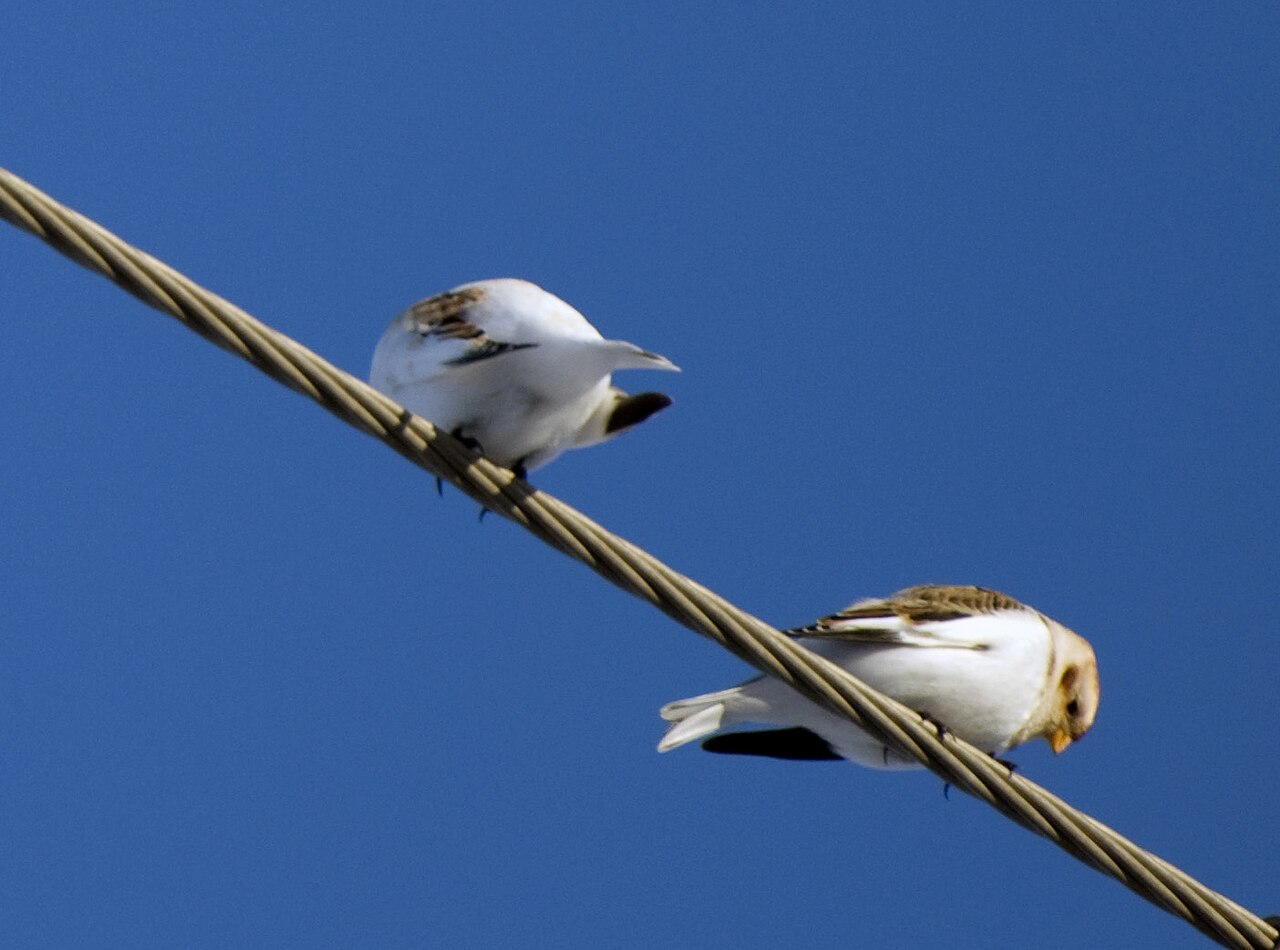
McKay's Bunting breeds on two uninhabited islands in the Bering Sea and nowhere else in the world. It is the whitest songbird in North America: a breeding male is almost entirely white, with black only on the wingtips and the outer tail feathers. Outside the breeding season it moves to the west coast of Alaska.
Voice
The song is a short, clear warble of three to five syllables, churee-churee-chureewee, delivered from a boulder or in a brief song flight. The calls are a dry rattling tirririt and a clear whistled tew, the same repertoire as Snow Bunting and not separable from it in the field. In winter flocks on the coast the rattle is what you hear first, often before the birds lift off.
No recording with a suitable Creative Commons licence has been found for this species yet; what to listen for is described below.
Identification
The breeding male is white with black wingtips; only the tips of the primaries and a narrow line on the outer tail feathers are dark, and the back is unmarked white. The female has a lightly streaked greyish back and more black in the wing, but stays much whiter than a female Snow Bunting. In winter plumage both sexes take on warm brown on the crown, cheeks and breast sides, an orange-buff wash over an otherwise white bird. The bill is black in summer, yellow with a dark tip in winter.
Confusion species
Snow Bunting is the only real confusion species and winters in the same coastal areas. Look at the back and the wing: a male Snow Bunting has a black back and far more black in the wing, a male McKay's a white back with black essentially confined to the wingtip. In females the difference is one of degree and not every bird can be identified. On St. Lawrence and the Pribilofs intermediate birds occur whose pattern falls exactly between the two species.
Habitat
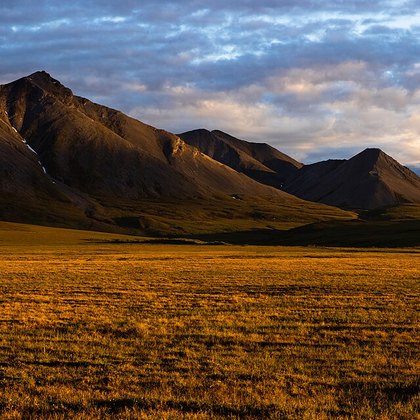
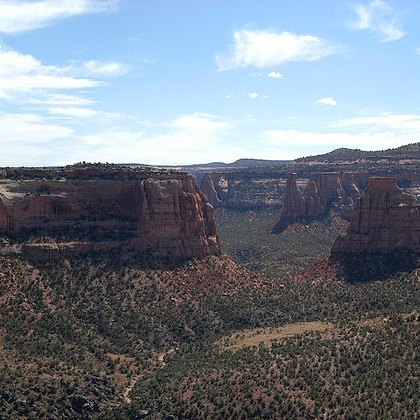
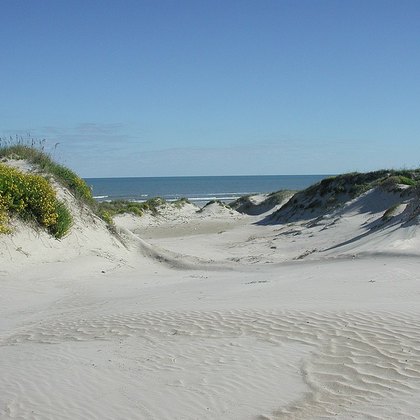
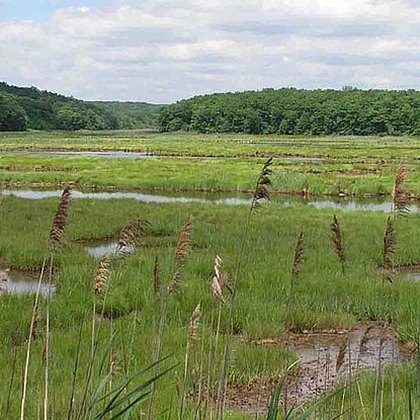
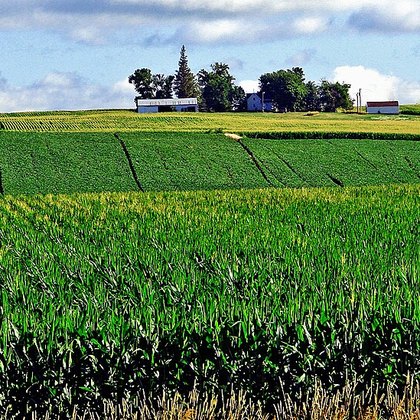
Breeds on shingle beaches, rock rubble and low tundra slopes on St. Matthew and Hall, nesting in a hollow driftwood log, a rock crevice or under a stone. Outside the breeding season it uses the coastal plains of western Alaska: beach ridges, salt marsh, road verges and stubble fields and field edges near the villages, where it takes grass and sea-rocket seed on snow-free patches.
Where the bird is most often found, arranged by the USNVC — the vegetation classification of the United States and Canada — and CMECS for sea and coast.
Range and movements
The entire breeding range consists of St. Matthew Island and neighbouring Hall Island in the central Bering Sea, together under 400 square kilometres. In September and October the birds cross to the mainland and winter along the west coast of Alaska, roughly from Nome south to the Yukon-Kuskokwim delta and Bristol Bay. Small numbers reach the Pribilofs, St. Lawrence and the Aleutians, and on some of those islands non-breeding birds also remain through the summer. Outside Alaska the species has hardly ever been recorded.
- Breeding (summer)
- Winter
- Passage
- dark = core range, pale = thinly spread
Where and when to look
The best chance is winter in and around Nome, where small parties feed along the coastal roads and by the harbour among Snow Buntings. Look for a bird that appears almost wholly white in flight: the black in a Snow Bunting's wing stands out against the sky, that of a McKay's barely does. For borderline birds a photograph of the spread wing settles it.
Conservation
Surveys on St. Matthew and Hall gave about 31,600 birds in 2003 and about 19,500 in 2018, a decline of some 38 per cent in fifteen years, or over 3 per cent a year. The researchers found no evidence for predators or competitors as the cause and point instead to decreasing snow cover, warmer summers, coastal erosion and severe storms on the wintering grounds. They conclude that by international criteria the species qualifies for a higher category; the Red List still treats it as Least Concern (LC). The introduction of rats, weasels or foxes to the two islands could remove the population in a short time.
Scientific name
Plectrophenax hyperboreus | Ridgway, 1884
Ridgway described the species in 1884 from material taken at St. Michael on Norton Sound and named it for Charles Leslie McKay, a United States Signal Service observer who collected in Alaska and drowned in Bristol Bay in 1883. The genus Plectrophenax was introduced by Stejneger in 1882, from Greek plēktron 'spur' and phenax 'impostor', because the birds resembled the genus Plectrophanes then in use without belonging to it. The species name hyperboreus means 'of the far north', after the Hyperboreans, the people the Greeks placed beyond the north wind.