All species › Gamebirds › Partridges, pheasants, grouse and allies › Lesser Prairie-Chicken
Lesser Prairie-Chicken | Tympanuchus pallidicinctus
Klein prairiehoen | Gallo de las Praderas Chico
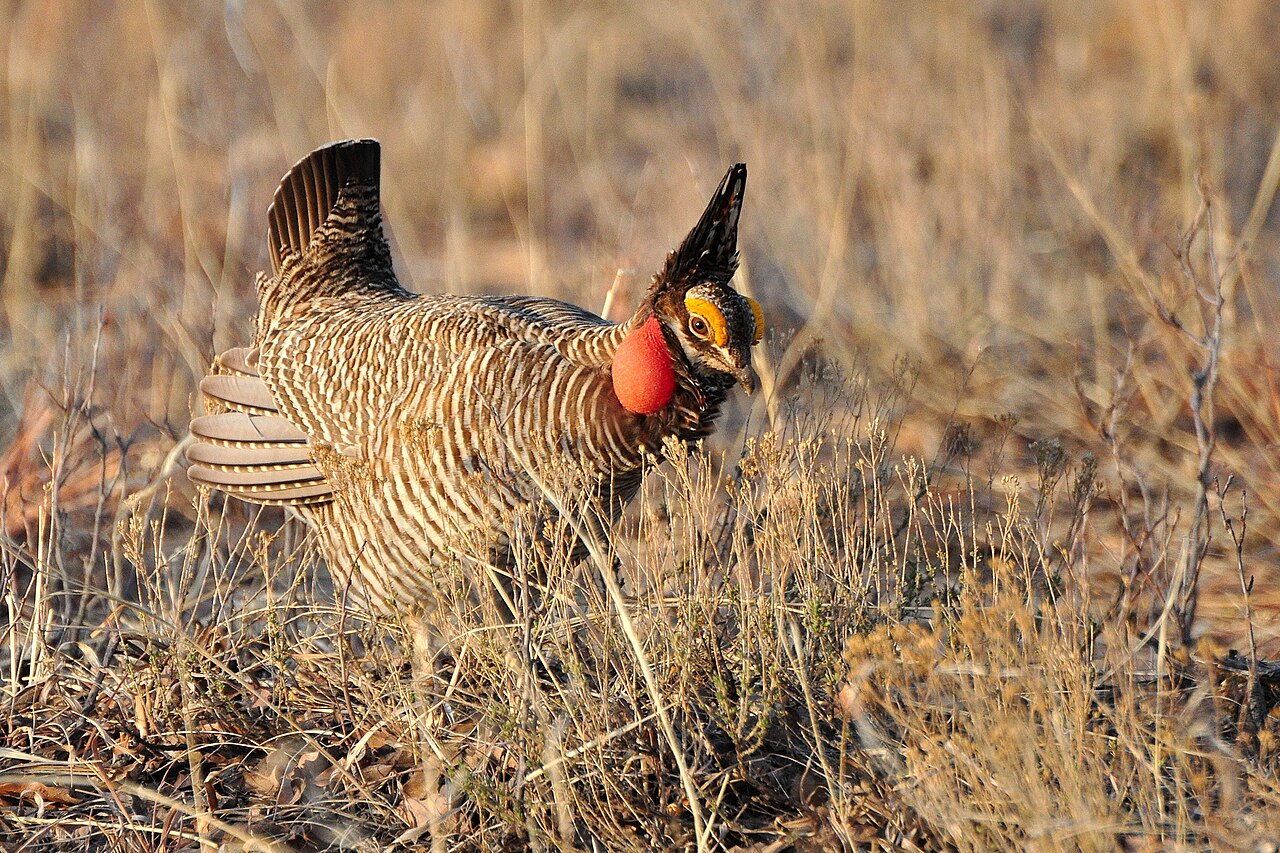
Lesser Prairie-Chicken is the smallest and rarest of the three prairie grouse, confined to the driest edge of their shared range: the sand sagebrush and shinnery oak shrubland of the southern Great Plains. In display the male inflates two small, reddish-purple air sacs and leaps up and down in short, sharp jumps. More than eighty-five per cent of its original range has been lost, and what remains is heavily fragmented.
Voice
The booming of Lesser Prairie-Chicken is thinner and higher-pitched than that of Greater Prairie-Chicken, a gurgling, throbbing sound amplified by the inflated reddish-purple neck sacs and audible clearly at a few hundred metres. Between booms come cackling and gabbling notes, especially during skirmishes between rival males on the display ground. In the so-called 'flutter-jump' the bird makes a short leap with clattering wings, which produces a rattling sound of its own. Outside spring the species is quiet.
Recording: Matt Wistrand — CC BY-NC-SA 4.0 · Logansport Township (near Winona), Logan County, Kansas, United States · xeno-canto
Identification
A stocky, medium-sized grouse, smaller and lighter than Greater Prairie-Chicken, with a large, round body, small head and short bill. The plumage is more finely and palely barred than its larger relative, in sandy and rust-brown tones that blend well against the soil of the sand sagebrush country. The male shows shorter pinnae than Greater Prairie-Chicken in display, and reddish-purple rather than orange neck sacs; the female lacks both and is even more finely marked. In flight the species is, like its relatives, laboured, with short bursts of rapid wingbeats between glides.
Confusion species
Greater Prairie-Chicken (Tympanuchus cupido) is larger and more darkly barred, with orange rather than reddish-purple neck sacs; the two ranges lie hundreds of kilometres apart, though occasional hybridization occurs where released or wandering birds meet. Sharp-tailed Grouse (Tympanuchus phasianellus) is slimmer and has a pointed rather than rounded tail; its range lies mostly north of that of Lesser Prairie-Chicken. Within its own range confusion is possible mainly with the female Ring-necked Pheasant, which has a far longer tail and no neck sacs.
Habitat
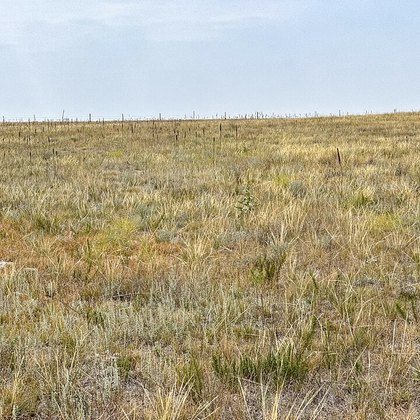
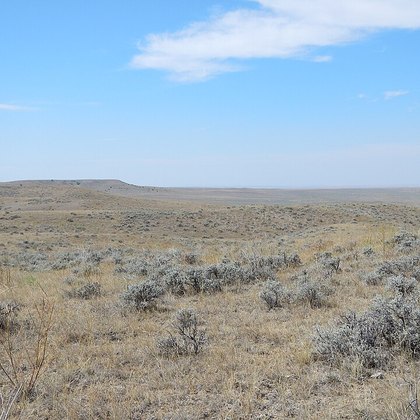
Shortgrass prairie with a dense understory of sand sagebrush or shinnery oak, on the sandy soils of the southern Great Plains. The shrubs are essential as shelter from the intense sun and from predators and provide buds as winter food, while open, short grassland serves as the display ground. The species avoids both fully open, shrubless prairie and unbroken cropland; the Conservation Reserve Program, which converts cropland back to grassland, has locally helped restore habitat.
Where the bird is most often found, arranged by the USNVC — the vegetation classification of the United States and Canada — and CMECS for sea and coast.
Range and movements
Resident in a heavily fragmented range across the extreme southern Great Plains: western Kansas, western Oklahoma, the Texas Panhandle including the Llano Estacado, eastern New Mexico and southeastern Colorado. It does not migrate and stays close to its display ground year-round. The range was once continuous across a far larger part of these five states; conversion of prairie to cropland and, since the late twentieth century, oil and gas development and wind farms have reduced the habitat to isolated islands.
- Passage
- dark = core range, pale = thinly spread
Where and when to look
Look before sunrise in April for a display ground in the sand sagebrush country of southwestern Kansas or the Texas Panhandle, preferably through one of the local viewing blinds opened during the display season — the birds are wary and abandon the ground at the slightest disturbance. Stay seated until the display winds down on its own.
Conservation
Vulnerable (VU): the population has fallen by roughly ninety-seven per cent since the nineteenth century and now numbers a few tens of thousands of birds spread across five states. Conversion and fragmentation of prairie by cropland and overgrazing remain the main threats, compounded by oil, gas and wind energy infrastructure built on the remaining prairie. The species' federal protection status in the United States has repeatedly been the subject of legal dispute in recent years.
Scientific name
Tympanuchus pallidicinctus | (Ridgway, 1873)
Ridgway described the species in 1873 as a pale western form of Greater Prairie-Chicken, Cupidonia cupido var. pallidicincta; because it has since been treated as a species in its own right within Tympanuchus, author and year stand in parentheses. pallidicinctus is compounded from the Latin pallidus ('pale') and cinctus ('girdled'), after the paler, more finely barred plumage that distinguishes the species from its larger relative. The type locality lies in the prairies of Texas, near the thirty-second parallel.