All species › Passerines › Finches, euphonias and allies › Lawrence's Goldfinch
Lawrence's Goldfinch | Spinus lawrencei
Maskergeelvink | Jilguero de Lawrence
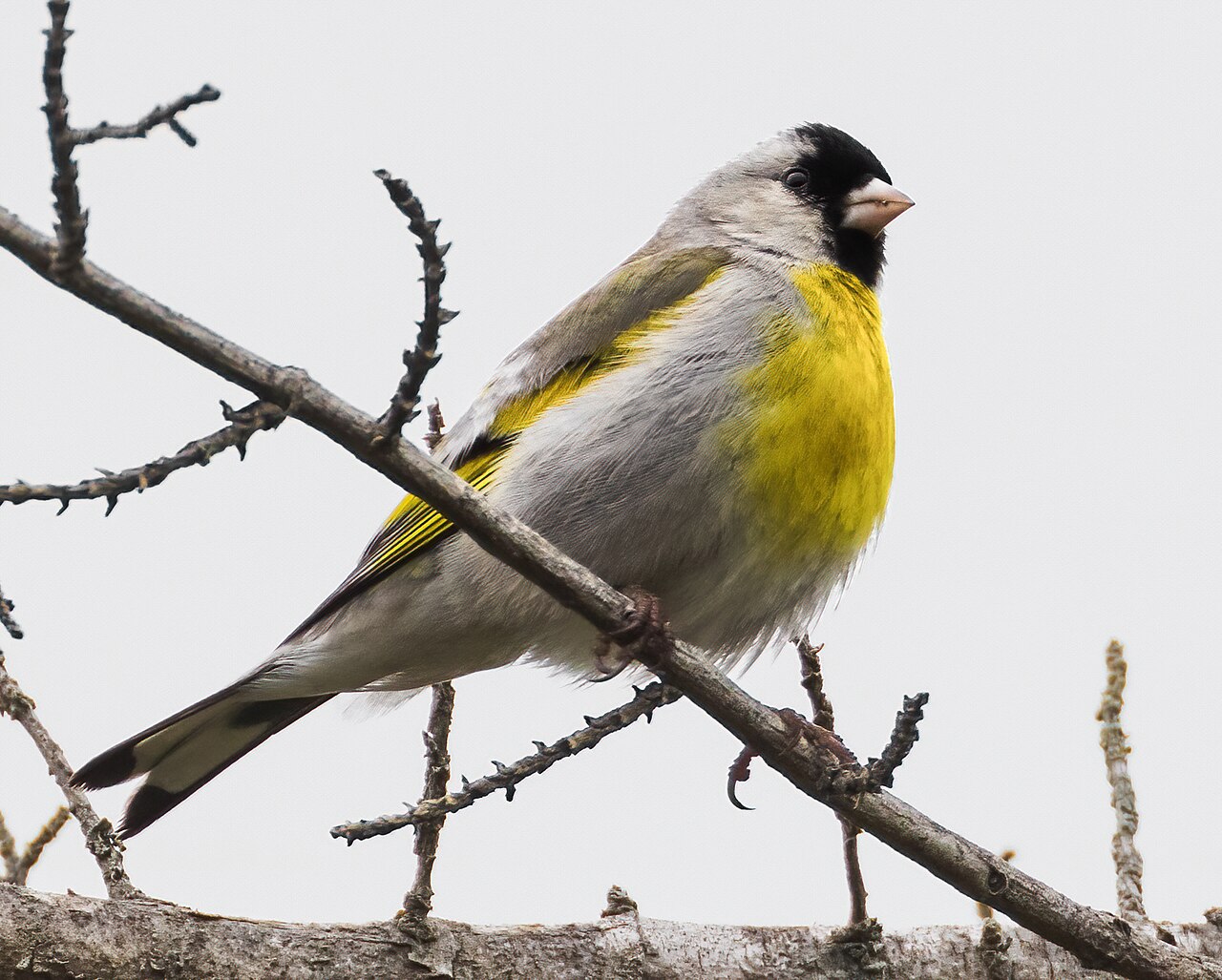
Lawrence's Goldfinch is a grey siskin with a yellow breast shield and, in the male, a black mask around bill and forehead. It breeds almost entirely in California and northern Baja California, and shifts about within that range from year to year, following rain, seeding herbs and drinking water.
Voice
The flight call is a clear, bell-like tink-oo or ti-too, with a metallic ring that recalls glass wind chimes — the most usable mark of the species, since you often hear a flock pass over without seeing it. The song is a high, continuous string of squeaks and trills with imitated notes of other species worked in: fragments of warblers, titmice and sparrows follow one another without a pause.
Recording: Paul Marvin — CC BY-NC-SA 4.0 · Bird and Butterfly Garden, Tijuana River Valley Regional Park, San Diego Co, California, United States · xeno-canto
Identification
The body is plain ash grey, with a yellow breast and belly and a yellow rump. The wing is black with broad yellow panels on the coverts and at the base of the primaries. The male has a black mask covering chin, bill base and forehead, standing out sharply against the grey. The female is browner grey, has no black on the face and considerably less yellow. The bill is short, thick and pale horn-coloured.
Confusion species
Lesser Goldfinch has green or black upperparts and yellow, never grey, flanks, and shows a white rather than a yellow wing patch. American Goldfinch is wholly yellow with a black forehead in breeding plumage and brown with a pale rump in winter, but never ash grey. On females the wing pattern settles it: yellow on the coverts and at the primary base means Lawrence's, white means Lesser. The bell-like call also differs in both sexes from the hard twitter of the other siskins.
Habitat
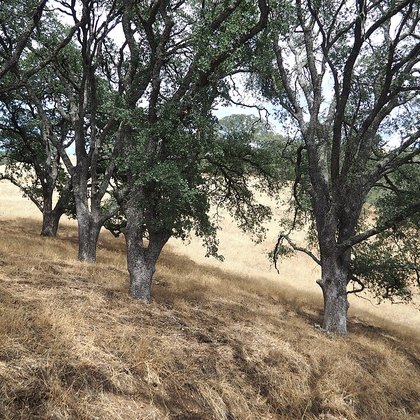
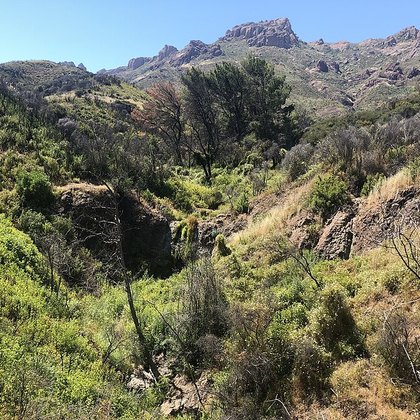
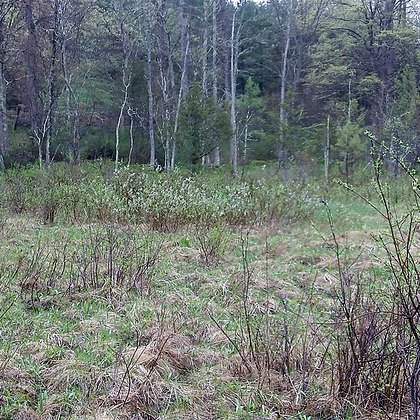
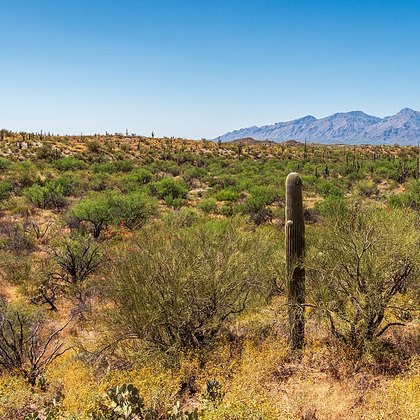
Open oak woodland and pine-oak woodland with clearings, next to brush or fields of tall annual herbs, usually within a kilometre of open water. The nest is placed in an oak or in a clump of mistletoe. On migration and in winter it occurs in coastal scrub, in desert arroyos with mesquite (a thorny pod-bearing shrub of the Southwest that forms dense thickets) and in cultivated country. The tie to drinking water is strong: flocks visit a pool or stream daily.
Where the bird is most often found, arranged by the USNVC — the vegetation classification of the United States and Canada — and CMECS for sea and coast.

Range and movements
The breeding range lies in the coast ranges and the Sierra Nevada foothills of California and continues into northern Baja California. Where it breeds in a given year depends on rainfall: in dry years it shifts to the coast and higher into the Sierra, in wet years towards the Central Valley. In winter part of the population moves east to Arizona, southern New Mexico, West Texas and northern Sonora, but numbers there vary greatly from year to year — in some winters it is almost absent.
- Resident
- Breeding (summer)
- Winter
- Passage
- dark = core range, pale = thinly spread
Where and when to look
Try a drinking place in open oak woodland in the California coast ranges in April and May: flocks come to water around midday. Learn the bell-like ti-too first; it carries far and betrays passing flocks that draw no other attention. With a singing bird, note that other species are built into the song and do not let that lead you astray.
Conservation
The species is listed as Least Concern (LC). Partners in Flight puts the world population at about 380,000 breeding birds. The species scores 15 out of 20 on the Continental Concern Score and is on the Yellow Watch List for restricted-range species: the whole breeding range fits within two states. Numbers fluctuate strongly with rainfall, which makes a trend hard to establish. Pressures are conversion of oak woodland to housing and vineyard, overgrazing of the herb layer and the replacement of native seed plants by introduced grasses.
Scientific name
Spinus lawrencei | (Cassin, 1850)
John Cassin described the species in 1850 as Carduelis Lawrencei, from material from Sonoma and San Diego in California; because it was later moved to another genus, author and year stand in parentheses. The species name honours George Newbold Lawrence (1806–1895), a New York merchant and ornithologist who described many of the North American birds from the Pacific Railroad surveys. The genus Spinus goes back to Greek spinos, an ancient name for a small finch. The Dutch name refers to the male's black mask.