All species › Passerines › Thrushes and allies › Hermit Thrush
Hermit Thrush | Catharus guttatus
Heremietlijster | Zorzalito colirrufo
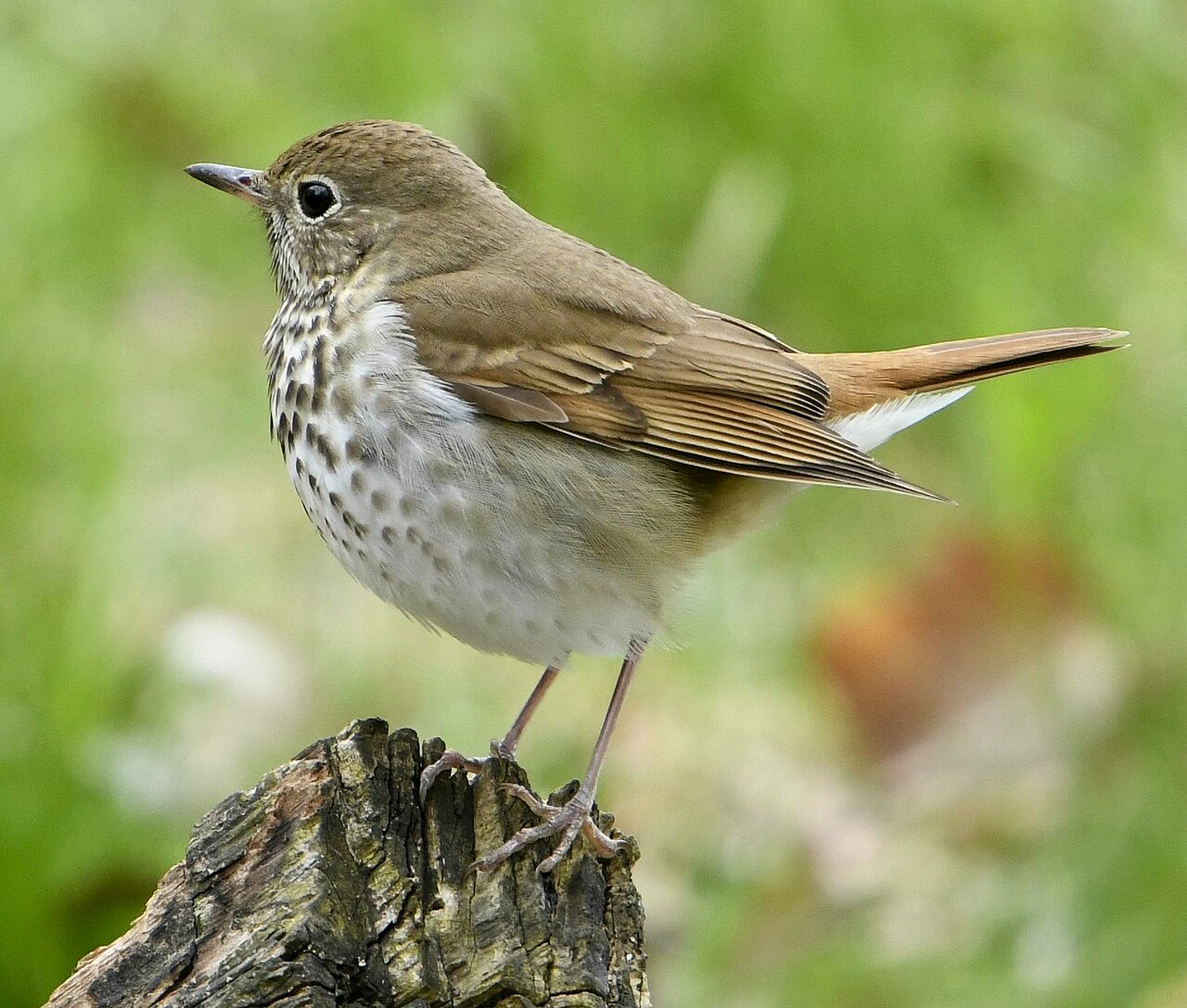
The Hermit Thrush is the only Catharus thrush that winters in numbers within North America; the other four go to the tropics. It is known by the rufous tail contrasting with the olive-brown back and by the habit of raising that tail on landing and letting it sink slowly back.
Voice
The song opens with a long, clear whistled note, followed by a series of thin, transparent tones curling up and down; after a pause a new phrase follows at a different pitch. That introductory whistle, pitched differently each time, is the most usable mark. The common call is a low, dry chup, with a rising, nasal wheee and, in alarm, a rapid tuk-tuk-tuk. In winter the song is absent and the chup is virtually all that is heard.
Recording: Ray Cooke — CC BY-NC 4.0 · Little River Road, First Bog East Corner, Albion Cross, Prince Edward Island, Canada · xeno-canto
Identification
Upperparts olive-brown to grey-brown, with a clearly rufous rump and tail standing out against them — the one field mark that works across all populations. The eye-ring is complete and dull white, narrower than the buff spectacles of Swainson's Thrush. The breast is dull white with sharp, round dark spots, the flanks grey-brown, the belly white. The legs are pink. The behaviour is diagnostic: on landing it flicks the tail up and lets it drop slowly, flicking the wings at the same time.
Confusion species
Swainson's Thrush has a full buff eye-ring and a plain tail with no rufous. Gray-cheeked Thrush is greyer in the face, has an incomplete eye-ring and also a plain tail. Veery is rufous across the whole upperside, so without contrast between back and tail, and is more faintly spotted. Wood Thrush is larger, rufous on head and back and heavily spotted with round spots onto the belly. Western Hermit Thrushes from the Rockies are larger and greyer and coastal birds smaller and darker, but the tail contrast holds in all of them.
Habitat
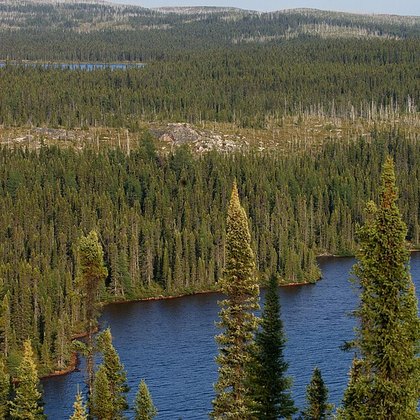
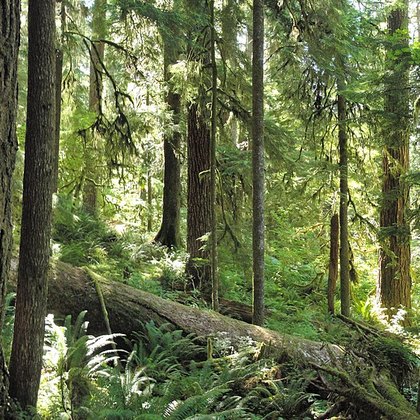
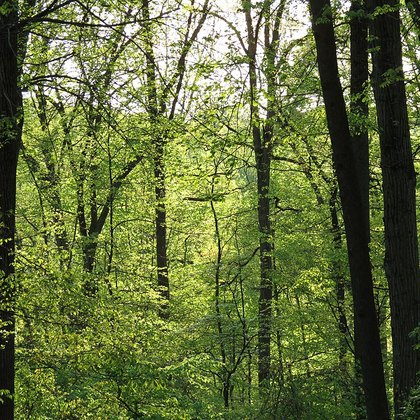
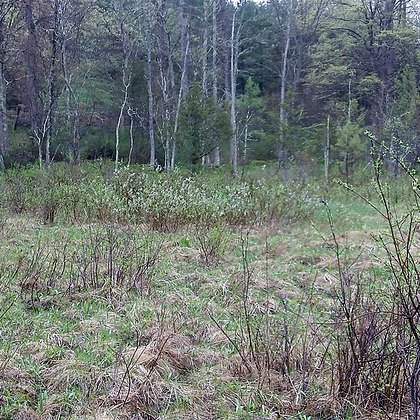
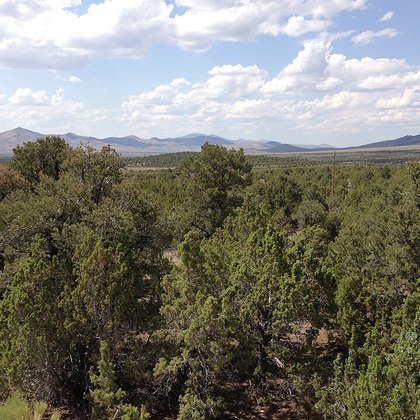
Conifer and mixed forest with openings and edges: boreal spruce and pine, montane conifer forest of the Cascades and Rockies, and in the east mixed woodland with hemlock and birch. It forages on the forest floor among the leaf litter. In winter it shifts to deciduous woodland, berry-bearing scrub, juniper and dry pine woodland, gardens and parks, usually where there is dense cover and deep litter.
Where the bird is most often found, arranged by the USNVC — the vegetation classification of the United States and Canada — and CMECS for sea and coast.

Range and movements
The breeding range runs from Alaska and Yukon across boreal Canada to Newfoundland and Nova Scotia, south along the western mountains to southern California, Arizona and New Mexico, and in the east to the Appalachians and New England. The winter range covers the southern United States from California to Florida and extends into Mexico and Guatemala; in the west breeding and wintering birds occupy the same states but at different elevations. The division across the Mexican states is inferred from range descriptions and is uncertain at state level.
- Resident
- Breeding (summer)
- Winter
- Passage
- dark = core range, pale = thinly spread
Where and when to look
In winter this is the only small thrush you are likely to meet at a wood edge or in a garden with berry bushes in the southern United States: almost any Catharus there between November and March is a Hermit Thrush. Watch the tail rather than the colour — the slow sinking after a flick identifies the bird even in poor light.
Conservation
The species is listed as Least Concern (LC). The North American population is put at tens of millions of birds and the Breeding Bird Survey shows a slightly rising course since 1966; the species scores low on the Continental Concern Score. Much of the breeding range lies in little-altered forest, and the species also breeds in young growth on cut-over ground. Mortality from collisions with windows and lit buildings on migration and from domestic cats in the wintering areas are the pressures most often recorded.
Scientific name
Catharus guttatus | (Pallas, 1811)
Pallas described the species in 1811 as Muscicapa guttata, from a specimen from Kodiak Island, Alaska, brought to St. Petersburg by the Russian expeditions; because it was later moved to another genus, author and year stand in parentheses. The genus Catharus comes from Greek katharos 'pure, clean'. The species name guttatus is Latin for 'speckled', from gutta 'drop', after the breast spots. The English and Dutch names refer to the retiring life in the undergrowth.