All species › Passerines › New World sparrows › Henslow's Sparrow
Henslow's Sparrow | Centronyx henslowii
Henslowgors | Chingolo de Henslow
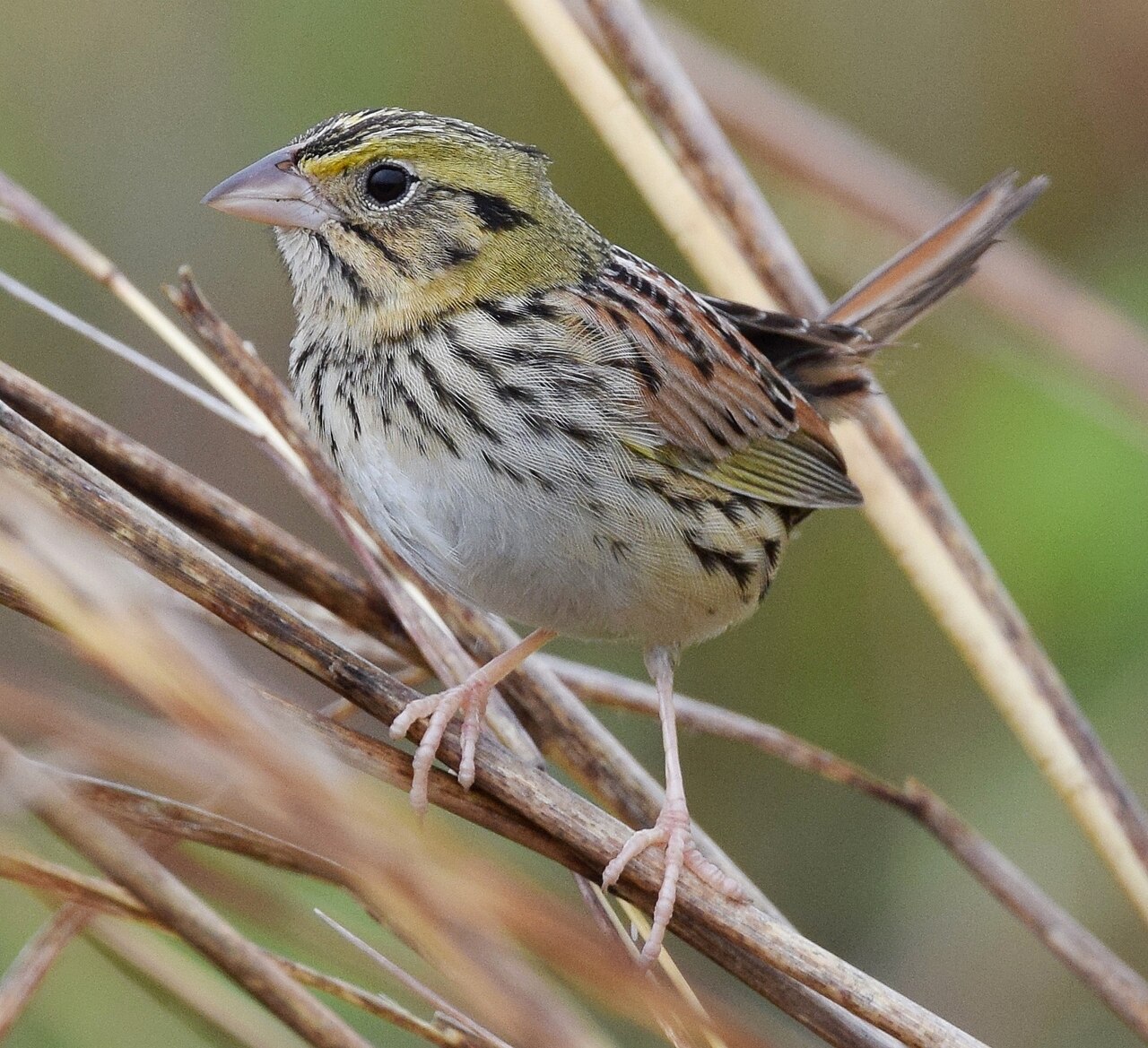
Henslow's Sparrow is a small sparrow of damp, rank grassland in eastern North America, with a large flat head, a heavy bill and an olive wash over face and nape. It spends most of its time on the ground among the grass and is known above all by its short song.
Voice
The song is one of the shortest of any North American songbird: a dry, two-syllabled tse-lick over in half a second, which at a distance resembles the ticking of an insect. The male repeats it from a dead stem or a grass head every few seconds and goes on singing at night. The call is a thin, high tsip.
Recording: Sue Riffe — CC BY-NC-SA 4.0 · EastPark Industrial Park, Greenup County, Kentucky, United States · xeno-canto
Identification
Small and compact, with a proportionally large, flat head and a short, spiky tail. Head and nape carry an olive to yellow-green wash, a colour no other sparrow of the same grasslands shows. The back is rufous with black streaking and the wings are chestnut. The breast is buff with sharp, thin black streaks and the belly is white. A dark crown stripe carries a fine pale median line, and two black lines run behind the cheek.
Confusion species
Grasshopper Sparrow has an unstreaked breast and a buffy, not olive, head. LeConte's Sparrow is more orange on breast and supercilium, has a grey, finely streaked nape and a longer, slimmer head. Baird's Sparrow has a broad ochre crown stripe and a sandy rather than chestnut wing. The surest mark remains the combination of olive face, chestnut wings and streaked buff breast.
Habitat
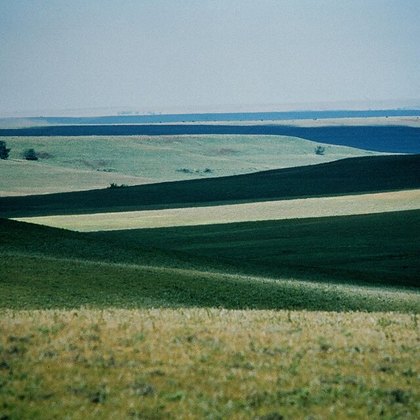
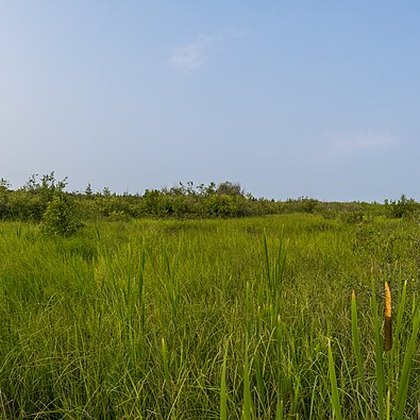
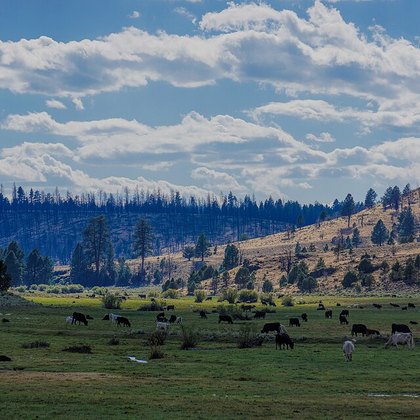
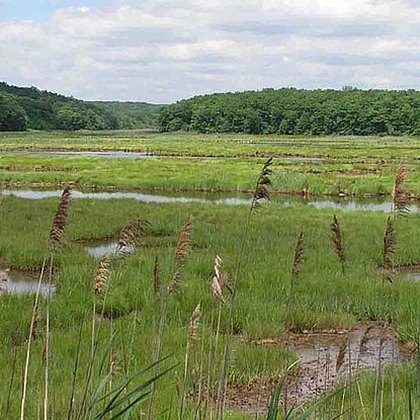
Damp pastures, hayfields and rank grasslands with tall, dense grass, plenty of old litter and scattered stiff stems to sing from; it avoids trees and shrubs while breeding. Reclaimed surface-mine land sown with grass in the Appalachians has become an important substitute habitat. In winter it uses weedy fields, pine savanna with saw palmetto and coastal salt marsh, and then tolerates some woody growth.
Where the bird is most often found, arranged by the USNVC — the vegetation classification of the United States and Canada — and CMECS for sea and coast.

Range and movements
The breeding range lies in the interior east: from New York and Pennsylvania west across Ohio, Indiana, Michigan, Illinois and Wisconsin to Missouri, Iowa and eastern Kansas, with scattered sites on reclaimed mine land in Kentucky, West Virginia and Tennessee and an isolated population in North Carolina. It winters on the coastal plain from eastern Texas and Arkansas east to South Carolina, Georgia and Florida. On the Atlantic coast of New England, where it once bred, it is gone.
- Resident
- Breeding (summer)
- Winter
- Passage
- dark = core range, pale = thinly spread
Where and when to look
Go to a large, unmown damp grassland an hour before sunrise in May or June on a windless morning and stand still: the tse-lick is so faint that you need to be within fifty metres to hear it. Later in the day the bird usually shows itself only when it flushes briefly, drops back in a few metres on, and walks away.
Conservation
Partners in Flight puts the world population at about 410,000 birds. Between 1966 and 2023 some 69 per cent of the population disappeared; the 2025 State of the Birds lists it as a tipping-point species at the middle alert level, with a trend that has since steadied. The Red List moved it back from Near Threatened (NT) to Least Concern (LC) in 2018. The Conservation Reserve Program, which takes cropland out of production and sows it with grass, together with reclaimed mine land, has locally reversed the decline; early mowing and the shrubbing over of fields are the pressures.
Scientific name
Centronyx henslowii | (Audubon, 1829)
Audubon described the species in 1829 as Emberiza henslowii; because it was later moved to another genus, author and year stand in parentheses. The specimen came from the bank opposite Cincinnati, on the Kentucky side of the Ohio. The species name honours John Stevens Henslow, botanist at Cambridge and Charles Darwin's teacher. The genus Centronyx was introduced in 1858 by Spencer Fullerton Baird, from Greek kentron 'spine' and onux 'claw', after the long claw of the hind toe.