All species › Woodpeckers and allies › Woodpeckers › Golden-fronted Woodpecker
Golden-fronted Woodpecker | Melanerpes aurifrons
Goudvoorhoofdspecht | Carpintero frentidorado
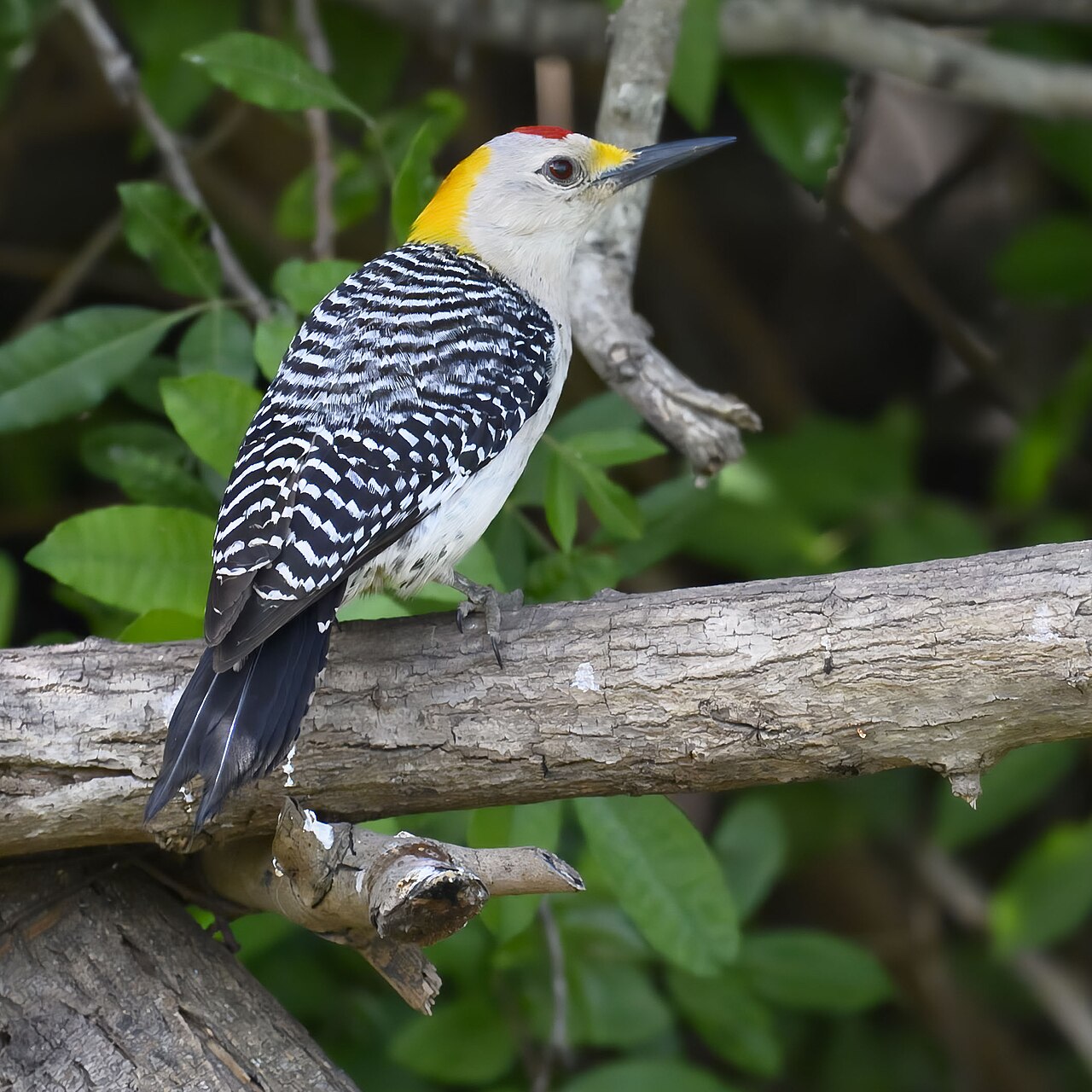
The Golden-fronted Woodpecker is a zebra-backed woodpecker of southern Texas and the Mexican Plateau: a medium-sized woodpecker with a barred black-and-white back, a pale grey head and underside, and golden-yellow to orange accents above the bill and on the nape. It is at home in mesquite scrub, riparian woodland and city parks, and is one of the commonest woodpeckers there. Pairs stay together on their territory all year round.
Voice
The best-known sound is a loud, harsh, rolling kirrr or churr, often given from a post or dead branch. There is also a hard, dry tig-tig, frequently in short series. The drum is short and relatively slow compared with that of many other woodpeckers; it also drums on wooden posts and utility poles.
Recording: Angel Castillo Cime — CC BY-NC-SA 4.0 · Sendero Xocén-Kanxoc, Yucatán, Mexico · xeno-canto
Identification
A medium-sized woodpecker of 22 to 27 centimetres with a finely barred black-and-white back, a white rump and a black tail without bars on the central feathers. Head and underside are pale grey to drab; in the centre of the belly is a yellow patch that often stays hidden. Both sexes have yellow nasal tufts above the bill and a yellow-orange nape. The male also has a red crown patch, kept separate from the nape by a grey band; the female has a grey crown. Young birds are duller, with little orange on the nape.
Confusion species
Red-bellied Woodpecker, which overlaps with this species in central Texas and also hybridises with it, has a red rather than orange nape, lacks the yellow nasal tufts and has barred central tail feathers; the male has a continuous red crown and nape. Gila Woodpecker of the west has a plain brownish-grey head without yellow or orange; its male also has a small red crown cap, but the central tail feathers are barred. Ladder-backed Woodpecker is much smaller, with a black-and-white striped face.
Habitat
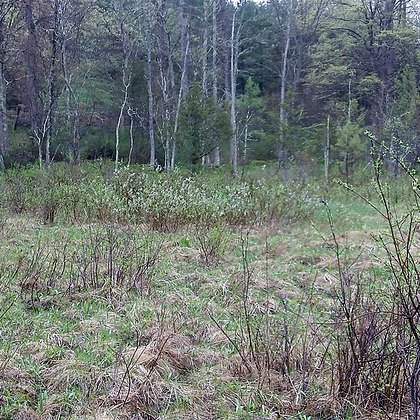
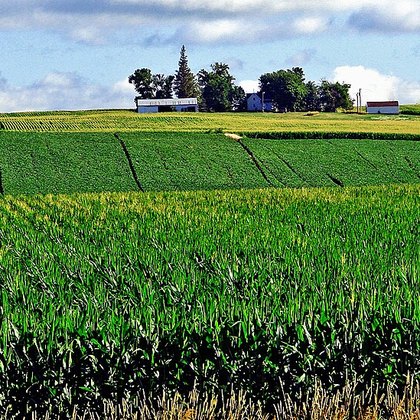
Dry, semi-open woodland: mesquite scrub, oak-juniper woodland and riparian woodland with pecan, soapberry, willow and hackberry. It adapts well to human-altered surroundings and also breeds in gardens, parks and small towns, where it visits feeders. The nest cavity is usually two to six metres up in mesquite, pecan or oak, sometimes in a telephone pole or fence post.
Where the bird is most often found, arranged by the USNVC — the vegetation classification of the United States and Canada — and CMECS for sea and coast.

Range and movements
Resident from south-western Oklahoma and central and southern Texas, south across the Mexican Plateau to Jalisco, San Luis Potosí and Hidalgo, and on through southern Mexico and Central America to Honduras and northern Nicaragua. It occurs casually in New Mexico and East Texas. Twelve subspecies are recognised, some of them on islands off Yucatán and Honduras; most southern forms show more red on head and belly.
- Resident
- Breeding (summer)
- Winter
- Passage
- dark = core range, pale = thinly spread
Where and when to look
In the Rio Grande Valley and on the Edwards Plateau you need not look far: city parks, cemeteries and riparian woodland with pecan trees are the best places. Watch for a bird calling from a utility pole or dead branch, and check nape and bill base first: yellow-orange and yellow mean Golden-fronted, red without yellow means Red-bellied Woodpecker. Intermediates with an orange-red nape occur in the overlap zone.
Conservation
The IUCN rates the species as Least Concern (LC). Partners in Flight puts the world population at about 5.3 million birds; according to the Breeding Bird Survey the population in the United States remained stable or declined slightly between 1966 and 2019. The species benefits from the spread of mesquite on rangeland and from leafy residential areas, but remains vulnerable to large-scale clearing of scrub and riparian woodland for agriculture.
Scientific name
Melanerpes aurifrons | (Wagler, 1829)
Johann Georg Wagler described the species in 1829 as Picus aurifrons, from a Mexican specimen; the type locality was later narrowed to the state of Hidalgo. Because the species has since been moved to Melanerpes, author and year stand in parentheses. Melanerpes is from Greek melas 'black' and herpēs 'creeper'; aurifrons combines Latin aurum 'gold' and frons 'forehead'. The southern subspecies are sometimes treated as a separate species, Velasquez's Woodpecker (Melanerpes santacruzi).