All species › Tubenoses › Petrels, shearwaters and diving petrels › Desertas Petrel
Desertas Petrel | Pterodroma deserta
Desertasstormvogel | Petrel de las Desertas
Desertas Petrel is a medium-sized, mostly grey gadfly petrel only recently recognized as a species in its own right, split from Fea's Petrel of the Cape Verde Islands. It breeds on a single island off Madeira, far outside this map's window, and within North America is no more than an extremely rare vagrant to the Gulf Stream.
Voice
At the breeding colony on Bugio, Desertas Petrel is active at night, with a series of wailing, cackling calls from among the burrows — said to be similar to, but slightly shriller than, those of the closely related Fea's Petrel. As in most Pterodroma petrels, these calls let partners and neighbours tell each other apart in the dark. At sea, including on the rare occasions it is reported off the American coast, it is silent by day; no sound has been recorded from those sightings.
Recording: Ben Metzger — CC BY-NC-SA 4.0 · Bugio, Madeira, Portugal · xeno-canto
Identification
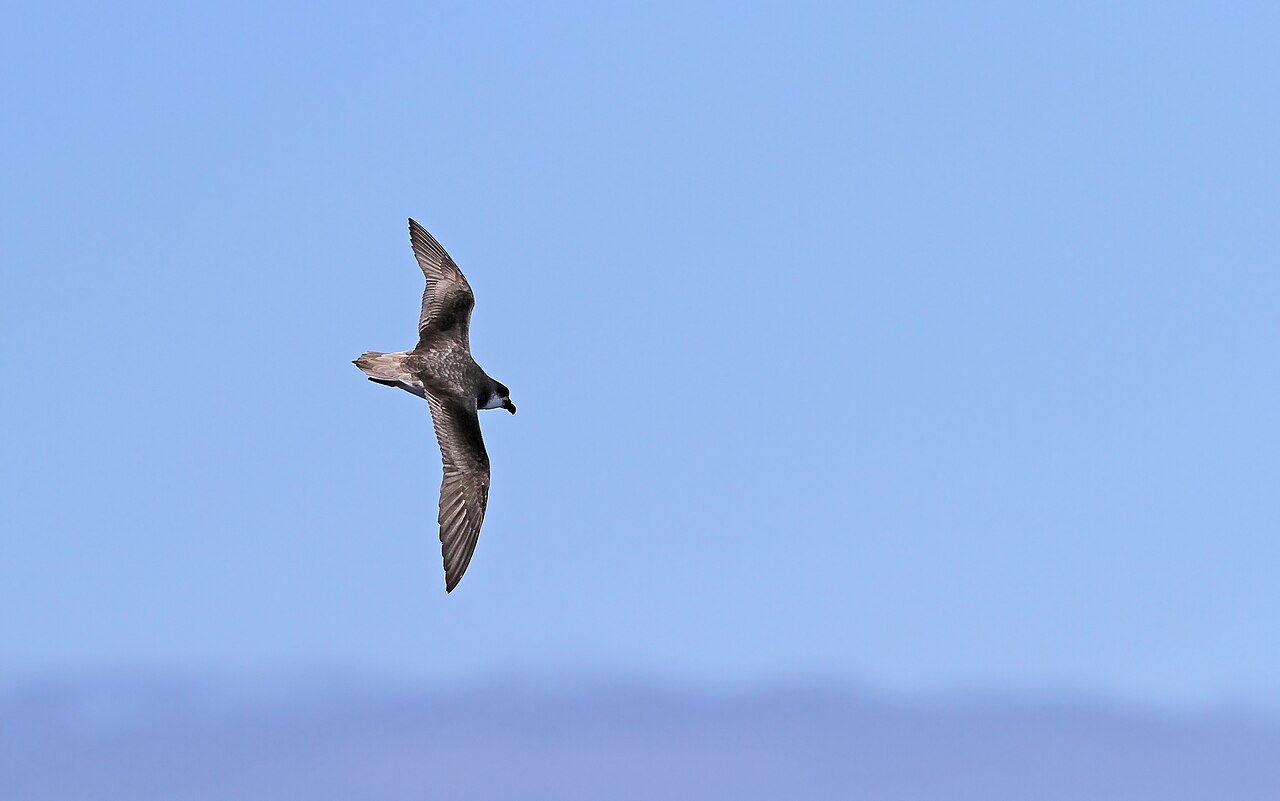
A medium-sized petrel, greyish-brown above with a dark M-pattern across the wings and back, a grey chest band that often fades into the white belly, and a dark underwing. The bill is slightly heavier than in the closely related Fea's Petrel. Male and female do not differ in appearance. The flight is the classic Pterodroma pattern, soaring high over the water with quick glides on wings held slightly bowed back.
Confusion species
Fea's Petrel (Pterodroma feae), until recently considered the same species, is nearly identical, so the two are almost impossible to separate at sea; only breeding season (winter rather than summer) and breeding site keep them apart. Black-capped Petrel (P. hasitata) and Bermuda Petrel (P. cahow), the other Pterodroma petrels found in the same waters, of which Black-capped Petrel is far bulkier, both show a sharper black-and-white pattern than the mostly grey tones of Desertas Petrel. Given its extreme rarity here, almost every reported sighting is later reviewed with photographs.
Habitat
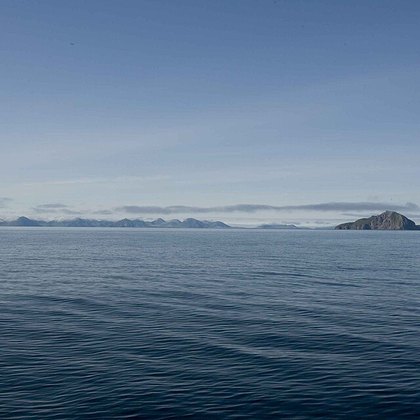
Desertas Petrel is a bird of open, warm ocean water far from shore, taking squid from the surface mainly at night. For breeding it uses the steep, scrub-covered slopes of Bugio, the southernmost island of the Desertas group off Madeira, nesting in a self-dug burrow. Within this map's window the species uses no fixed area at all; what has been seen here has always involved birds far out on the open sea.
Where the bird is most often found, arranged by the USNVC — the vegetation classification of the United States and Canada — and CMECS for sea and coast.
Range and movements
Desertas Petrel breeds only on Bugio, where the breeding season runs from April to October — the reverse of the winter-breeding Fea's Petrel on the Cape Verde Islands. Outside the breeding season most birds head to the Azores and to waters off southeastern Brazil; only a small fraction reaches the Gulf Stream off eastern North America, with a handful of accepted records off North Carolina. There is accordingly no regular occurrence within this map's window.
Where and when to look
Within this area Desertas Petrel is not a species to seek out deliberately: the chance of encountering it, even on a multi-day pelagic trip in the Gulf Stream, is vanishingly small. Anyone who photographs a greyer, smaller Pterodroma petrel among the more numerous Black-capped Petrels on such a trip would do well to submit those photographs to an experienced seabirder.
Conservation
The world population is estimated at a few thousand breeding pairs, all on a single island, which by its nature leaves the species exposed to a single disaster such as a fire or the arrival of a new predator; the IUCN lists it as Vulnerable (VU). Off the Portuguese coast and along the migration route, bycatch in longline fisheries is the main known threat; on Bugio itself, the absence of established predators is precisely one of the reasons the colony has held on so far.
Scientific name
Pterodroma deserta | Mathews, 1934
Gregory M. Mathews described the bird in 1934 as the subspecies P. mollis deserta, within what was then still treated as one widespread species; the genus Pterodroma, erected by Bonaparte in 1856, has remained unchanged since, so no parentheses stand around author and year. Only research into breeding timing and plumage in the twenty-first century led the form to be placed first with Fea's Petrel and then, as Desertas Petrel, raised to full species status. The species name deserta refers directly to the Desertas Islands, its only breeding site.