All species › Waders, gulls and terns › Sandpipers and allies › Buff-breasted Sandpiper
Buff-breasted Sandpiper | Calidris subruficollis
Blonde ruiter | Correlimos canelo
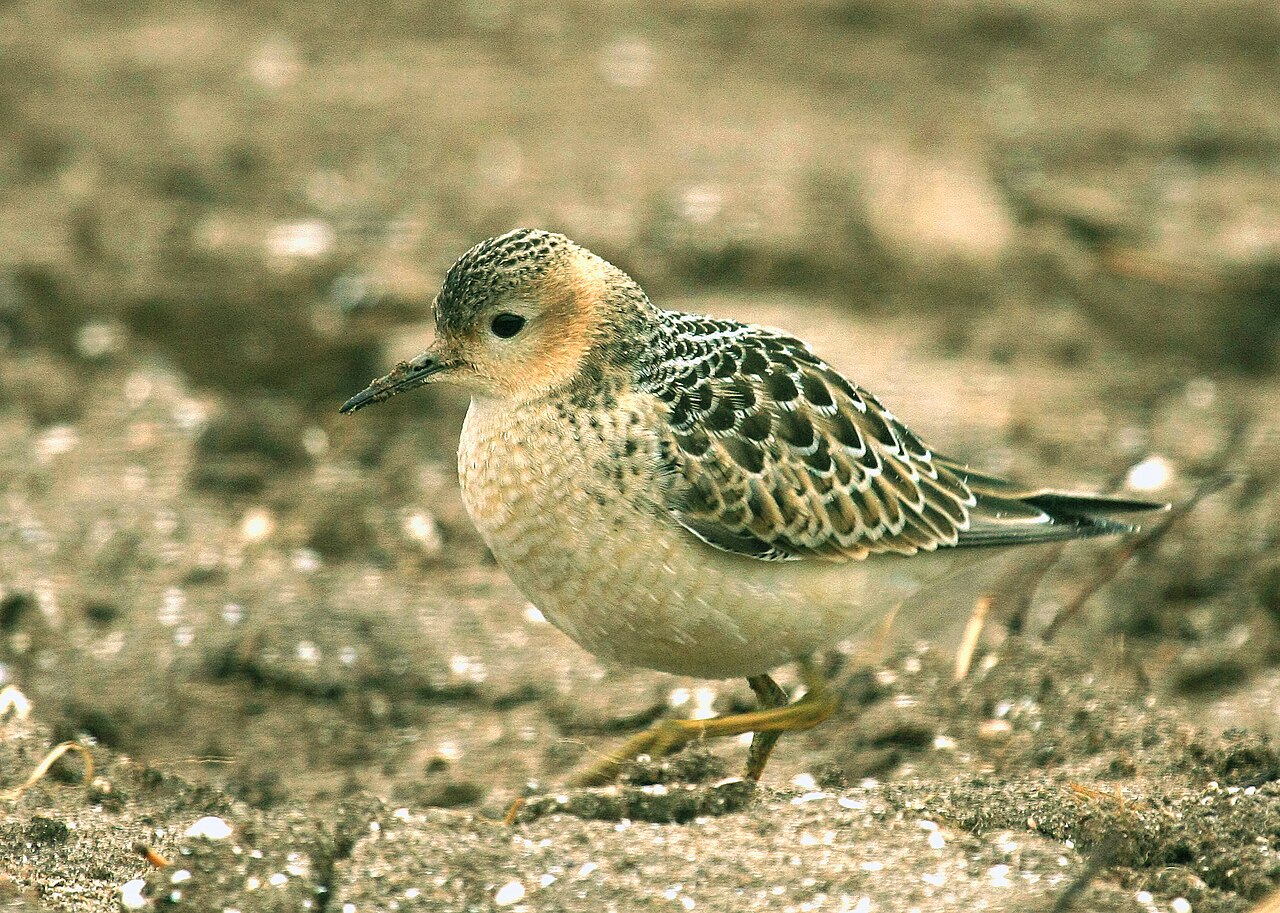
The Buff-breasted Sandpiper is the sandpiper that has left the water: it walks over close-cropped grass, sod farms and stubble fields and picks insects off the ground the way a plover does. Everything about it is buff, with a large dark eye in a blank face and clean yellow legs. Of the hundreds of thousands present in the nineteenth century, some fifty-six thousand are left.
Voice
It is a quiet bird: on migration you will hear no more than a low trill or a short, soft chwup as a party lifts off. On the display ground the male makes a barely audible ticking sound while it opens one wing or both. With it go a buzzing noise, probably made with the wing feathers, and a rapid stamping of the feet. Anyone watching one on a sod farm in Kansas or Texas will usually hear nothing at all.
Recording: Paul Kelly — CC BY-NC-SA 4.0 · Tacumshin Lake (East End), County Wexford, Ireland · xeno-canto
Identification
A medium-sized, slender shorebird with a rounded head, a fairly long neck, a short dark bill about the length of the head and long yellow legs. The whole plumage is warm buff, from face and neck to the undertail coverts, with fine black streaks on the crown and dark centres to the back and wing feathers that give a neat scaly pattern. The large dark eye stands out in an otherwise featureless face and lends the bird a soft, startled expression. In flight the underwing flashes white, with a dark mark at the wrist. Male and female are alike in colour, but the male is clearly larger; juveniles are more scaly above and finely spotted on the breast.
Confusion species
A juvenile Ruff (Calidris pugnax) is the most similar species: it is larger, longer-legged and longer-billed, more coarsely scaled, and shows white ovals either side of the tail in flight. Upland Sandpiper (Bartramia longicauda) lives in the same short grass but is far bigger, with a long tail, a small head on a long neck and a yellow eye. Pectoral Sandpiper (C. melanotos) has a sharply demarcated streaked breast and seeks wetter ground. Where plumage does not settle it, behaviour will: the Buff-breasted Sandpiper runs in short bursts and stops upright, like a plover.
Compare sandpipers, snipes and allies: bill, legs, wing bar and rump
Habitat
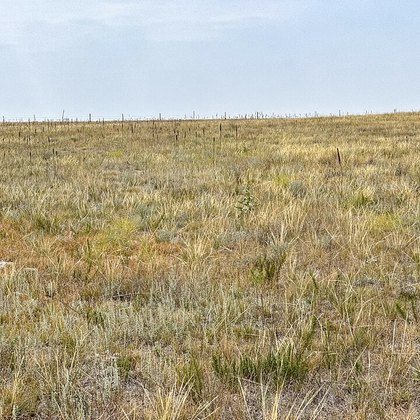
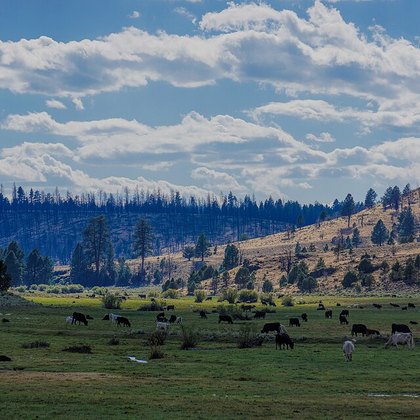
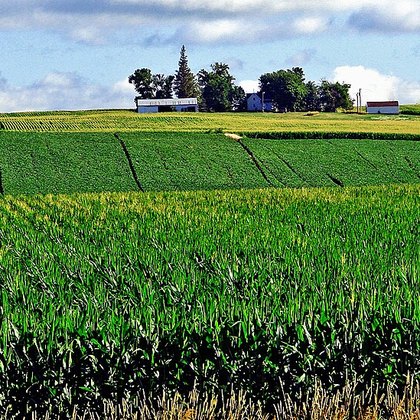
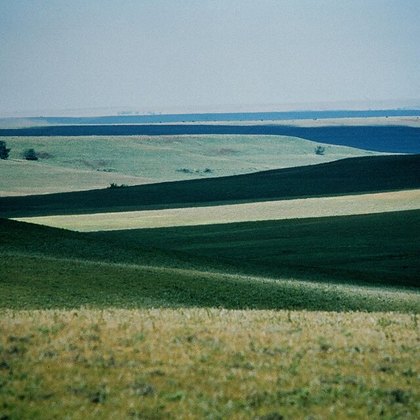
On migration this is not a water bird: it looks for short, dry grass — sod farms, grazed prairie, ploughed and freshly sown fields, airfield verges and the margins of irrigated crops. It barely needs water at all, and positively avoids flooded or rank grassland. The breeding grounds are dry, well-drained High Arctic tundra, with ridges and river banks on which the males set out their display sites. In the winter quarters it ends up on closely grazed pampas — the same short sward, ten thousand kilometres away.
Where the bird is most often found, arranged by the USNVC — the vegetation classification of the United States and Canada — and CMECS for sea and coast.

Range and movements
It breeds in the High Arctic tundra from Wrangel Island and the North Slope of Alaska east through the Northwest Territories and Nunavut into the Arctic islands; about three quarters of the population breeds in Canada. In spring virtually the whole population moves through the interior: over the Texas coastal plain, the Flint Hills of Kansas and the grasslands of Saskatchewan. In autumn the route is broader, with juveniles on the Atlantic coast and in smaller numbers on the Pacific, and with a passage over Central America. It winters on the pampas of Argentina, Uruguay and southern Brazil, far beyond the edge of the guide area.
- Breeding (summer)
- Winter
- Passage
- dark = core range, pale = thinly spread
Where and when to look
In the last week of August and the first half of September, search a sod farm or a freshly mown grass field — a golf course, an airfield verge, an irrigated crop — and scope through whatever is standing among the American Golden-Plovers. Buff-breasted Sandpipers move little and vanish between the grass tufts; walk the edge quietly and let the flock give itself away. In spring the Texas coastal plain in April is the best chance, and then dozens may stand together.
Conservation
The population is put at about fifty-six thousand birds, within a range of thirty-five to seventy-eight thousand. In the nineteenth century it numbered in the hundreds of thousands to millions; market hunting brought the species to the brink around 1920 and the recovery was never completed. Conversion of prairie to cropland, pesticides, wind turbines along the flyway and the warming of the breeding grounds keep the decline going. The IUCN lists it as Vulnerable (VU).
Scientific name
Calidris subruficollis | (Vieillot, 1819)
Louis Pierre Vieillot described the species in 1819 as Tringa subruficollis; it then stood for a long time in a genus of its own, Tryngites, and is now placed in Calidris, which is exactly why author and year are in parentheses. subruficollis means 'somewhat red-necked', from the Latin sub ('almost') and ruficollis ('red-necked') — a name that does the buff neck no great justice. The genus name Calidris goes back to kalidris, the word Aristotle used for a grey waterside bird. The described specimen came not from the breeding grounds but from Paraguay, from the notes of Félix de Azara: the species was thus made known to science in its winter quarters.