All species › Passerines › New World sparrows › Bachman's Sparrow
Bachman's Sparrow | Peucaea aestivalis
Dennengors | Chingolo de Bachman
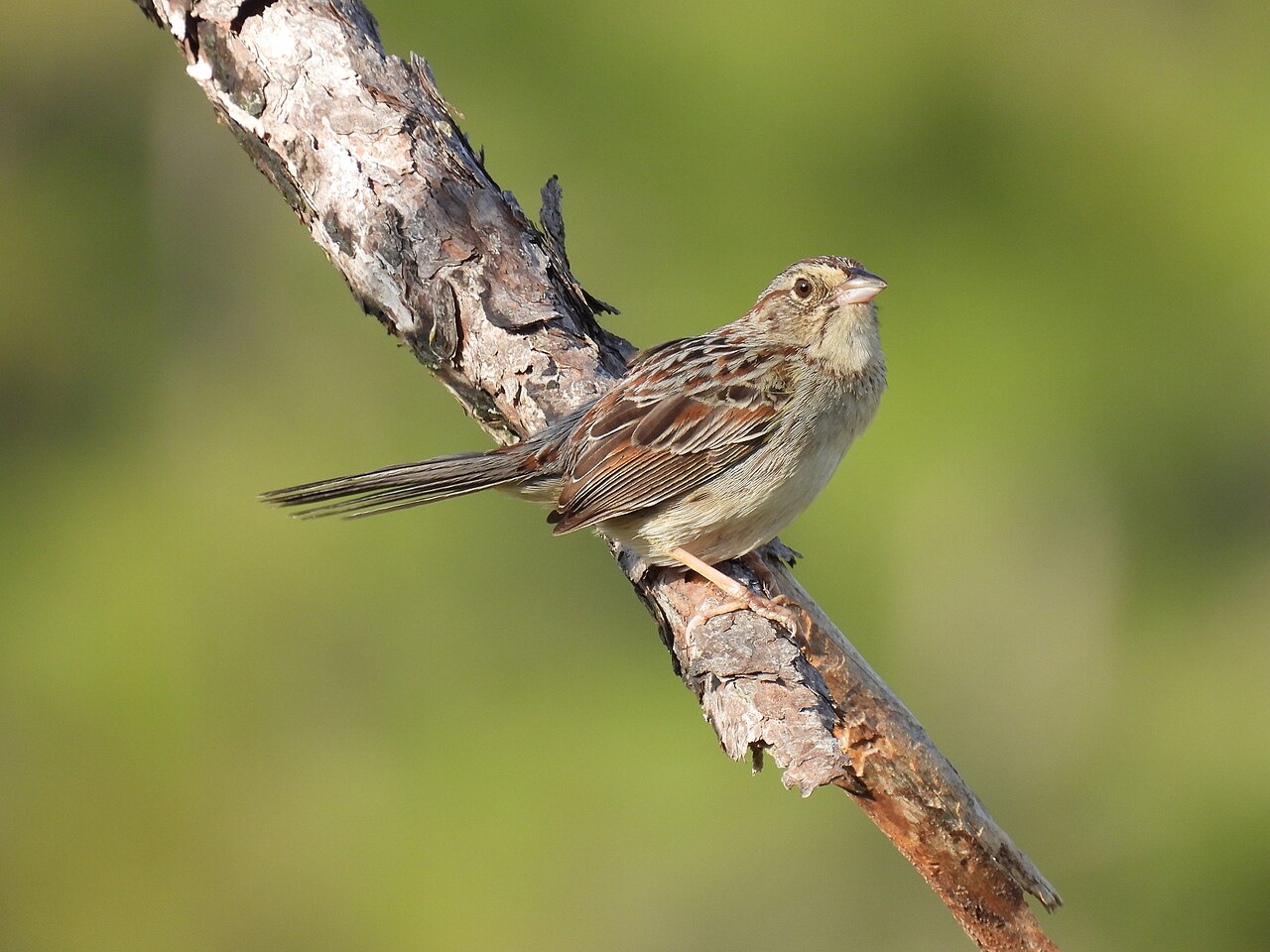
Bachman's Sparrow is a retiring ground bird of the open longleaf pine woodland of the southeastern United States. It is tied to woodland that burns regularly: without fire the understorey closes in and the bird is gone within a few years. The species is treated as Near Threatened and has declined since surveys began.
Voice
The song is a single clear, sustained whistle followed by a looser trill or rattle on another pitch; the male repeats that pattern with the opening note shifted each time, so that successive phrases sound different. He sings from a low perch, usually under three metres, from early spring into summer. Calls are a thin tsip and a soft, rapid chatter when a pair keeps contact.
Recording: steve — CC BY-SA 4.0 · Hoffman, Richmond County, North Carolina, United States · xeno-canto
Identification
A fairly large sparrow with a large, round bill, a full belly and a long, rounded tail. Crown and back are rufous with grey and black streaking; the face is grey with a rufous stripe behind the eye and a pale supercilium above it. Throat and breast are plain buff, without streaks and without a breast spot; the belly is dingy white. Male and female are alike. Juveniles do have a streaked breast and a distinct eye-ring.
Confusion species
Grasshopper Sparrow shares the habitat and is smaller, with a flat head, a shorter, pointed tail, orange-yellow lores and a wheezy, insect-like song instead of whistle and trill. Botteri's Sparrow, close by only on the Texas coast, is a duller grey-brown above, without rufous, and lacks the grey face with rufous eyeline. Song Sparrow has a heavily streaked breast with a central spot. A flushed Bachman's Sparrow drops back into cover almost at once and walks off over the ground — in practice that behaviour already separates it from most other sparrows.
Habitat
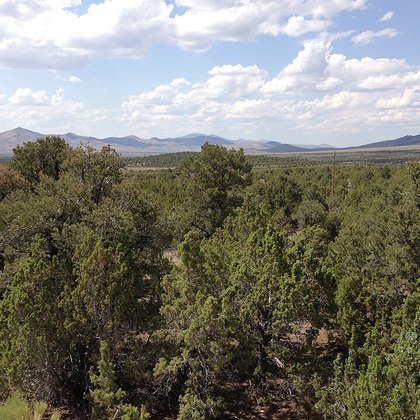
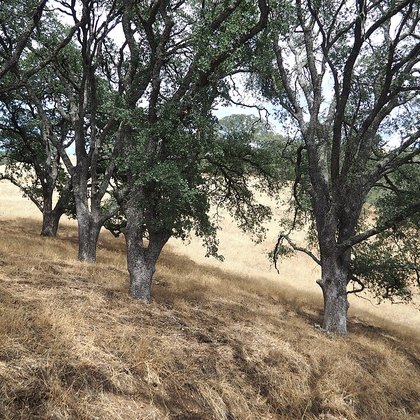
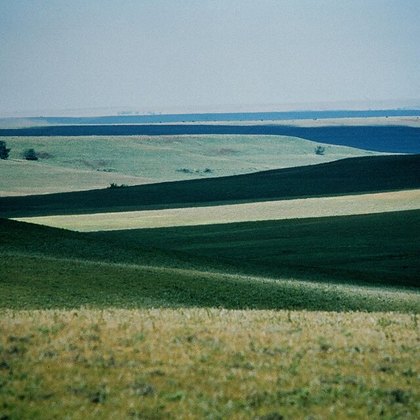
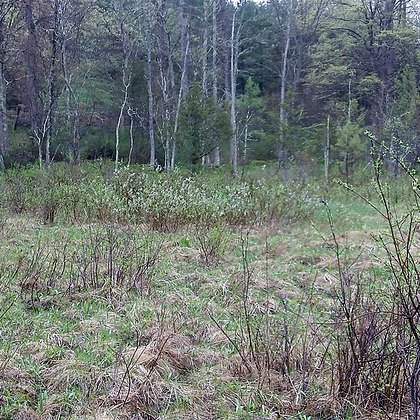
Open longleaf pine woodland with wiregrass, saw palmetto or other low ground cover and few shrubs; also oak-palmetto scrub, wide powerline cuts and young clearcuts. The site must have burned recently: stands unburned for three to four years are less occupied, and after five years without fire the species largely disappears. Clearcuts are abandoned once the regrowth passes about seven years.
Where the bird is most often found, arranged by the USNVC — the vegetation classification of the United States and Canada — and CMECS for sea and coast.
Range and movements
The range runs from central peninsular Florida north to southeastern North Carolina and west through Georgia, Alabama, Mississippi and Louisiana to east Texas, eastern Oklahoma and Arkansas, with a fragmented edge in Tennessee, Kentucky and Missouri. In the south of the range it stays all year; in the north and west it withdraws in winter. In the early twentieth century it spread north into Illinois, Indiana, Ohio, West Virginia, Virginia, Maryland and Pennsylvania, but from the 1930s that range contracted again.
- Resident
- Breeding (summer)
- Passage
- dark = core range, pale = thinly spread
Where and when to look
Look for it in April or May in a pine stand burned this year or last: walk slowly and listen for the whistle-and-trill, which carries for hundreds of metres. Outside the singing season the chance is small; a disturbed bird drops into the grass and stays down for a long time. Take time at a singing post rather than walking in search of it.
Conservation
Partners in Flight puts the world population at about 170,000 breeding birds and gives the species 16 out of 20 on the Continental Concern Score; the IUCN places it in the Near Threatened (NT) category. The Breeding Bird Survey indicates an annual decline of about 1.7 per cent between 1966 and 2023, more than sixty per cent in total, and the 2025 State of the Birds report lists it among the species that have lost over half their numbers in fifty years. The cause is the loss of longleaf pine woodland, now standing on a fraction of its former extent, and the loss of the regular fires the understorey depends on. Prescribed burning and longleaf restoration on state forests and military lands maintain part of the population.
Scientific name
Peucaea aestivalis | (Lichtenstein, 1823)
Martin Hinrich Carl Lichtenstein described the species in 1823 as Fringilla aestivalis from material out of Georgia; because it was later moved to Peucaea, author and year stand in parentheses. The species name aestivalis is Latin for 'of the summer'. The genus name Peucaea goes back to Greek peukē 'pine', after the pine woodland this species inhabits; the Dutch name says the same thing. The English name honours John Bachman (1790–1874), Lutheran minister and naturalist at Charleston, South Carolina, who worked with Audubon.