All species › Passerines › Honeyeaters › Yellow-throated Honeyeater
Yellow-throated Honeyeater | Nesoptilotis flavicollis
Geelkeelhoningeter | Mielero cuelligualdo
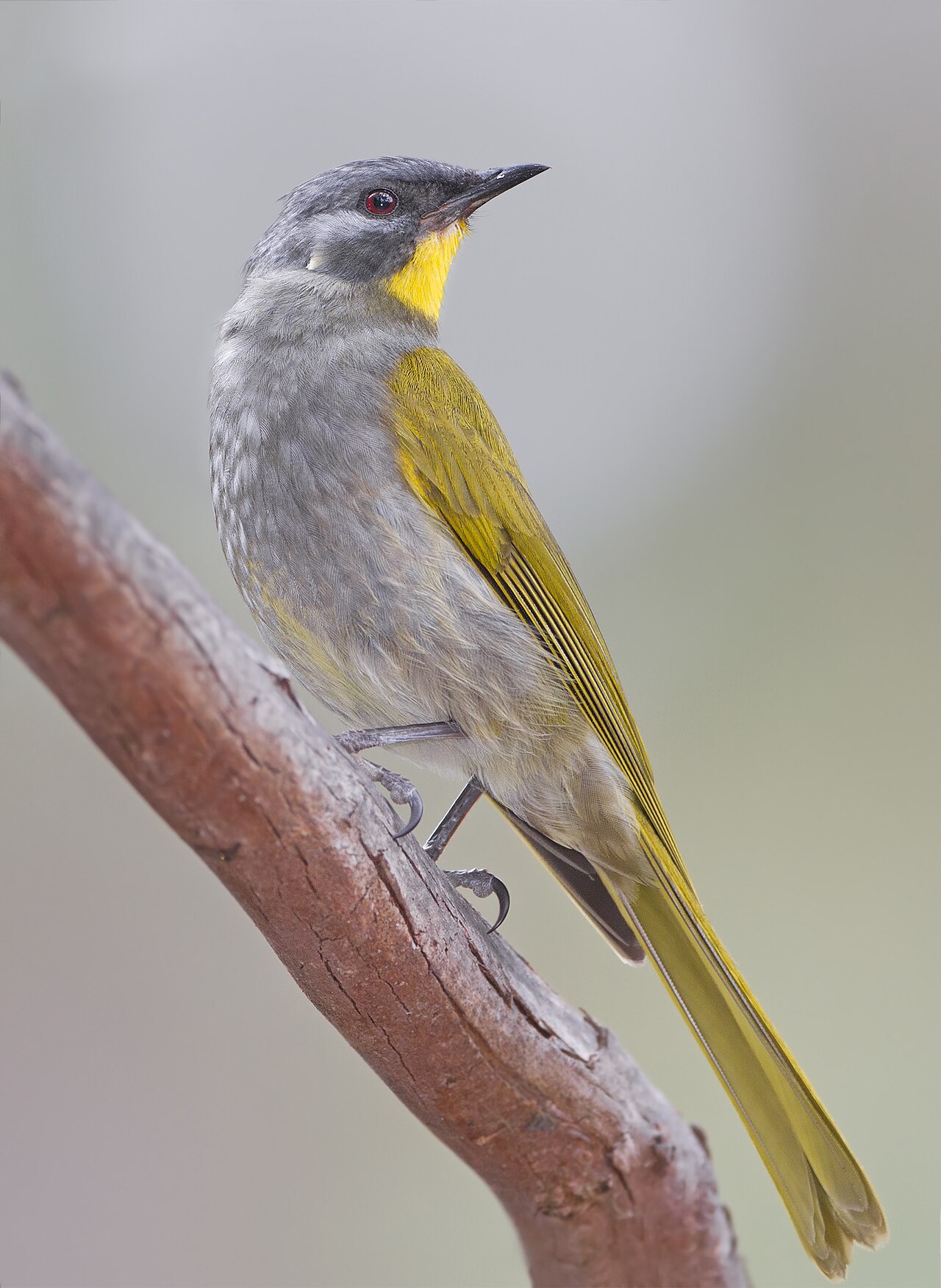
The Yellow-throated Honeyeater is the largest and noisiest honeyeater in Tasmania and endemic to the island: olive-green above, silver-grey on crown, face and belly, with a bright yellow chin and throat hanging beneath the bill like a small triangle. The eye is deep red, the bill black. It turns up everywhere on the island, from wet forest to town garden, and is often heard, because males hold and loudly defend territory the year round.
Voice
One of the most familiar sounds of Tasmanian bush. The usual call is a hard, wooden tonk, tonk, tonk or tchook, tchook, as though a hollow trunk were being struck, and it carries far through dense forest. Alongside it come a whirring chur-uk, chur-uk and a loud de-wit in the breeding season, with local variation between districts; Tasmanian observers often render the song as pick-em-up or get-a-whip. A bird chasing another out of its tree does so with a harsh, sustained churring that is audible even at a distance.
Recording: Cassin Finch — CC BY-NC-SA 4.0 · Cradle Mountain, Kentish Council, Tasmania, Australia · xeno-canto
Identification
A substantial honeyeater of eighteen to twenty-three centimetres, sturdily built, with a black, straight-looking bill. The upperparts are bright olive-green, the wing feathers edged yellow, and crown, face and lower belly are silver-grey — a notably cool contrast with the green of the back. The mark is the chin and throat: clear lemon-yellow, sharply bounded and set off below by a narrow dark band. A small yellow ear-patch sits behind the eye. The eye itself is deep red to ruby and stands out in any decent view. The sexes are alike in colour, though the female is smaller; juveniles are duller, with less vivid yellow and a browner eye.
Confusion species
In Tasmania the risk is small: this is the only large green-and-grey honeyeater on the island and the yellow throat is unique. The other Tasmanian honeyeaters — Strong-billed Honeyeater (Melithreptus validirostris) and Black-headed Honeyeater (Melithreptus affinis) — are considerably smaller, have a black head with a white nape band, and lack the yellow throat entirely. The sister species Nesoptilotis leucotis, the White-eared Honeyeater of the mainland, has the same build, size and olive-green, but carries a white ear patch and a black face and chin instead of a yellow throat; the two replace one another geographically and nowhere occur together, since N. leucotis does not reach Tasmania. Fuscous Honeyeater (Ptilotula fusca) of the Australian mainland is a smaller, dull olive-brown bird with a yellow ear plume and no yellow throat, and does not occur in Tasmania.
Habitat
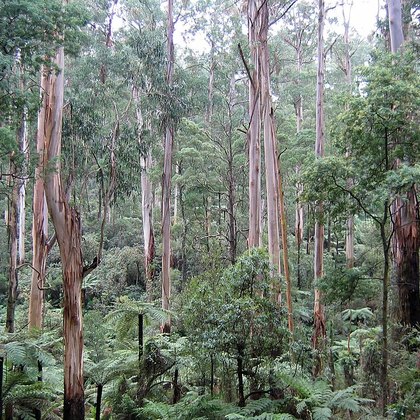
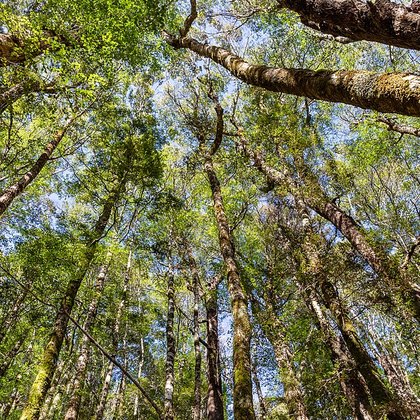
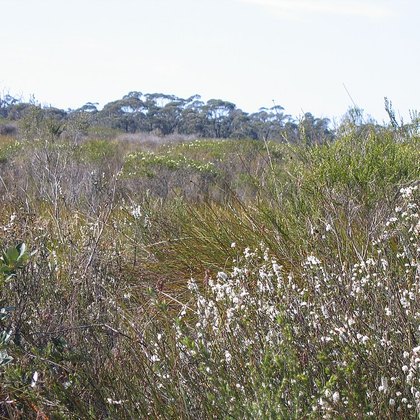
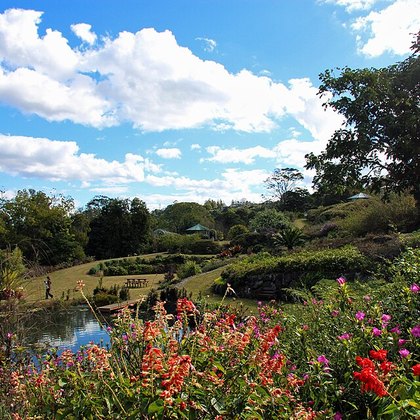
Practically every wooded and shrubby habitat in Tasmania: wet and dry eucalypt forest, subalpine eucalypt woodland, cool temperate rainforest with southern beech, wet scrub, coastal heath and coastal scrub. Beyond that it is common in gardens, town parks, cemeteries and orchards, including the middle of Hobart and Launceston. It forages from canopy to ground, usually singly or in pairs, and takes most of its food from trunks, branches and bark. The diet is mainly arthropods — insects and spiders — with nectar, manna and lerp (sugary scale secreted by psyllids, food for honeyeaters) and occasional fruit or seed. Males hold territory all year and defend it fiercely against their own kind and other honeyeaters. The female builds alone, generally within a metre of the ground in a dense shrub or tussock, occasionally up to ten metres; the nest is a deep cup notably often lined with mammal hair. The clutch is two or three pinkish eggs, with incubation and nestling periods of about sixteen days each; breeding runs from August to December.
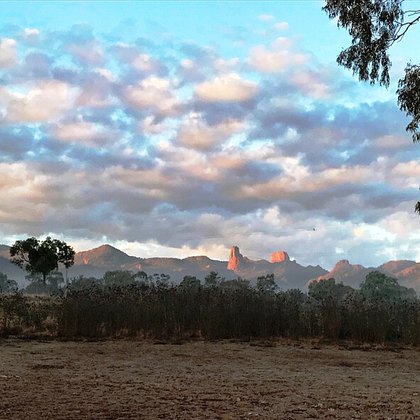
Where the bird is most often found, arranged by main group and formation.
Range and movements
Endemic to Tasmania, where it is widespread and common from sea level into the subalpine zone. It also occurs on King Island in Bass Strait and on the Furneaux Group around Flinders Island. It is wholly absent from mainland Australia, where its place is taken by its sister species Nesoptilotis leucotis. It does not occur in New Zealand.
- Resident
- dark = core range, pale = thinly spread
Where and when to look
In Tasmania it takes little effort: stand still in almost any patch of bush or larger garden and wait for the wooden tonk. When the bird comes into view, look first at the throat and then at the eye — a yellow triangle under the bill plus a ruby eye is a combination nothing else on the island offers. A good tactic is to wait at a flowering banksia or eucalypt where other honeyeaters are feeding: this species will sooner or later arrive to drive them off, and that noisy chase usually gives the best view of all.
Conservation
Least Concern (LC) and common throughout Tasmania. The species benefits from its wide habitat tolerance: it manages in natural forest, in planted scrub and in urban greenery, and has therefore suffered little from the reshaping of the Tasmanian landscape. Where understorey is removed at scale — by intensive logging, fire or grazing — nesting opportunity does decline, since the nest is slung low in dense shrub layer. On an island an endemic always stays vulnerable to large-scale disturbance such as extensive bushfire, but there is no evidence of decline across its range.
Scientific name
Nesoptilotis flavicollis | (Vieillot, 1817)
Louis Pierre Vieillot described the species in 1817; the parentheses around author and year record that it has since changed genus. It stood successively in Melithreptus and for a long time in Lichenostomus, and moved after molecular phylogenetic work in 2011 into the then newly erected genus Nesoptilotis, which it shares with the White-eared Honeyeater. Nesoptilotis is built from Greek nesos, 'island', and ptilon, 'feather' or 'plume' — a reference to this species' Tasmanian home. The epithet flavicollis comes from Latin flavus, 'yellow', and collum, 'neck', and matches exactly the yellow throat the English name also records. The Dutch name geelkeelhoningeter follows it directly; Spanish sources usually call the species mielero cuelligualdo, which does point at the yellow neck. No subspecies are recognised.