All species › Waders, gulls and terns › Sandpipers and allies › Wood Sandpiper
Wood Sandpiper | Tringa glareola
Bosruiter | Andarríos bastardo
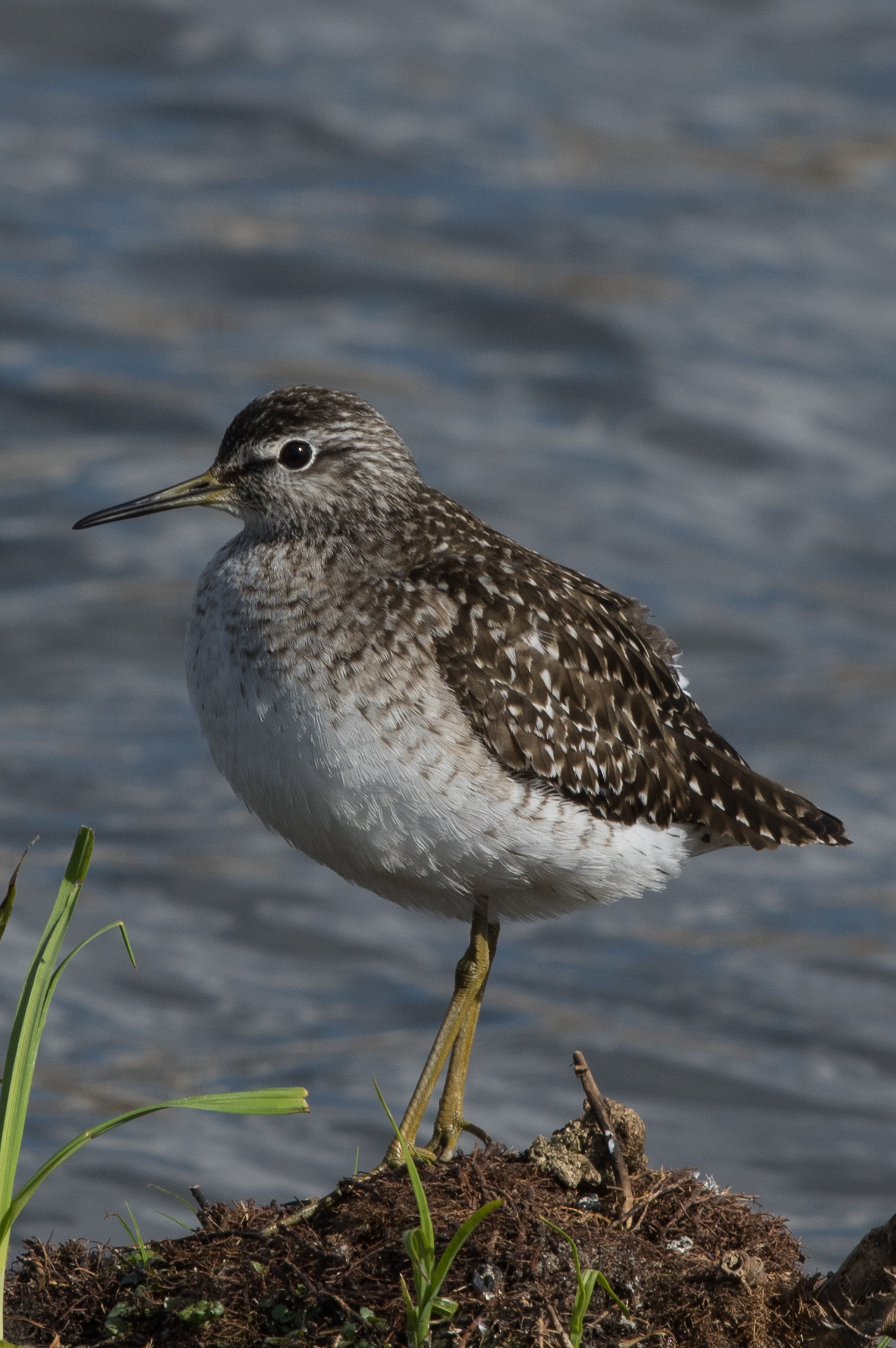
The Wood Sandpiper is the freshwater shank of northern Australia: a small, finely built wader of just over twenty centimetres, densely spangled with pale spots above, with a long pale supercilium and yellow-green legs. Unlike most waders here it rarely stands on tidal flats — look for it on flooded grassland, rice fields and the vegetated edges of inland pools.
Voice
The flight call is a high, cheerful, fast three-note chiff-iff-iff, sharper and more hurried than the full whistle of Common Greenshank and with an upward lift at the end. It calls almost every time it flushes, and in a small party it becomes a busy high piping that carries over the reeds. When uneasy on the ground it switches to a repeated short chip. Its yodelling song flight, tlooee-tlooee, is not heard here: that belongs to the breeding grounds of northern Eurasia.
Recording: Stanislas Wroza — CC BY-NC-SA 4.0 · Soppavann, Finland · xeno-canto
Identification
A small, slender shank of twenty to twenty-three centimetres, dark grey-brown above and densely covered with pale spots and flecks, with a mottled breast that cuts off sharply against the white belly. The pale supercilium runs clearly beyond the eye and gives the head an open expression. The bill is short, straight and fine, dark with a greenish base, no longer than the head. The legs are yellow-green and fairly long. In flight there is no wingbar but a square white rump patch — not the long wedge of Common Greenshank and Marsh Sandpiper — and the toes project clearly beyond the tail; the underwing is pale.
Confusion species
Marsh Sandpiper (Tringa stagnatilis) is paler and finer, with a needle-fine bill and a long white wedge up the back instead of a square rump, and lacks the spangled upperparts. Common Greenshank (Tringa nebularia) is much larger and shows the same white wedge. Common Redshank (Tringa totanus) has orange-red legs and broad white trailing edges to the wings. Common Sandpiper (Actitis hypoleucos) stands far lower on its legs, teeters its tail constantly, has a white wedge between the breast side and the bend of the wing, and does show a bold white wingbar in flight. Outside this group it is most often confused with Sharp-tailed Sandpiper (Calidris acuminata), which uses the same freshwater pools: that bird has a rufous crown, a shorter bill, shorter dull-yellowish legs and a dark centre to the rump.
Habitat
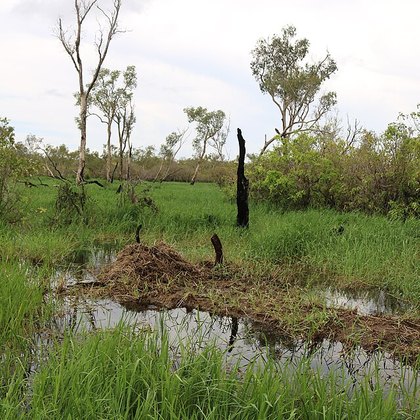
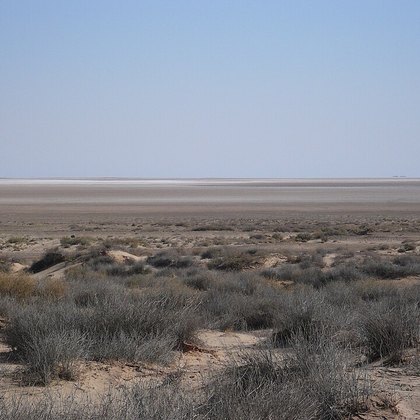
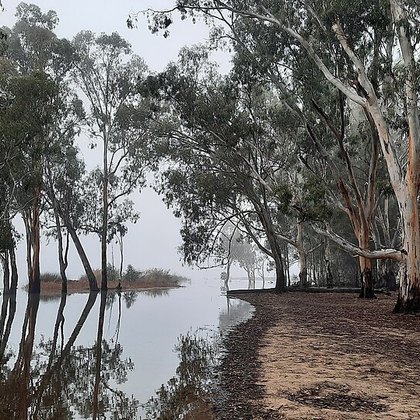
Almost exclusively fresh and shallow: inland swamps and flooded grassland, pools and stock dams with emergent reed and grass, claypans (shallow clay basin that holds water for a time after rain) that fill after the rains, rice fields and sewage ponds, and by preference edges where dead timber, grass or reed stems give cover. It steps through them high-legged and daintily, probing the mud or picking from the surface, swims well and at times sweeps its bill from side to side under water. On salt tidal flats it seldom stands.
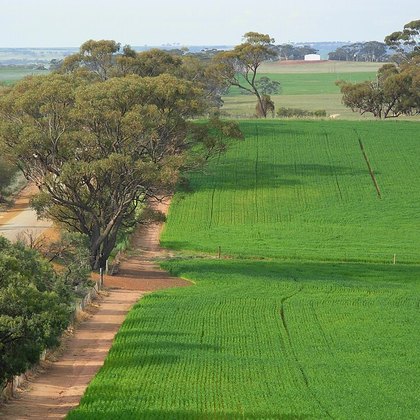
Where the bird is most often found, arranged by main group and formation.

Range and movements
Chiefly northern Australia, from the Kimberley through the Top End into the Gulf of Carpentaria and Cape York, where it can be numerous on the flooded plains in the wet season; southwards it thins out rapidly and in Tasmania it is a rarity. Birds arrive from August and September and leave in March and April, and precisely because it is an inland bird its numbers shift with the monsoon rains. New Zealand and Norfolk Island are not on its route: GBIF data for 2015–2024 hold records from Australia only.
- Breeding (summer)
- dark = core range, pale = thinly spread
Where and when to look
Look for it not on the tidal flat but inland, along the vegetated edge of a flooded plain or a stock dam in the north, preferably early in the morning. It flushes at long range with its high chiff-iff-iff, and that flush gives the mark away: watch the rump and decide whether the white is a square patch or a point running up the back. A square makes it a Wood Sandpiper.
Conservation
Least Concern (LC): the species breeds in a broad belt across northern Eurasia, from Scandinavia to Kamchatka, and numbers millions of birds worldwide. On this flyway it has an advantage over its coastal relatives, because it uses freshwater marshes and rice fields that are not reclaimed the way the tidal flats of the Yellow Sea have been. Within Australia it depends on the natural flood cycle of the northern plains: water management that shortens the wet period, or keeps the swamps permanently flooded, removes the shallow edges it lives off.
Scientific name
Tringa glareola | Linnaeus, 1758
Linnaeus described the species in 1758 as Tringa glareola, and it has stayed in that genus, so author and year carry no parentheses; the type locality was first given as Europe and later restricted to Sweden. The epithet is a diminutive of Latin glarea, 'gravel', after the shingly margins on which the bird likes to feed. The genus name Tringa goes back through Neo-Latin to Aristotle's trungas. The English name, like the Dutch bosruiter, is misleading, for it is no woodland bird: it owes the name to its habit on the breeding grounds of nesting in swamp forest, sometimes in an old thrush nest in a tree.