All species › Passerines › Honeyeaters › Western Spinebill
Western Spinebill | Acanthorhynchus superciliosus
Roesthalshoningvogel | Picoespina occidental
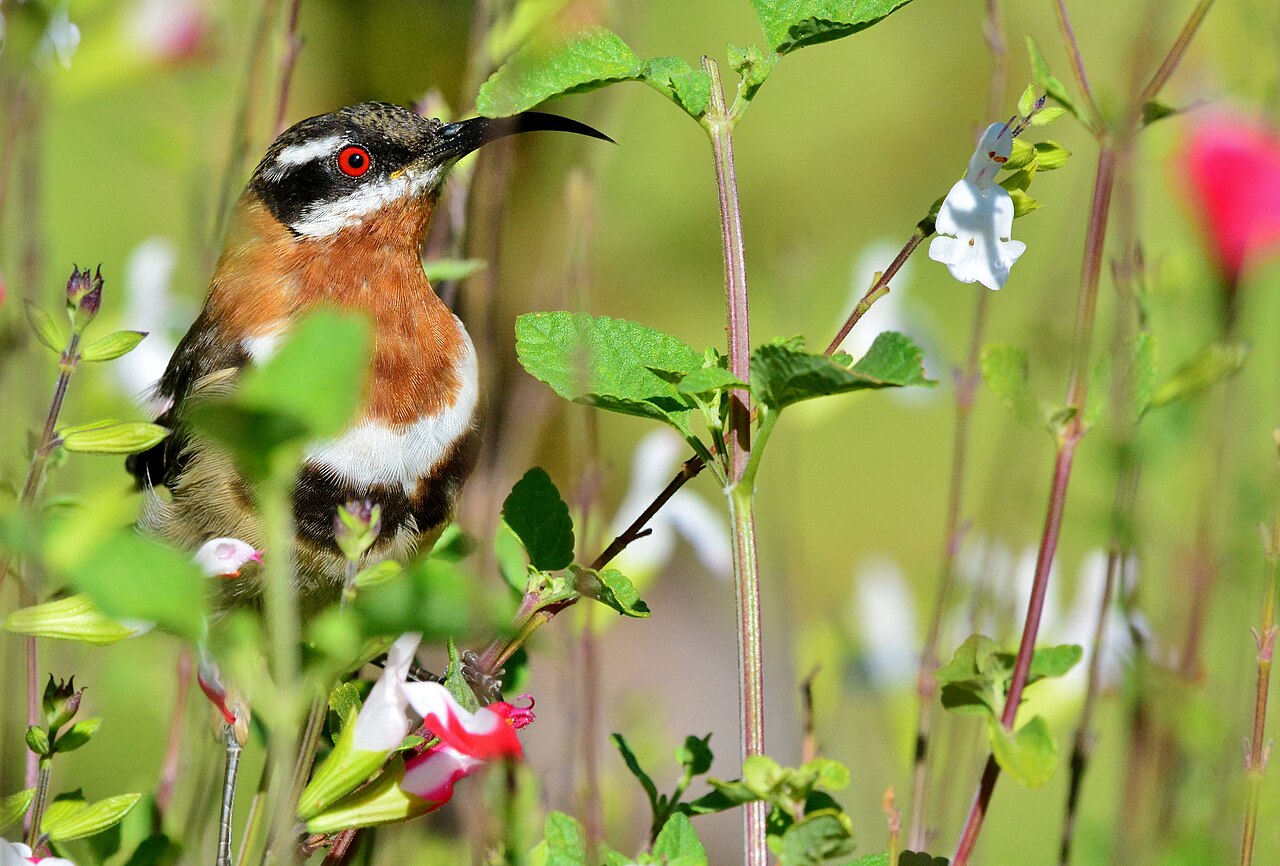
The Western Spinebill is the small long-billed honeyeater of Australia's south-western corner: a bird of kwongan (species-rich heath-like scrub of south-western Australia) heath and banksia scrub that reaches with a thin, strongly decurved bill right down into tubular flowers. The male is boldly marked — black head with a white eyebrow, a rufous collar and a rufous throat — and when he darts off the white outer tail feathers flash. He is one of the few Australian honeyeaters that can genuinely hover while drinking.
Voice
A high, shrill, staccato piping, usually written as kleet-kleet-kleet, which he may repeat for long stretches from a perch above the heath. The tone is thin and penetrating and carries further than you would expect from so small a bird; between flowers he also gives a short sharp chip as a contact note. In chases between males it runs together into a fast, angry rattle.
Recording: John Graff — CC BY-NC-SA 3.0 · Victoria Dam access track (near Canning Mills), Western Australia, Australia · xeno-canto
Identification
A small, slender honeyeater of twelve to sixteen centimetres and eight to eleven grams, with a long, thin, strongly decurved black bill nearly a third the length of the head. The male has a black crown and face with a narrow white eyebrow, a broad rufous band across the nape, a rufous throat and upper breast edged below by a black and then a white crescent, and grey back and wings. The eye is red. The female is far plainer: grey-brown above, rufous-buff below, with a faint pale rufous nape and none of the male's crisp banding. Both sexes show white outer tail feathers in flight; the flight itself is jerky and restless, with short glides between flowers.
Confusion species
The only true sister species, Eastern Spinebill (Acanthorhynchus tenuirostris), occurs solely in eastern Australia and Tasmania and nowhere overlaps with this bird; it also has a white throat with a chestnut patch in the centre rather than a wholly rufous throat, and lacks the broad rufous collar. Within Western Australia the female is the difficult bird: Brown Honeyeater (Lichmera indistincta) is just as small and also decurved-billed, but that bill is distinctly shorter, the bird is uniform olive-brown with a small yellow spot behind the eye and shows no white in the tail. White-cheeked Honeyeater (Phylidonyris niger) and Tawny-crowned Honeyeater (Gliciphila melanops) share the heath with it but are larger, heavily streaked and much straighter-billed; the first also carries a yellow wing panel.
Habitat
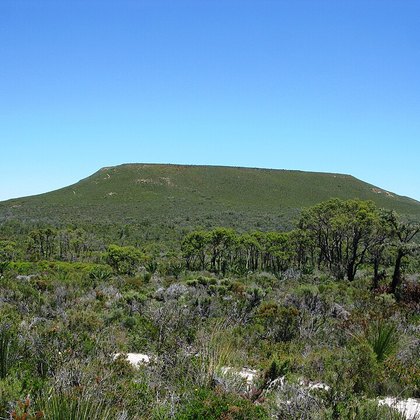
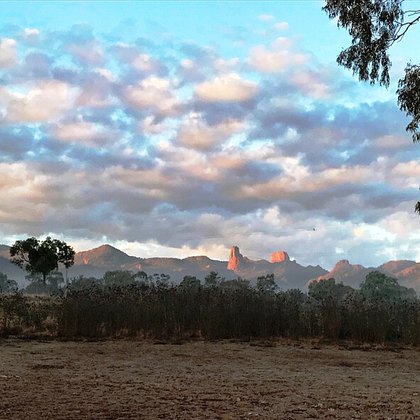
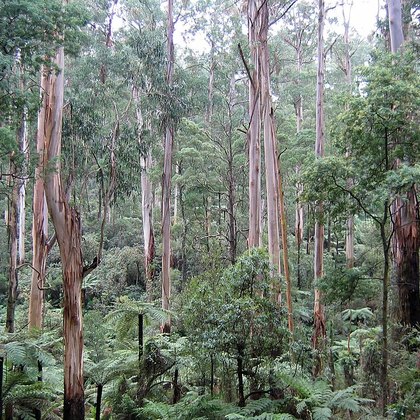
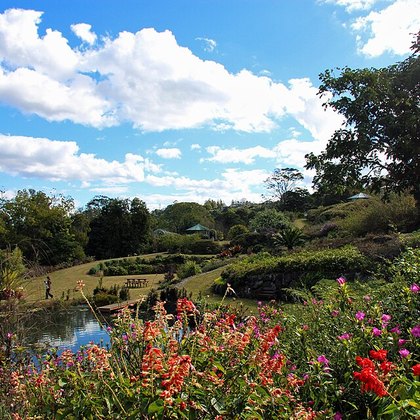
Its core country is the kwongan, the species-rich sandplain heath of south-western Australia, with banksias, grasstrees and hakeas; beyond that, the shrub layer of jarrah and karri forest, coastal scrub behind the dunes and the understorey of open eucalypt woodland. In town it is a regular garden bird wherever native plants have been used: kangaroo paw, grevillea, banksia and Adenanthos supply the tubular flowers its bill is built for.
Where the bird is most often found, arranged by main group and formation.
Range and movements
Endemic to the south-western corner of Western Australia, roughly from north of Jurien Bay along the coast south and east to Israelite Bay, inland to about Moora, Corrigin and Lake Grace. Within that range it is locally nomadic: in winter it drops from the higher forests to the coastal plain and into gardens, and it follows the flowering of banksia and Dryandra through the season.
- Resident
- dark = core range, pale = thinly spread
Where and when to look
In south-western Australia, stand by a flowering banksia or a clump of kangaroo paws and wait — the bird will come, because it works a fixed, rapid flower circuit. Listen before you look: the sharp high kleet-kleet gives it away long before the eye finds it. If all you see is a small brown bird with a curved bill, check the tail: white outer edges make it this species, a plain tail makes it Brown Honeyeater.
Conservation
Least Concern (LC) and still common in suitable heath and forest of the south-west. The species is nonetheless wholly tied to kwongan heath and banksia woodland, and three things press on those: the historical clearing of sandplain heath for wheat, the root rot caused by the soil-borne Phytophthora that kills whole banksia stands, and too-frequent fire, which denies the older, most floriferous shrubs time to recover. In suburban edges planted with native species, by contrast, it holds up well.
Scientific name
Acanthorhynchus superciliosus | Gould, 1837
John Gould erected the genus Acanthorhynchus in 1837 and described this species in the same year; author and date therefore stand without parentheses. Acanthorhynchus is built from Greek akantha, thorn or spine, and rhynchos, bill — after the needle-fine, probing bill that the English name spinebill also records. superciliosus is Latin for 'eyebrowed', after the white stripe above the male's eye. The Noongar of south-western Australia call the bird buljit. The Dutch name refers to the rufous throat and collar.