All species › Parrots › Old World parrots › Swift Parrot
Swift Parrot | Lathamus discolor
Zwaluwpapegaai | Periquito migrador
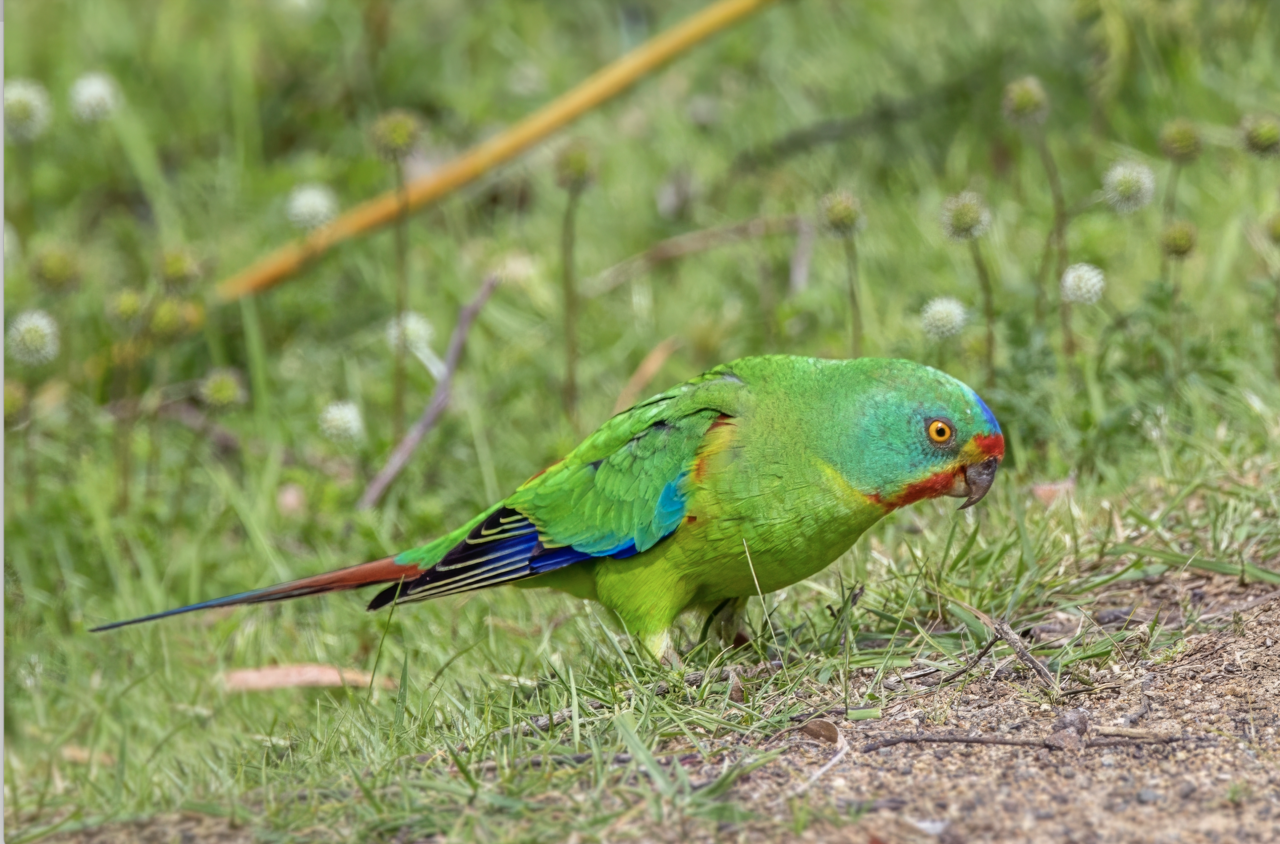
The Swift Parrot is the fastest parrot in Australia and owes its name to it: a slim, bright green bird of twenty-five centimetres with pointed swept-back wings and a long tapering dull-red tail, cutting over the canopy like a swift. It breeds only in Tasmania and crosses Bass Strait every year to winter on the mainland. With some five hundred birds it is among the most threatened parrots in the world.
Voice
The flight call is the most reliable mark: a hard, metallic clit-clit-clit, three or four notes in quick succession, high and dry in tone and quite unlike the harsh screeching of the lorikeets it shares the flowering trees with. Between feeding bouts comes a soft, sustained chattering and muttering. Anyone who knows that flight call can pick the bird out of a mixed flock without seeing it — for many observers that is the only way they have ever recorded the species.
Recording: Ramit Singal — CC BY-NC-SA 4.0 · Quoiba, Devonport City Council, Tasmania, Australia · xeno-canto
Identification
Twenty-five centimetres and about sixty-five grams, but noticeably leaner than that suggests. The plumage is bright grass-green, with a crimson mask running from the forehead across the lores and chin onto the throat and edged in yellow, and a dark blue patch on the crown. There is blue on the shoulder and the bend of the wing, and the underwing coverts are scarlet — a flash that shows on every passing bird. The tail is long and tapering and dull red to purple-red, unique among the green parrots of this region. The female is duller and shows a cream bar across the underwing. Flight is very fast, straight and swift-like, on rapid beats with short glides.
Confusion species
The confusion is almost always with two lorikeets feeding in the same flowering eucalypts. Musk Lorikeet (Trichoglossus concinnus) is the same size and also green with red on the face, but carries that red as a stripe behind the eye, has a blue crown and a short square-cut green tail; Scaly-breasted Lorikeet (Trichoglossus chlorolepidotus) is plainer green with yellow scalloping on the breast and is likewise short-tailed. Both lack the long pointed red tail, and both screech harshly instead of giving the metallic clit-clit. Rainbow Lorikeet (Trichoglossus moluccanus) is bulkier with a blue head and orange breast. Australian King-Parrot (Alisterus scapularis) is far larger with a broad square tail.
Habitat
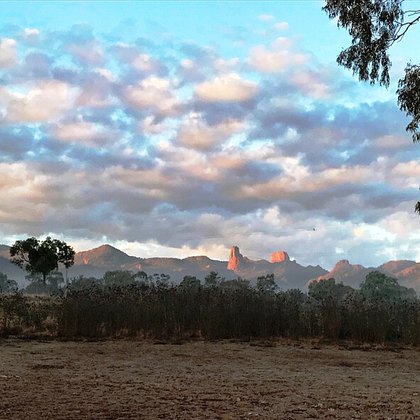
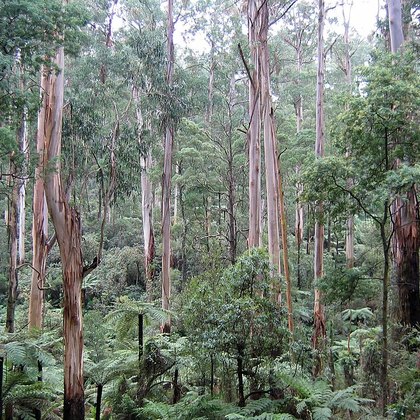
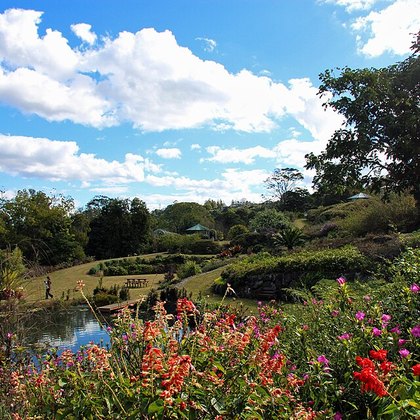
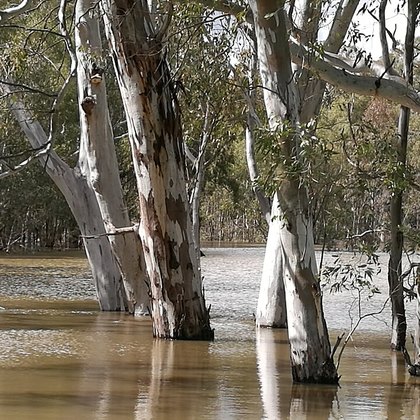
In the breeding season dry and wet eucalypt forest in Tasmania, where two things must coincide: heavily flowering Tasmanian blue gum (Eucalyptus globulus) and black gum (Eucalyptus ovata) for nectar, and old trees with hollows to nest in. In winter on the mainland it seeks out flowering eucalypts in box-ironbark (dry eucalypt forest of box and ironbark species; ironbark: eucalypt with deeply furrowed, hard bark) woodland, in coastal spotted gum (eucalypt with a spotted, flaking trunk, east coast) and swamp mahogany (eucalypt of coastal swamps, an important winter-flowering tree) forest, on river red gum floodplains, and simply in street trees and town parks where those are in blossom. It depends wholly on nectar and lerp (sugary scale secreted by psyllids, food for honeyeaters) and follows the flowering to different districts from year to year.
Where the bird is most often found, arranged by main group and formation.
Range and movements
Breeds only in Tasmania, in a strip along the east coast, in the Wellington Range near Hobart and on Maria Island and Bruny Island. In March and April virtually the whole population crosses Bass Strait; from late May it is on the mainland, and through October it is back in Tasmania. The winter quarters lie in central and northern Victoria — the box-ironbark country around Bendigo, St Arnaud, Rushworth–Heathcote, Chiltern–Mount Pilot and the Warby Ranges — and in New South Wales as far as south-eastern Queensland, with the spotted gum forests of the south coast a key area. A few reach south-eastern South Australia. It does not occur in New Zealand.
- Breeding (summer)
- Winter
- Passage
- dark = core range, pale = thinly spread
Where and when to look
In winter, find a eucalypt in full blossom and stand under it listening for the metallic clit-clit-clit; that picks it out of a noisy lorikeet flock. Check the tail of every bird that leaves — long, pointed and red means this species, short and green means a lorikeet. Good places are the box-ironbark around Chiltern and Bendigo in Victoria and the flowering spotted gum of the New South Wales south coast between June and September. Report every sighting to the annual survey, which runs on volunteers.
Conservation
Critically Endangered (CR). A count using genetic markers put the population at about five hundred birds in 2024, an upward revision of the earlier figure of some three hundred but still a shadow of the two thousand of the early 2000s; models predict extinction around 2031 if nothing changes. The core of the problem is habitat loss: nearly a quarter of the Tasmanian breeding habitat was logged between 1996 and 2016, about eighty-three per cent of the original box-ironbark woodland of central Victoria has gone, and the fires of 2019–20 removed large parts of the south-coast spotted gum forest. Predation by the introduced sugar glider was held to be the leading direct cause from 2016 and was the reason for the uplisting to Critically Endangered, but a study of twenty nests over two breeding seasons published in 2026 found no confirmed case, although the animals did visit nest hollows; what it did record was predation of chicks by currawongs and by the introduced Common Starling (Sturnus vulgaris). On top of that an estimated two per cent of the population dies each year in collisions with windows, fence wire and vehicles. The lesson of that latest work is that protecting old hollow-bearing forest and the winter blossom weighs more than predator control on its own.
Scientific name
Lathamus discolor | (Shaw, 1790)
Shaw described the species in 1790 as Psittacus discolor, on plate 49 of surgeon John White's journal of the voyage to New South Wales, where it was called the red-shouldered paroquet; because it later moved genus, author and year are bracketed. The epithet discolor is Latin for 'of different colours'. Lesson introduced the genus Lathamus in 1830, named for the English ornithologist John Latham, who described many of the first Australian birds. The type locality is New South Wales — the winter quarters, then, and not the breeding grounds.