All species › Pelicans, herons and ibises › Ibises and spoonbills › Straw-necked Ibis
Straw-necked Ibis | Threskiornis spinicollis
Strohalsibis | Ibis tornasolado
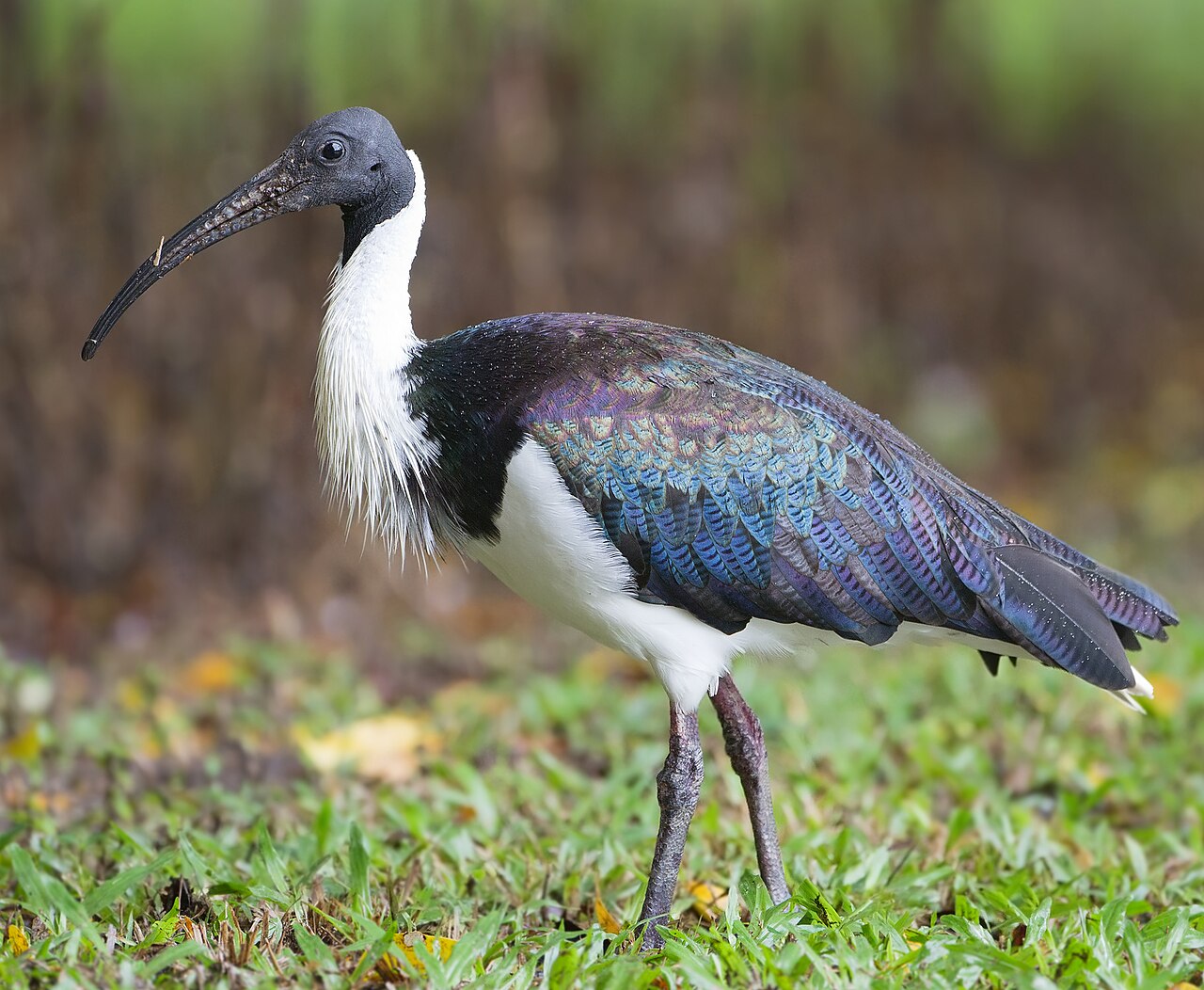
The Straw-necked Ibis is the ibis of dry land: a bird with a bare black head, a long curved bill and a glossy blue-black back, walking in loose flocks over pasture and cereal paddock and eating grasshoppers there. Its name comes from the bundle of stiff, straw-yellow feather shafts that hangs like a beard down its foreneck.
Voice
Away from the colony it is silent. At the nest come grunts and a dull croaking between the birds, and in flight a passing flock sometimes gives a hoarse, rolling u-u-uh that drifts down from above. Otherwise what one hears from it is chiefly the rush of wings when hundreds lift off a paddock at once.
Recording: Nigel Jackett — CC BY-NC-SA 4.0 · Willare, Western Australia, Australia · xeno-canto
Identification
A large wading bird of about seventy centimetres with a bare black head and neck and a long, downcurved black bill. Back and wings are glossy blue-black with a metallic sheen of purple, green and bronze that only comes out in good light; the nape and sides of the neck are white and the underparts are white. Adults carry a tuft of stiff, straw-yellow feather shafts low on the foreneck — the feature the species is named for and unmistakable at close range. The legs are dark, with red on the thighs when breeding. In flight the picture is simple: a white body under black wings, neck and legs outstretched, often in long strings or in V formation. Young birds lack the neck plumes and are duller.
Confusion species
Australian White Ibis (Threskiornis molucca) is the species it is always seen with, and in flight the distinction is absolute: White Ibis has white wings with only black tips, Straw-necked has wholly black wings under a white body. On the ground the glossy black back and the straw-yellow neck plumes separate them. Glossy Ibis (Plegadis falcinellus) is much smaller, slimmer and entirely dark with no white. Far Eastern Curlew (Numenius madagascariensis) also has a long curved bill but is a brown-streaked shorebird with a quite different flight.
Habitat
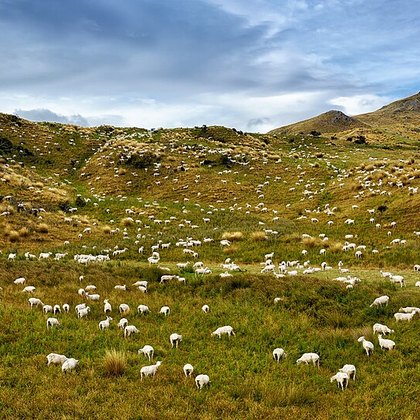
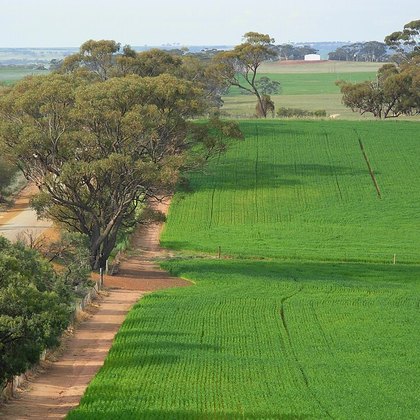
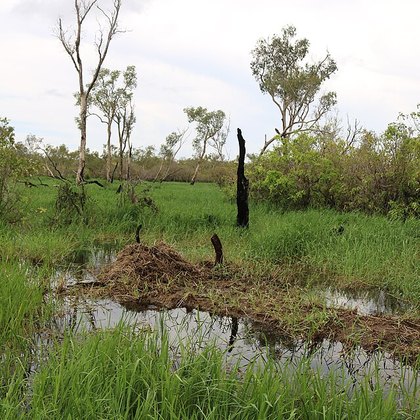
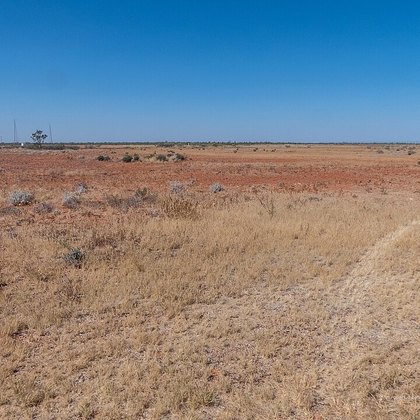
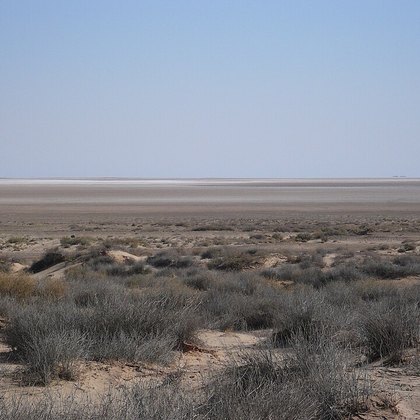
Dry and wet grassland, stock pasture, cropland and the margins of swamps and lagoons, where it walks and picks up grasshoppers, crickets, beetles and larvae, and takes frogs, small reptiles and mammals besides. Unlike White Ibis it is not tied to water and rarely goes to the coast, the mudflat or the mangrove; it avoids towns. For breeding it does need water: colonies lie in reed and rush swamps, on large trampled mats of reed and sticks that sometimes merge into one continuous platform and are used again for years.
Where the bird is most often found, arranged by main group and formation.
Range and movements
Across the whole Australian mainland, with the weight in the grasslands and croplands of the east and south-east; in Tasmania it is a vagrant. It breeds mainly in the south and moves north afterwards, as far as the Top End and southern New Guinea. It is strongly nomadic and follows food and water: a locust outbreak or a freshly flooded inland swamp draws thousands of birds within days. It appears now and then on Norfolk Island and Lord Howe Island; it does not occur in New Zealand.
- Resident
- dark = core range, pale = thinly spread
Where and when to look
Look for it on land, not at the water: a freshly mown or grazed paddock and a stubble field after harvest are its best places, and in a good year hundreds stand together in inland New South Wales and Victoria. Check every flock of ibis for wing colour as soon as they lift — that is the quickest separation from White Ibis. Get close enough to a single bird to see the straw-yellow shafts on the foreneck; that is the mark that really fixes it.
Conservation
Least Concern (LC) and spread across the whole of Australia, with a population in the millions. Farmers regard it as a useful bird, since a flock removes large numbers of grasshoppers and crop larvae in a short time. Its weak point is breeding: the colonies lie in inland reed swamps and depend on the big floods of the Murray-Darling Basin, and with drainage and water extraction there the number of successful breeding years has fallen. Through a run of dry years it locally does not breed at all.
Scientific name
Threskiornis spinicollis | (Jameson, 1835)
Jameson described the bird in 1835 as Ibis spinicollis, in the Edinburgh New Philosophical Journal; because it was later moved to another genus, author and year stand in parentheses. spinicollis is formed from Latin spina, 'thorn' or 'spine', and collum, 'neck', after the stiff feather shafts on the foreneck that others called 'straw'. The genus Threskiornis was introduced by G.R. Gray in 1842, from Greek thrēskos, 'religious', and ornis, 'bird', after the Sacred Ibis of Egypt, the type species of the genus. The type locality is the Murray River in New South Wales.