All species › Birds of prey › Kites, Old World vultures, eagles and hawks › Square-tailed Kite
Square-tailed Kite | Lophoictinia isura
Kortstaartwouw | Milano colicuadrado
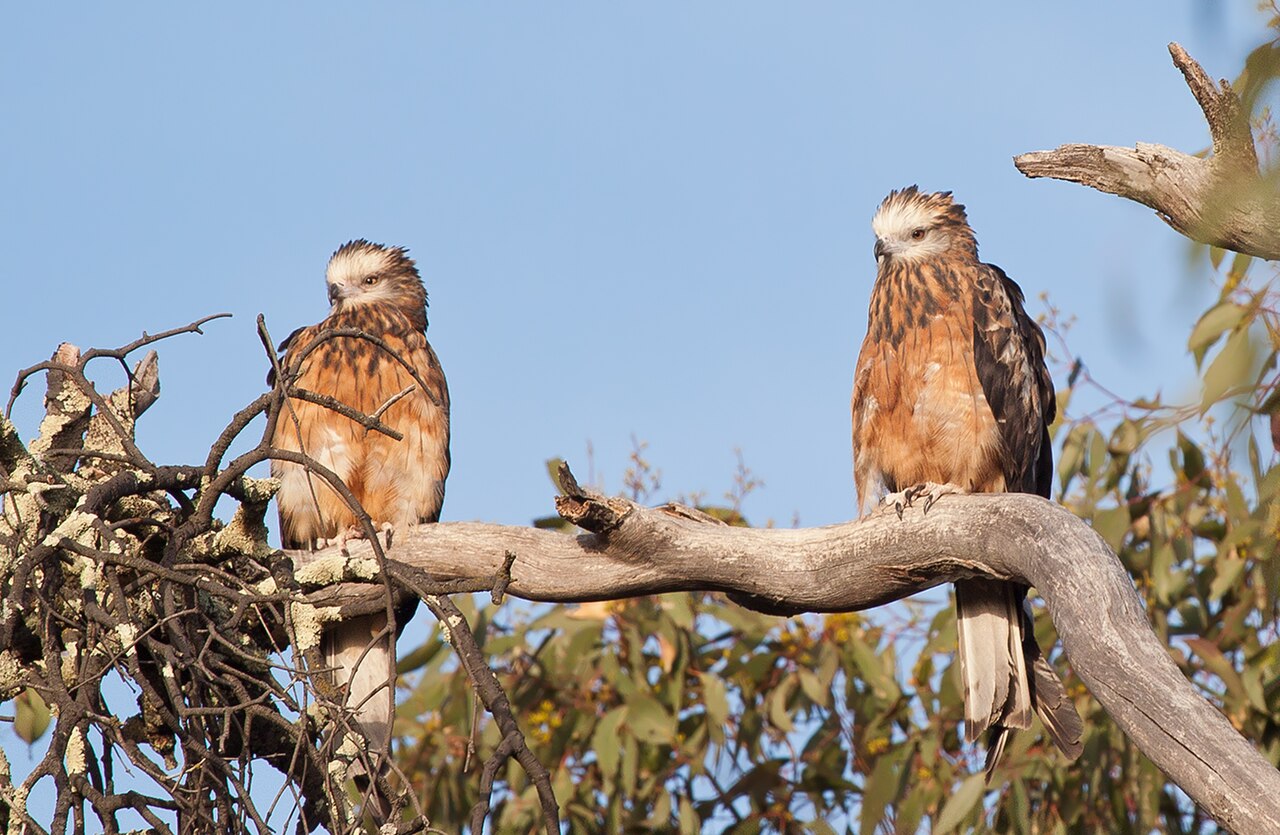
The Square-tailed Kite is the nest robber of the Australian eucalypt forest: a slim, strikingly white-faced raptor with long wings set well forward, drifting slowly and low along the canopy and plucking young birds from their nests. It is nowhere numerous and is seldom seen.
Voice
A yelping, high yeep-yeep-yeep, and beside it a shriller drawn-out squealing: ee-ee-ee-ee. Away from the breeding territory it is almost always silent, so sound is no way of finding it here; at the nest it does become noisy, especially when the pair circle together over the nest tree.
Recording: Greg McLachlan — CC BY-NC-SA 4.0 · Heathcote, Sutherland Shire, New South Wales, Australia · xeno-canto
Identification
A slightly built raptor of just over half a metre with a wingspan around a metre and a half — a lot of wing on little body. The head is narrow and the face conspicuously white to cream, with a pale yellow eye. The underparts are rufous with dark streaks; the long wings are set well forward and end in deeply fingered tips with a pale window at the base of the primaries. The tail is long and cut off square, and is twisted continuously in flight. It sails on wings held in a shallow V, rocking slowly from side to side, often barely above the treetops.
Confusion species
Black-breasted Buzzard (Hamirostra melanosternon) also has a square-cut tail, but is far heavier and darker on the breast and shows large white bull's-eyes in the primaries that the Square-tailed Kite lacks. Black Kite (Milvus migrans) has a forked tail and a dark face. Whistling Kite (Haliastur sphenurus) is shaggier about the head, shows a pale M on the underwing and circles high rather than sliding along the canopy. Pacific Baza (Aviceda subcristata) also drifts slowly along the foliage, but is smaller, with a yellow eye-ring, a crest and a barred belly.
Habitat
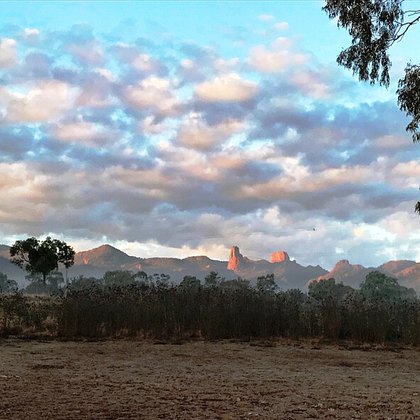
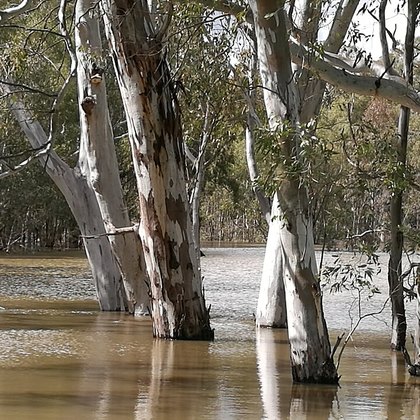
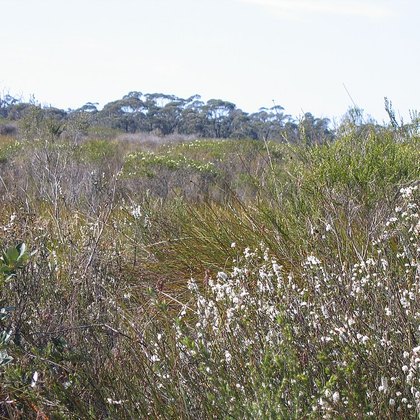
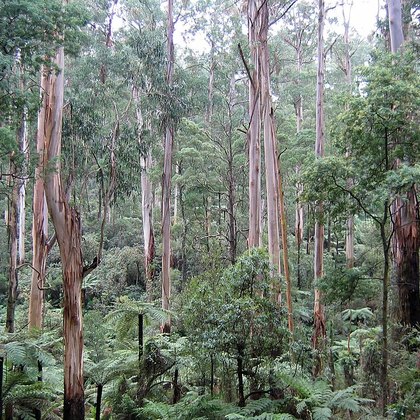
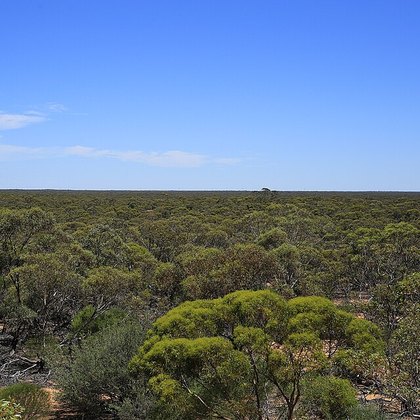
Open eucalypt forest and woodland with old tall trees, timbered watercourses, coastal heath and the edges of mallee (low, multi-stemmed eucalypt scrub of dry southern Australia) — nearly always within two hundred and fifty kilometres of the coast. Treeless interior and closed rainforest are avoided. The nest, a stick platform lined with fresh eucalypt leaves, is usually close to water. Unlike most kites it takes no carrion: it lives on small passerines — honeyeaters above all — and their nestlings, and beyond that on insects, eggs and lizards.
Where the bird is most often found, arranged by main group and formation.
Range and movements
Thinly spread over almost the whole Australian mainland, but centred on the coast and subcoast; it skips the arid centre and the western deserts, and is absent from Tasmania as it is from New Zealand. It is partly migratory: birds from the south-east shift north in winter, while the tropical north holds birds all year. In Victoria the population is put at twenty to fifty pairs, with concentrations in East Gippsland around Orbost and Mallacoota, in the goldfields near Bendigo and near Horsham.
- Resident
- Breeding (summer)
- dark = core range, pale = thinly spread
Where and when to look
In spring watch the canopy of a stand of old river red gums and go by behaviour rather than plumage: no other raptor slides so slowly and so low just above the leaves, with its wings bowed forward. A party of honeyeaters scolding loudly above a slowly passing pale-faced raptor is almost always this species.
Conservation
Least Concern (LC) globally and not listed nationally under Australian environment law, but so scarce everywhere that several states list it separately: in Victoria it stands as Vulnerable on the FFG list with an estimated twenty to fifty pairs, and in New South Wales it is likewise Vulnerable. The pressure comes from clearing and thinning of old open eucalypt forest, loss of large nest trees, altered fire regimes and disturbance at the nest. Because it lives on small birds rather than carrion, it escapes the poisoning risks that reach the other kites.
Scientific name
Lophoictinia isura | (Gould, 1838)
Gould described the species in 1838 as Milvus isurus; the later move to a genus of its own puts author and year in parentheses. The genus Lophoictinia was introduced by Kaup in 1847 and combines Greek lophos 'crest' with iktinos 'kite'. isura comes from isos 'equal' and oura 'tail': a tail whose feathers are of equal length and so is cut off straight. The type locality is Australia, later restricted to New South Wales. The English and Spanish names name that square end directly; the Dutch name also points at the tail, although in truth it is not short but square-cut.