All species › Tubenoses › Albatrosses › Southern Royal Albatross
Southern Royal Albatross | Diomedea epomophora
Zuidelijke koningsalbatros | Albatros real
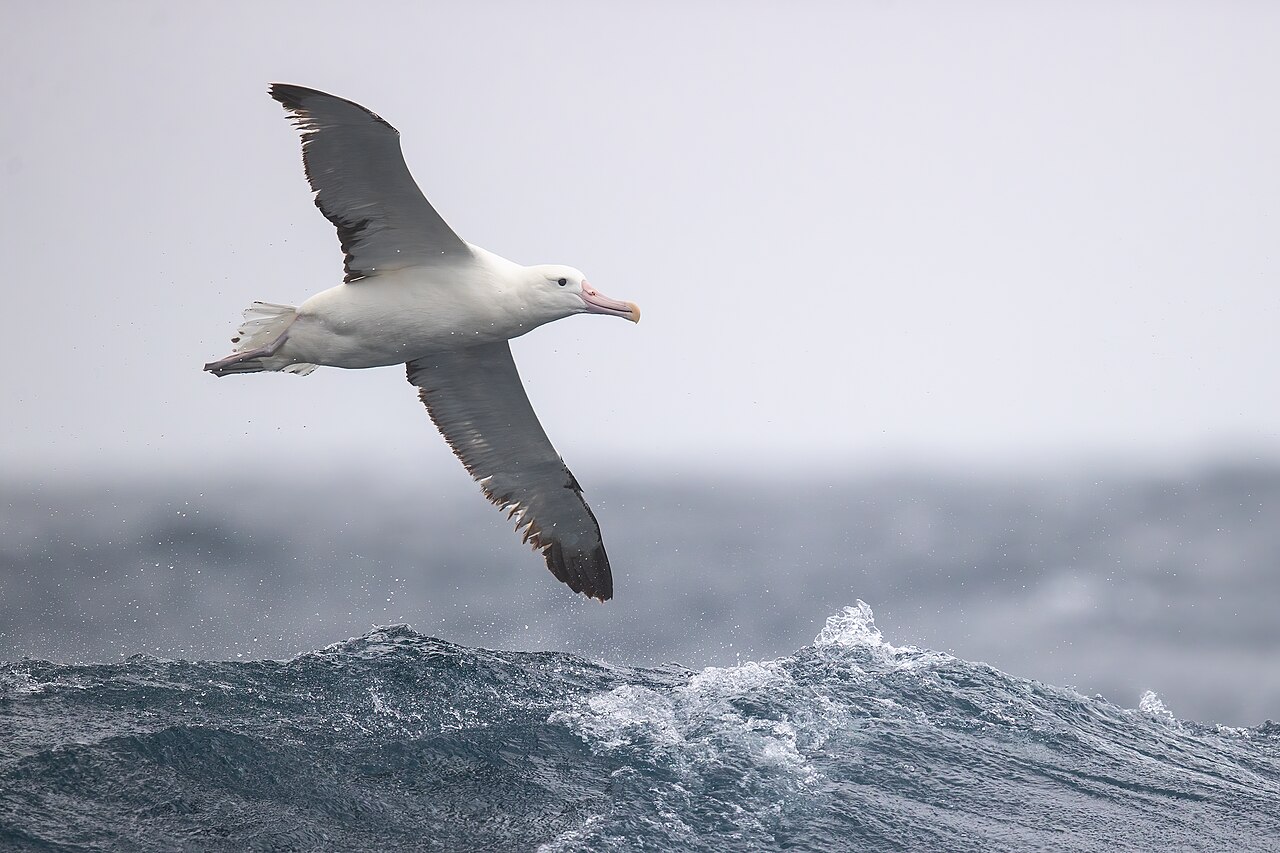
The Southern Royal Albatross is one of the heaviest flying birds in this guide: an albatross of around 120 cm with a span of over three metres, snow-white bodied with black wings and a stout pale pink bill. More than 99 per cent of the world population breeds on a single island, Campbell, far south of New Zealand.
Voice
At sea it is silent. At the colony, display brings a high, shrill screaming bray that may break into yapping or clucking; bills clatter and the wings open to their full width, a performance visible and audible right across the slope on a still day.
Recording: Sander Lagerveld — CC BY-NC-SA 4.0 · Campbell Island, New Zealand · xeno-canto
Identification
About 120 cm long, span over three metres, 8 to 10 kg. The best mark is the bill: stout and pale pink with a creamy tip and a black cutting edge along the upper mandible — a thin dark line that no other great albatross carries. The body is white at every age; there is no brown stage in this species. The upperwing whitens with the years from the leading edge inwards, especially in males, so that old birds show a white-flecked inner wing. Young birds have a wholly dark upperwing and a white body flecked black on back, flanks, crown and tail. In flight royals look bulkier than Snowy Albatross, with the head set deeper between the shoulders.
Confusion species
Northern Royal Albatross (Diomedea sanfordi) is the nearest double: it keeps a wholly blackish-brown upperwing for life, whereas in Southern the white creeps in from the leading edge. In young birds that mark fails — both then have dark wings — and a lone bird at sea often cannot be named with confidence; Southern averages larger and heavier-billed. Snowy Albatross (Diomedea exulans) and Antipodean Albatross (Diomedea antipodensis) do pass through a brown stage, lack the black cutting edge and often carry a peach smudge behind the ear; in them the upperwing whitens from the back outwards, the exact reverse. All mollymawks (albatrosses of the genus Thalassarche) — Shy Albatross (Thalassarche cauta) and Salvin's Albatross (Thalassarche salvini), for instance — are a third smaller, with a dark bill marked yellow and a permanently black upperwing.
Habitat
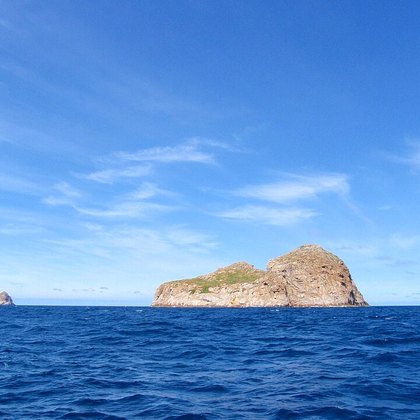
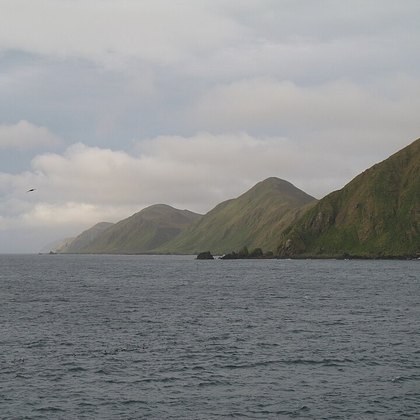
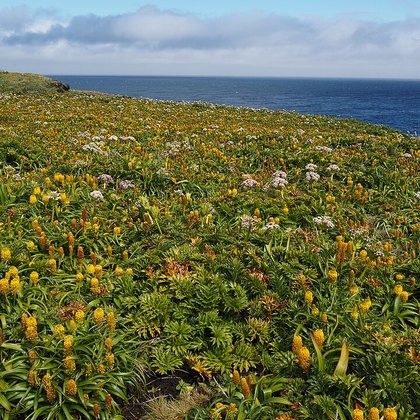
Subantarctic and cool-temperate ocean, favouring the shelf edge and the upwellings where squid and fish come to the surface. Breeding is on the open tussock (grassland of loose, tall clump-forming grasses, especially in New Zealand) slopes and herbfields of the subantarctic islands, where the nest is a low cone of mud and plant material sited where there is wind enough to take off.
Where the bird is most often found, arranged by main group and formation.
Range and movements
Breeds on Campbell Island (8,200 to 8,600 pairs, well over 99 per cent of the population), on Enderby in the Auckland Islands (about 47 pairs left in 2017) and in a few dozen pairs on Auckland and Adams Islands. At sea it is seen off the Otago coast and at Kaikoura, in Foveaux Strait and around Stewart Island, and further out across the Tasman Sea and over the shelf off Victoria, New South Wales and Tasmania, mainly in winter.
- Resident
- Breeding (summer)
- dark = core range, pale = thinly spread
Where and when to look
The albatross trip out of Kaikoura is the most reliable place in the whole region: the birds come within a few metres of the boat and the black cutting edge on the pink bill is then visible with the naked eye. If you have a large albatross with a wholly white body and no brown at all, go straight to that cutting edge and then to the leading edge of the upperwing — white running inwards from the leading edge names this species rather than Northern Royal.
Conservation
Vulnerable (VU), with a total population of 28,000 to 29,500 birds. The nineteenth century cut deep: the breeding birds on Enderby were wiped out and the Campbell population was thinned severely by hunting and introduced animals. Today bycatch on longliners and trawlers is the main problem, both in New Zealand waters and off South America, where the birds move outside the breeding season. That virtually the whole species breeds on one island leaves it exposed to a single catastrophe.
Scientific name
Diomedea epomophora | Lesson, 1825
Lesson described the species in 1825 as Diomedaea epomophora; because the genus (bar that spelling) stayed the same, author and year carry no parentheses. epomophora is built from the Greek epōmis, 'shoulder', and -phoros, 'bearing': the bird 'bears' dark shoulders on an otherwise white body. Lesson gave no type locality; it is now placed at Campbell Island, where almost the whole species breeds.