All species › Tubenoses › Petrels, shearwaters and diving petrels › Southern Giant-Petrel
Southern Giant-Petrel | Macronectes giganteus
Zuidelijke reuzenstormvogel | Abanto marino antártico
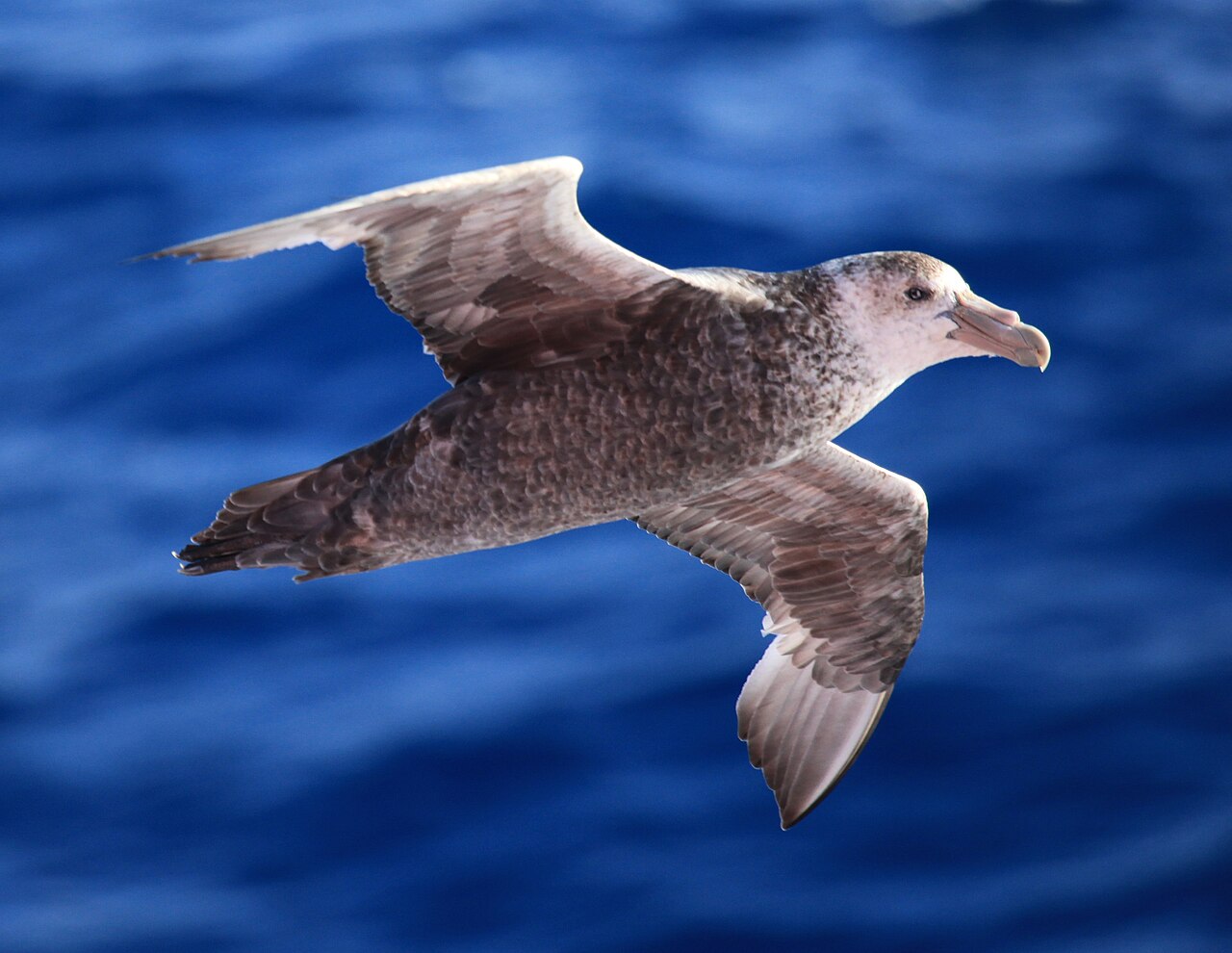
The Southern Giant-Petrel is the largest petrel in the world, the size of a small albatross, with an enormous horn-yellow bill whose tip is green. It is the scavenger of the southern ocean — eating dead penguins, seals and whales, and killing seabirds itself besides — and it is the only petrel with a white morph, which sits among the dark birds like a white patch flecked with black.
Voice
At a carcass it is loud: a deep growling and roaring, with whinnying and hissing in the scrum and much wing-flapping as birds drive one another off. At the colony displaying birds clap the bill and give a braying shout with the wings held wide. At sea, away from carrion, it is generally silent. Chicks on the nest spit stomach oil at anything that comes too close.
No recording with a suitable Creative Commons licence has been found for this species yet; what to listen for is described below.
Identification
A huge petrel of 80 to 100 cm and 3.8 to 5.0 kg, with a span of about two metres. There are two morphs. The dark morph — some ninety per cent of birds — has a grey-brown body with an off-white head, neck and upper breast set sharply against it, mottled greyish-brown wings with pale coverts along the leading edge, and often a pale eye. The white morph — roughly one bird in ten — is wholly white with a variable scatter of dark brown feathers, and has a dark brown eye. Both share the enormous horn-yellow bill with its pale green tip and grey-brown legs. Juveniles of the dark morph are sooty black and only pale on the head with the years. The flight is hunched and short-necked, heavy beats on stiff wings — never the smooth straight wing line of an albatross.
Confusion species
Northern Giant-Petrel (Macronectes halli) is the only real confusion, and the bill tip decides it: in giganteus the nail is horn-yellow with a green tip, from bluish to apple green; in halli brick-red to reddish brown. At range, plumage helps on adults: giganteus keeps a dark body with a sharply bounded whitish head and neck, while halli turns dark above and pale below with a crown that stays brown. The white morph is a certainty: it occurs in this species only. Juveniles of both are entirely sooty black and, without a view of the bill tip, all but inseparable — that is the honest position, and size does not solve it, since the two overlap in almost every measurement. Albatrosses are slighter in head and neck, have separate nostril tubes on either side of the bill rather than one pipe along the top, and glide more smoothly.
Habitat
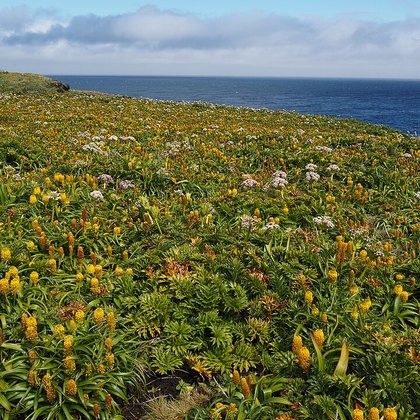
Open sea from subantarctic water far into the pack ice, further south than its northern twin, with a strong pull towards anywhere carrion can be had: along penguin and seal colonies, behind trawlers and around harbours. It also forages on foot ashore, at the tideline and at elephant seal wallows. It breeds on open, windswept ground on subantarctic and Antarctic islands and coasts, in loose colonies where the nest is a low mound of moss, grass and pebbles.
Where the bird is most often found, arranged by main group and formation.
Range and movements
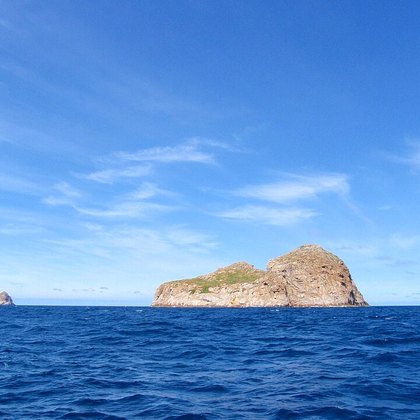
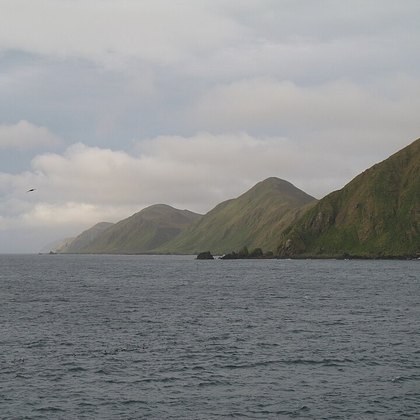
Within the map window it does not breed in New Zealand itself; the nearest colony is Macquarie Island, with about 2,145 pairs, and beyond that Heard and the McDonald Islands in the Indian Ocean. The world population is put at some 46,800 breeding pairs, centred on the islands and coasts around Antarctica, South Georgia and southern Chile and Argentina. Non-breeding birds are regular in New Zealand waters, with the Kaikoura Peninsula the best-known spot, and along the southern coast of Australia; in this region it is therefore chiefly a visitor.
- Resident
- Winter
- dark = core range, pale = thinly spread
Where and when to look
Take the albatross trip at Kaikoura, where both giant petrels come to chum and approach within a few metres. There, do not look at the head but at the tip of the bill — green is this species — and take a photograph, because against the light green looks much like brown. If you see a wholly white bird flecked with black the matter is settled at once: that morph occurs only in the southern species, and it is not a separate bird but simply a second plumage.
Conservation
Least Concern (LC), with a world population of around 46,800 breeding pairs. The largest losses arise at sea: birds are caught on longlines or strike the warps of trawlers, and because the species seeks out carcasses and fishery waste it goes precisely where that gear hangs. At the colonies disturbance is a real problem, since a breeding bird that is flushed leaves the nest, and colonies have declined for that reason. Measures help: streamer lines behind trawlers and setting longlines at night cut the toll sharply.
Scientific name
Macronectes giganteus | (Gmelin, 1789)
Gmelin described the species in 1789 as Procellaria gigantea; because it was later moved to Macronectes, author and year stand in parentheses. giganteus simply means 'gigantic'. The genus Macronectes was introduced by Richmond in 1905 and is formed from Greek makros, 'great', and nektes, 'swimmer'. The type locality was later restricted to Staten Island — Isla de los Estados, off the tip of Tierra del Fuego. The Maori name is pangurunguru.