All species › Passerines › Australasian robins › South Island Robin
South Island Robin | Petroica australis
Zuidereilandvliegenvanger | Petroica neozelandesa
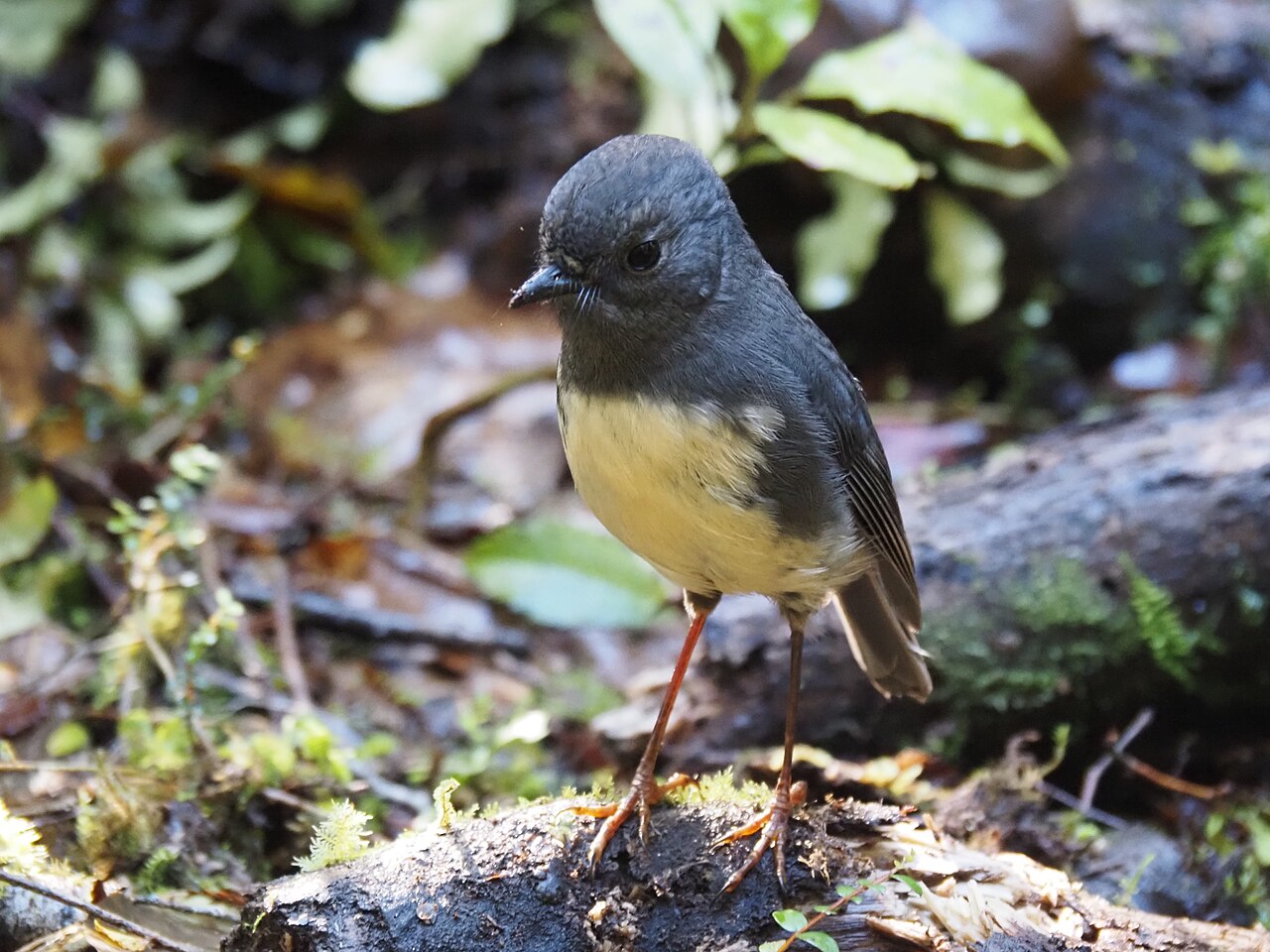
The South Island Robin, toutouwai in Maori, is the robin of New Zealand's South Island: a long-legged, dark grey bird that stands upright on the forest floor and walks up close to people. It lacks the red of all its Australian relatives entirely. What makes it distinctive is not its plumage but its behaviour: it follows walkers to snap up what they flush, caches food for later, and has become one of the best-studied birds in New Zealand.
Voice
A loud, sustained territorial song of clear, well-spaced whistled notes, delivered in long runs with short pauses between them — one of the most penetrating bird sounds of South Island forest, especially in the early morning. Males sing on for minutes from a fixed post. There is also a short, sharp tick as contact and alarm call, often given just as the bird stands close by on the ground.
Recording: Olivier SWIFT — CC BY-NC-SA 4.0 · Kapiti Island, Kapiti Coast District, Wellington, New Zealand · xeno-canto
Identification
A large bird for a robin, well over thirty grams, with long thin legs and a markedly upright stance. The upperparts are dark slate-grey to nearly black; the underparts change fairly sharply on the lower breast and belly to off-white or yellowish white. There is no red or pink, and no white forehead spot. The sexes look much alike; the female averages slightly duller, browner and smaller. The bird hops across the forest floor in long bounds, then stands motionless and darts in as soon as something moves.
Confusion species
The closest relative is North Island Robin (Petroica longipes), which is nearly identical but occurs only on the North Island; the two were long treated as one species and cannot usefully be separated on appearance in the field — the island decides. Tomtit (Petroica macrocephala), miromiro or ngirungiru in Maori, shares the forest but is much smaller and shorter-legged, with a large round head, a white wing bar and a white forehead spot, and hunts from a branch rather than on the ground. Black Robin (Petroica traversi) — the most threatened member of the genus, reduced to five birds in the early 1980s — is entirely black and lives only on the Chatham Islands. With the red and pink Australian species, Scarlet Robin (Petroica boodang), Flame Robin (Petroica phoenicea), Red-capped Robin (Petroica goodenovii), Rose Robin (Petroica rosea) and Pink Robin (Petroica rodinogaster), no confusion is possible: all have red or pink underparts and none reaches New Zealand.
Habitat
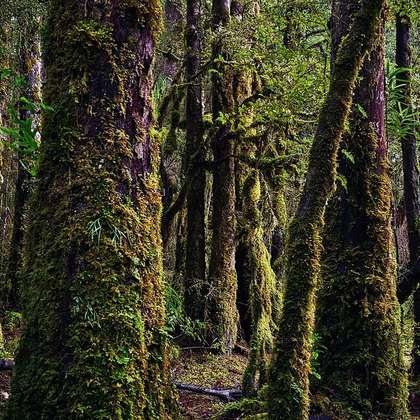
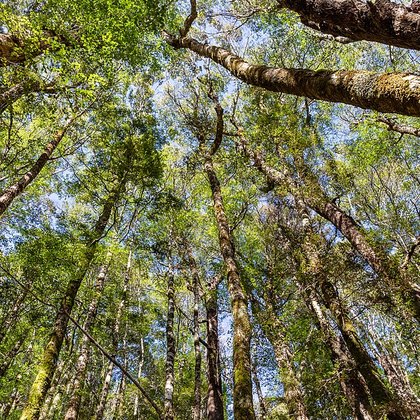
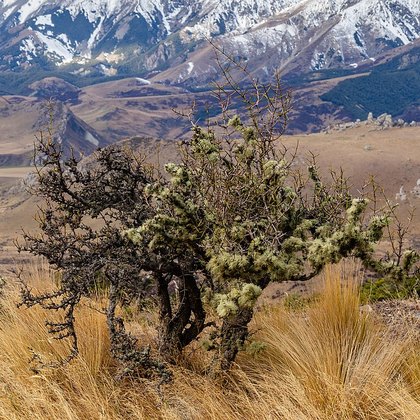
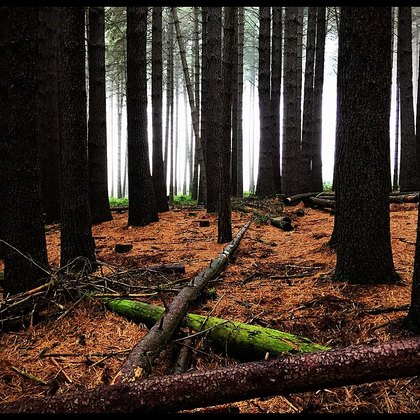
Native forest: podocarp-broadleaf and southern beech forest, with a preference for places with a closed canopy, an open floor and plenty of dead wood and litter. The bird forages almost entirely on the ground, turning over leaf litter for worms, beetles and other invertebrates. It also persists in planted conifer forest with a native understorey and in manuka and matagouri scrub, provided there is enough litter and cover — a flexibility that helps in reintroductions.
Where the bird is most often found, arranged by main group and formation.
Range and movements
Endemic to the South Island of New Zealand and to Stewart Island, where the form rakiura lives; the type material comes from Dusky Sound. On the mainland the distribution is fragmented and confined to forests where predators are controlled. Beyond that there are important populations on predator-free islands and in fenced sanctuaries — Motuara Island, Ulva Island and Orokonui are well-known examples — largely the result of deliberate translocations. There is no migration.
- Resident
- Breeding (summer)
- dark = core range, pale = thinly spread
Where and when to look
This is the easiest robin of all: stand still on a forest track, shuffle your feet through the litter, and the bird will come to you to see what you have flushed. Look down, not up. On island sanctuaries such as Ulva and Motuara the birds often stand within a metre. Note the long legs and the upright stance; that, and the complete absence of red, separates it at once from any Australian robin.
Conservation
Globally Least Concern (LC on the IUCN Red List), but that category covers the New Zealand reality only halfway: under the national threat classification the species counts as declining. Because it forages on the ground and nests low and in cavities, it is exceptionally exposed to introduced rats, stoats and cats, and on the mainland it persists almost only where these are actively controlled. The answer has become the New Zealand standard approach: predator-free islands, fenced sanctuaries and repeated translocations. Several of those translocated populations started small and have yielded important research on inbreeding and on how few founders a population needs — knowledge that fed directly into the rescue of Black Robin (Petroica traversi).
Scientific name
Petroica australis | (Sparrman, 1788)
Anders Sparrman described the species in 1788 as Turdus australis, from material taken at Dusky Sound on the South Island; because it now stands in Petroica, author and year go in parentheses. The genus Petroica combines Ancient Greek petros ('rock') with oikos ('dwelling'). The epithet australis is Latin for 'southern'. The Maori name toutouwai applies to this species and to North Island Robin alike. The English name South Island Robin, the Dutch zuidereilandvliegenvanger and the Spanish petroica neozelandesa all name the country rather than the plumage — understandable in a robin that carries no red or pink at all.