All species › Tubenoses › Albatrosses › Salvin's Albatross
Salvin's Albatross | Thalassarche salvini
Salvins albatros | Albatros de Salvin
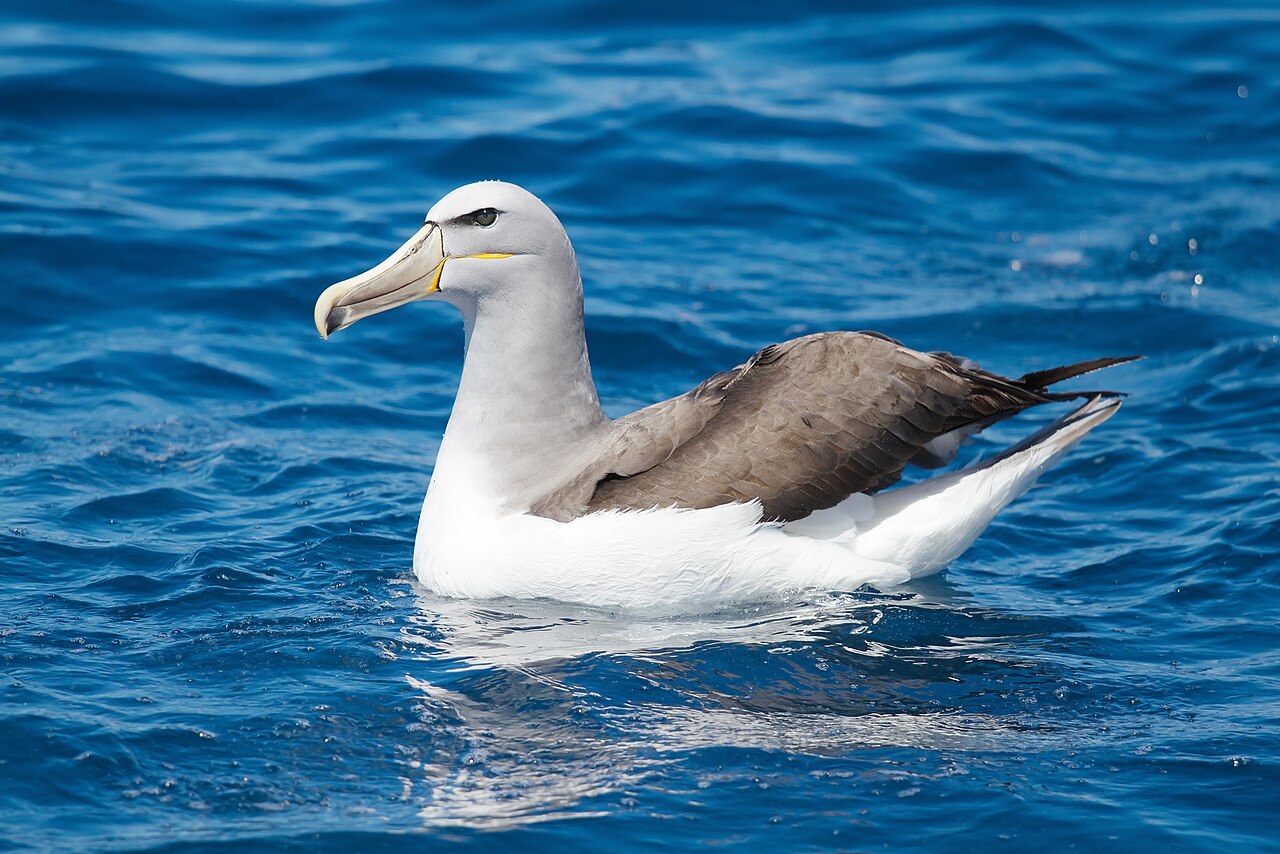
Salvin's Albatross is the grey-hooded counterpart of the Shy Albatross: a large mollymawk (an albatross of the genus Thalassarche) with a pale grey hood over head, throat and nape, a grey-green bill and an almost white underwing. It breeds virtually only on the Bounty Islands south-east of New Zealand, nesting on bare granite among the fur seals.
Voice
At sea it is silent, apart from hard croaking when birds fight over offal behind a trawler. In the colony display brings a mix of braying, rasping and wailing notes, with bill clattering between partners. On the Bounties that sound is swallowed by the roar of the tens of thousands of fur seals using the same rocks.
Recording: Dan Lane — CC BY-NC-SA 4.0 · Stewart Island, Southland, New Zealand · xeno-canto
Identification
A large mollymawk (an albatross of the genus Thalassarche) of ninety to a hundred centimetres and three and a half to over four kilos, broad-winged and heavy-headed. The pale grey hood runs over crown, cheeks, throat and nape and fades softly into the white breast, giving it a hooded look. The bill is grey-green with a paler upper and lower ridge and — the decisive mark — a clear black spot on the tip of the lower mandible. The upperwing is black, the lower back and rump white, the tail dark with white corners. The underwing is white with narrow black margins and a small black thumbprint in the armpit. Young birds have a greyer head and a dull grey-brown bill on which the black tip of the lower mandible is already present.
Confusion species
Shy Albatross (Thalassarche cauta) is the species it is constantly confused with: that one has a white head with at most a pale grey cheek, and lacks the black spot on the lower mandible tip. Be honest here: in good light at close range the distinction is solid, but at range, against the light, or on a bird flying past, the two often cannot be named with certainty — shadow can fake a grey hood on a Shy, and hard light can bleach one off a Salvin's. Chatham Albatross (T. eremita) has the same grey hood and the same black lower-mandible tip, but a bright yellow to orange bill instead of grey-green, and a darker face. Grey-headed Albatross (T. chrysostoma) is smaller, with a darker grey head, a black bill with yellow ridges and a broad black leading edge to the underwing. Black-browed Albatross (T. melanophris) has an orange-yellow bill and broad black underwing margins. Snowy Albatross (Diomedea exulans) and Southern Royal Albatross (D. epomophora) are much larger with pink bills; the sooty albatrosses (Phoebetria palpebrata, P. fusca) are wholly dark with wedge tails.
Habitat
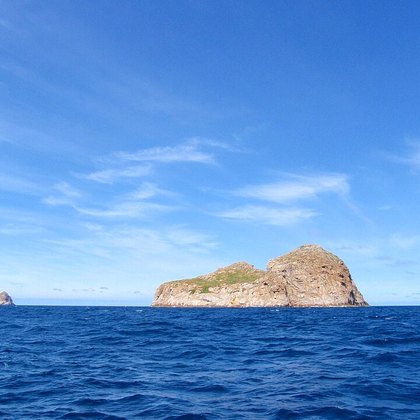
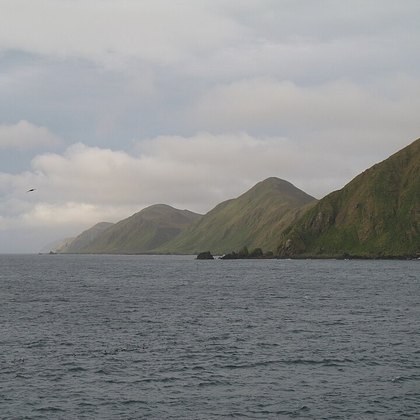
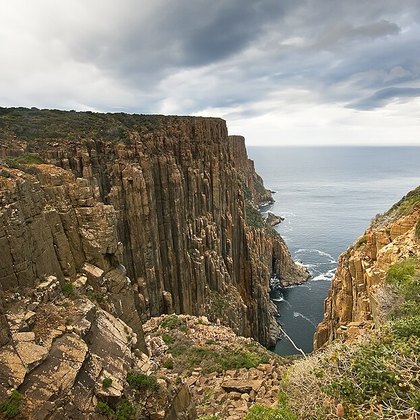
Subantarctic and cool temperate sea, above all over the shelf break and the shallow banks around the breeding islands, and out over the open South Pacific. It follows trawlers and longliners and feeds heavily on squid and fish. Breeding is on almost bare, sea-scoured granite tops and cliffs, where nests of mud and guano stand among the rocks.
Where the bird is most often found, arranged by main group and formation.
Range and movements
The Bounty Islands hold virtually the whole world population, with some forty-one thousand pairs in 2010; beyond that it breeds on the Western Chain of the Snares with eleven to twelve hundred pairs and with a few pairs in the Chathams. Outside the breeding season it ranges over the waters around New Zealand, with the highest numbers over the shelf east and south of the South Island. In Australian waters it is far scarcer: a few hundred records, mostly from pelagic trips off New South Wales, Victoria and Tasmania. Many birds cross the Pacific outside the breeding season to the Humboldt Current off Peru and Chile.
- Resident
- dark = core range, pale = thinly spread
Where and when to look
The surest chance is a boat trip out of Kaikoura or along the east coast of the South Island, where it shows nearly year-round; in Australia save it for a winter pelagic out of Wollongong or Eaglehawk Neck. On every 'Shy Albatross' check three things in order: is the grey of the head carried down into the throat, is there a black spot on the tip of the lower mandible, and is the bill grey-green rather than yellow? Only once you have actually seen those points is the name settled.
Conservation
Vulnerable (VU) globally and rated nationally critical in New Zealand. Numbers on the Bounties have fallen sharply — some seventy-six thousand pairs were counted in 1978 — and fishing is the main cause: between 1998 and 2004 this was the second most frequently caught albatross in New Zealand fisheries, with trawlers responsible for over half the deaths. At the colonies the growing New Zealand fur seal population pushes nests off the best rock. Because nearly everything sits on one island group, a single bad event strikes the whole species at once.
Scientific name
Thalassarche salvini | (Rothschild, 1893)
Rothschild described the bird in 1893, at first as a form within the Shy Albatross, and the epithet honours Osbert Salvin, the British ornithologist and co-author of the Biologia Centrali-Americana. Author and year stand in parentheses, because the species now sits in Thalassarche (Reichenbach, 1853) and no longer in Diomedea. Only molecular work in 1998 confirmed its standing as a full species. The type locality lies in New Zealand waters, but the sources do not give the exact place unambiguously; the Maori name toroa covers albatrosses in general.