All species › Pelicans, herons and ibises › Herons, egrets and bitterns › Nankeen Night-Heron
Nankeen Night-Heron | Nycticorax caledonicus
Rosse kwak | Martinete canelo
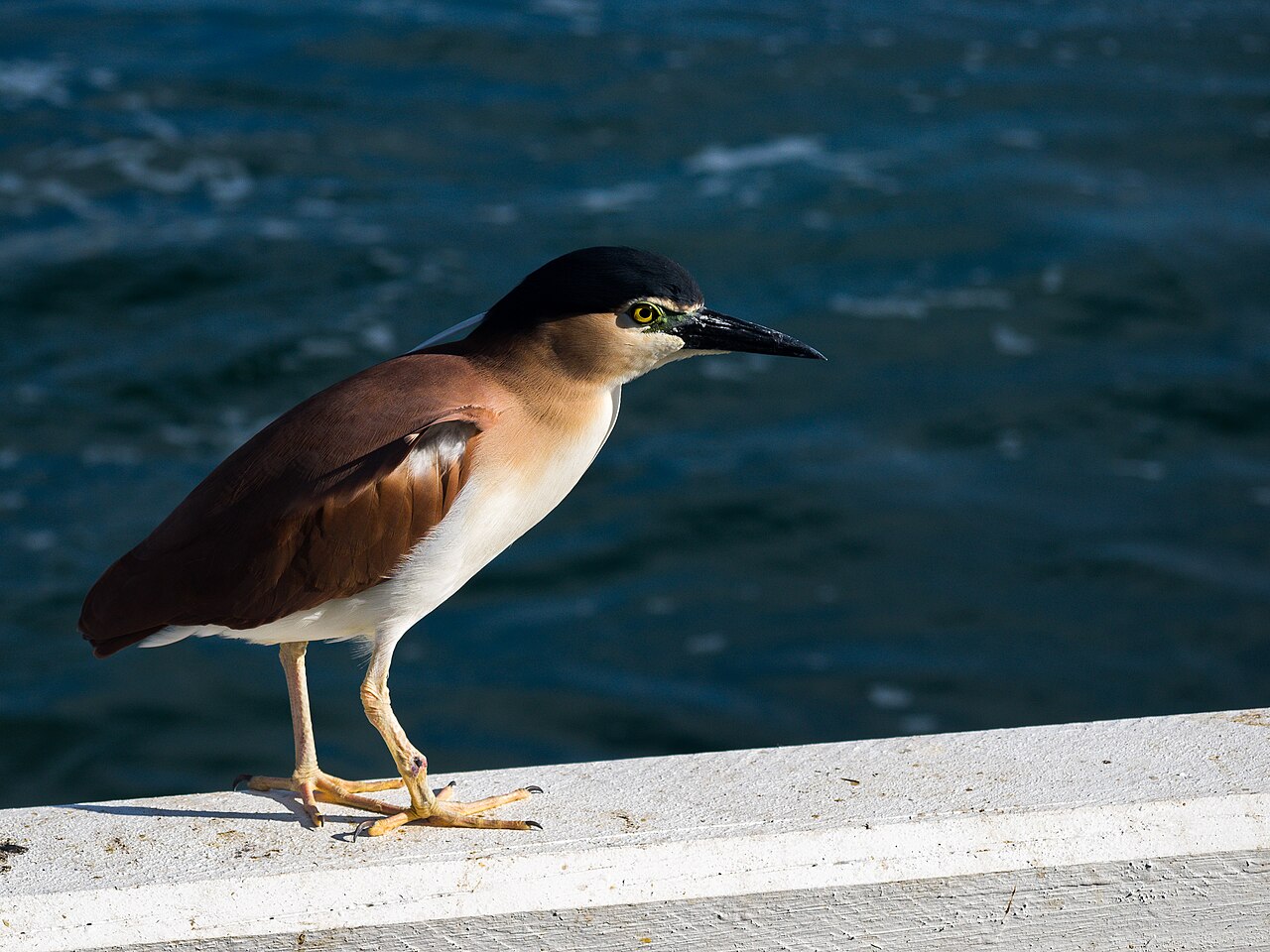
The Nankeen Night-Heron is Australia's night heron: a stocky, cinnamon-red bird with a heavy black bill, a black crown and large yellow eyes. By day it sits motionless in a dense tree above the water, and only at dusk does it come out to fish. In New Zealand it is a newcomer that has settled this century along a single river.
Voice
Heard mainly at dusk, as the birds leave the roost tree: a harsh, rasping qu-arck that carries across the water, higher pitched in females and young birds. A roosting bird disturbed by day gives a short, deep quock. The colony is noisier, with croaking and squabbling between the nests and the shrill, persistent begging of the young.
Recording: Marc Anderson — CC BY-NC-SA 3.0 · Kakadu National Park (near Kakadu), Northern Territory, Australia · xeno-canto
Identification
A stocky heron of about sixty centimetres with a large head, a short thick neck and short legs — a very different outline from the slender herons of the genus Ardea. The upperparts are warm cinnamon-red, the underparts creamy white to pale buff, the crown and hindneck blue-black, with a narrow orange line above the eye. The bill is heavy and black, the eye large and yellow, the legs yellowish and brighter when breeding; adults then carry two or three long, narrow white nape plumes. Young birds look entirely different: brown with heavy white and ochre spotting and streaking, and they take about three years to reach adult plumage. In flight it looks short-tailed and broad-winged, with the neck drawn in.
Confusion species
The juvenile plumage is the trap. Australasian Bittern (Botaurus poiciloptilus) is clearly larger and longer-necked, streaked rather than spotted below, and lacks the black crown; it also stays in the reeds and rarely perches in trees. Little Heron (Butorides atricapilla) is much smaller and greyer, and carries the cinnamon on the underparts rather than the back. Black Bittern (Botaurus flavicollis) shares the habit of perching in trees over water but is sooty black with a yellow neck patch.
Habitat
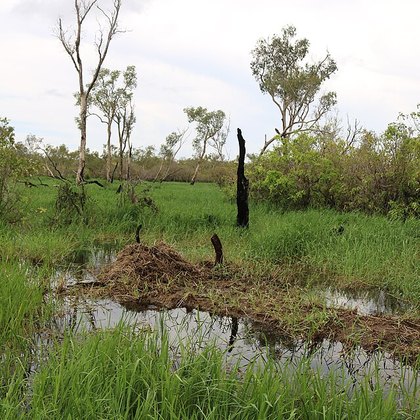
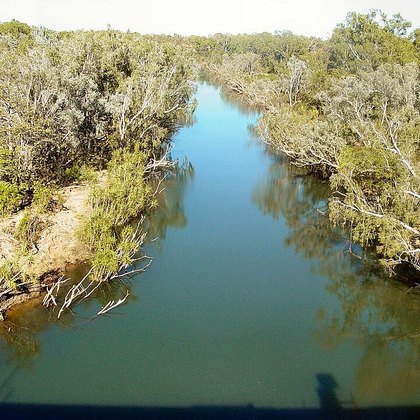
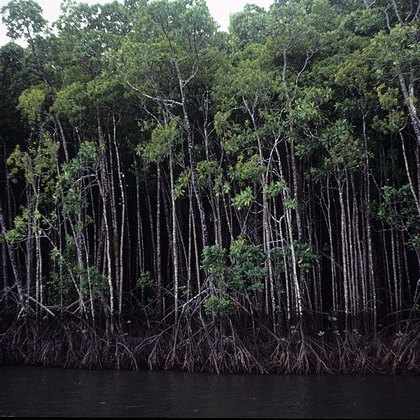
Any well-vegetated fresh water: river banks with overhanging trees, creeks, reed swamps, floodplains, reservoirs and farm dams, and on the coast mangroves as well. The roost is the hinge of its day — a dense evergreen tree, often close to houses — with the hunting ground around it. It is one of the few herons at home in city parks and gardens, as long as there is water and cover.
Where the bird is most often found, arranged by main group and formation.
Range and movements
Across the whole of Australia wherever there is permanent water, from the Kimberley and the Top End to Victoria and the south-west; scarce in Tasmania. It follows the rain inland and falls back on the coast and the towns in dry years. In New Zealand it is new: the birds are almost confined to the Whanganui River, roughly between Pipiriki and the city of Whanganui, where a breeding colony was found at Upokongaro in 2022; the population there is unlikely to exceed fifty pairs. Elsewhere in New Zealand it is a rare vagrant.
- Resident
- dark = core range, pale = thinly spread
Where and when to look
Look for the roost, not the bird. Walk the dense evergreen trees over the water in a park or along a quay and look up: white droppings on the leaves and the ground give the place away, and there are then often ten to twenty birds sitting quietly together. Wait on a bridge or bank towards sunset until they fly out one by one — the harsh qu-arck comes ahead of the bird. In New Zealand the river bank at Upokongaro is the place.
Conservation
Least Concern (LC): widespread, numerous and tolerant of people, so it profits from city parks, farm dams and reservoirs. Locally it depends on the flooding of the inland swamps, and the loss of riverside timber and of quiet, dense roost trees is the main constraint. In New Zealand the young population is growing, but no conservation measures exist there for the species.
Scientific name
Nycticorax caledonicus | (Gmelin, 1789)
Gmelin described the bird in 1789 as Ardea caledonica; because it was later moved to another genus, author and year stand in parentheses. The genus Nycticorax was introduced by Forster in 1817, from Greek nux, nuktos, 'night', and korax, 'raven' — the night raven, after the harsh calling in the dark. caledonicus means 'of New Caledonia', which is also the type locality. The English name refers to nankeen, a yellowish-brown cotton cloth from Nanking, after the colour of the back; the Dutch kwak and the Spanish martinete are the ordinary names for night herons.