All species › Gamebirds › Megapodes › Malleefowl
Malleefowl | Leipoa ocellata
Thermometervogel | Talégalo leipoa
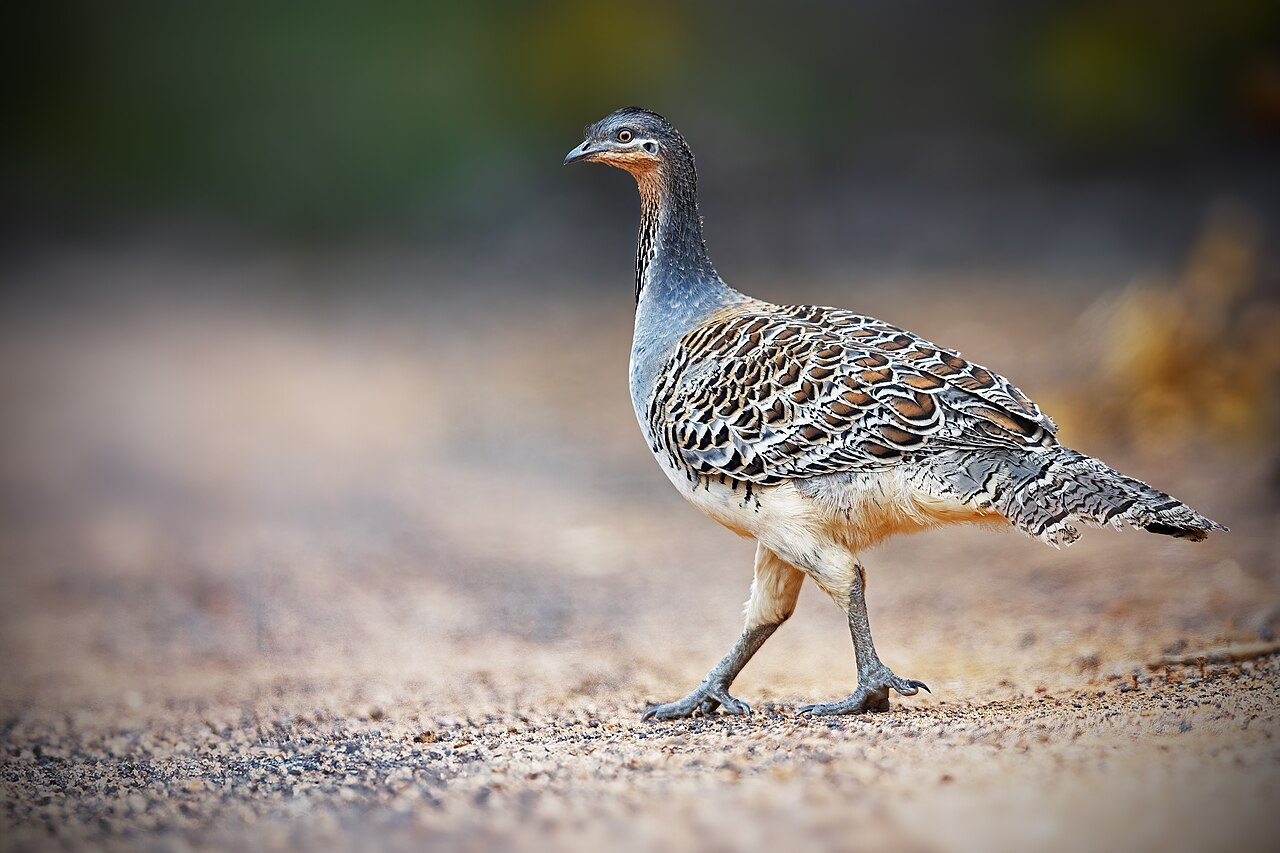
The Malleefowl builds the best known nest in Australia: a mound of sand and leaf litter in which the male holds the temperature at thirty-three degrees for the better part of a year, testing it with his bill. The bird itself is a grey, mottled, wary walker of the mallee (low, multi-stemmed eucalypt scrub of dry southern Australia) that freezes when disturbed and is then almost impossible to pick out.
Voice
Mostly silent. In the breeding season the male gives a deep, low boom that carries through the mallee and seems to come from just above the ground; the female answers with a higher, crowing, falling note. Beyond that there is a short harsh screech when the bird is flushed, and a soft grunting mutter between partners at the mound. In the field you hear it scratching in the litter more often than you hear its voice.
No recording with a suitable Creative Commons licence has been found for this species yet; what to listen for is described below.
Identification
About sixty centimetres, a stocky gamebird with a small head, a short grey crest and a straight dark bill. Head and neck are plain grey, with a black stripe running from the chin down the foreneck; the upperparts are a fine mosaic of grey, black, white and rust blotches and bars that dissolves in the dappled light of the mallee. The underparts are pale cream. The sexes are alike, the male slightly larger. It walks in short, measured steps and flies only when it must, low and noisily to the nearest tree.
Confusion species
The other two Australian megapodes do not overlap with it: Australian Brushturkey (Alectura lathami) is black with a red head and yellow wattle and belongs to eastern rainforest, and Orange-footed Scrubfowl (Megapodius reinwardt) is smaller, rufous and confined to northern monsoon forest. In open country a bird crossing a track can suggest an Australian Bustard at range, but that stands twice as tall and walks on long legs in bare terrain. The mottled plumage and the black throat stripe rule out everything else.
Habitat
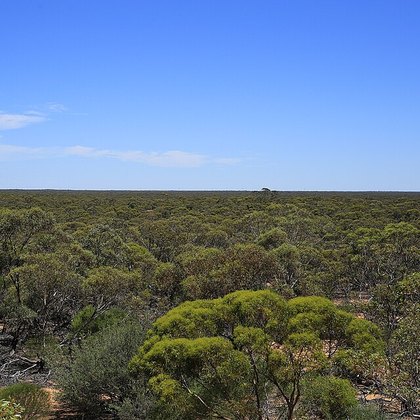
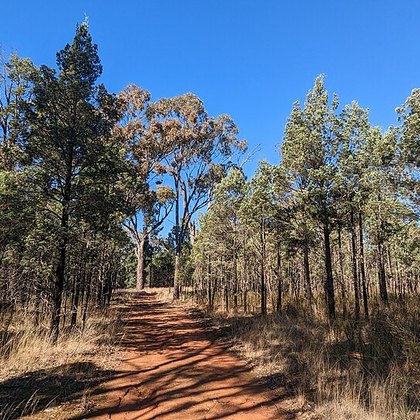
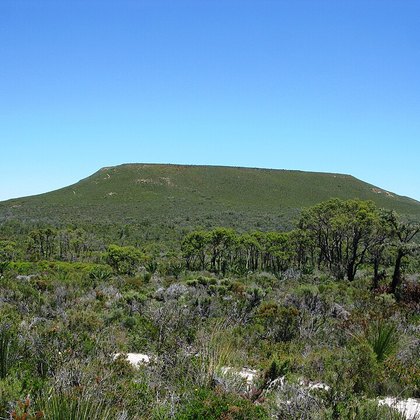
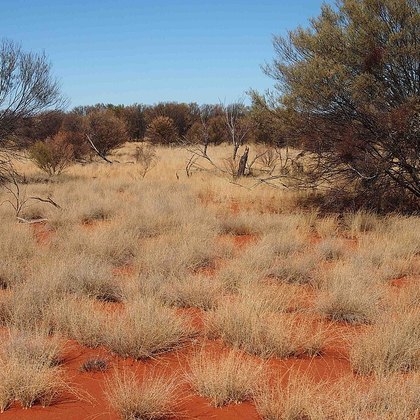
Mallee with a closed litter layer and an understorey of spinifex (spiny, hummock-forming desert grass of the interior) or shrubs, on sand or loam it can dig: that is the core. It also breeds in white cypress and casuarina woodland, in the sandheath of the southwest and in old acacia scrub on the desert edge. It needs old, long-unburnt country, because for the first fifteen to twenty years after a fire there is too little litter to fill a mound; recently burnt mallee is empty ground to it.
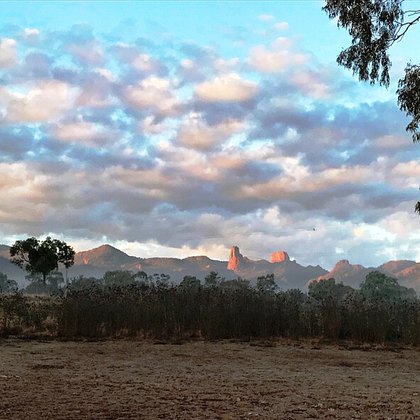
Where the bird is most often found, arranged by main group and formation.
Range and movements
Semi-arid southern Australia, now in three separated blocks: the Murray-Murrumbidgee basin in Victoria and New South Wales, the country west of Spencer Gulf out to the desert margin, and the wheatbelt and sandheath of southwestern Australia. Before European settlement the range ran unbroken across the whole south. Most of the mallee has been cleared for wheat and sheep and what is left lies in fragments; the bird does not migrate and cannot bridge those gaps itself.
- Resident
- dark = core range, pale = thinly spread
Where and when to look
Look for the mound rather than the bird: a round, bare crater three to five metres across with a low hump in the middle, usually under canopy and recognisable from a distance by the clean, raked sand. Walk in quietly at first light between September and January and wait at a distance; the male is then at work on it. Drive the sand tracks through mallee at walking pace, because most records are of a bird crossing the road.
Conservation
Vulnerable (VU) and protected in Australia under the EPBC Act, with declines still running in South Australia and Western Australia. The fox is the heaviest burden — it takes both the eggs and the chicks as they dig out — with the feral cat alongside it; beyond that weigh the clearing of mallee, grazing by goats and sheep that strips the litter, and fire too often. More than three thousand eight hundred mounds are checked each year at over a hundred sites, which makes this one of the most closely followed birds in the country.
Scientific name
Leipoa ocellata | Gould, 1840
Gould described the species in 1840 as Leipoa ocellata and in the same year introduced the genus Leipoa, which has held this bird alone ever since; author and year therefore carry no parentheses. Leipoa is formed from Greek leipo, 'to leave behind', and oon, 'egg': the bird that leaves its egg. ocellata means 'bearing little eyes', after the round spots on the upperparts. Gould gave the type locality as Western Australia; Mathews later fixed it on the Swan River at Perth.