All species › Passerines › Honeyeaters › Little Wattlebird
Little Wattlebird | Anthochaera chrysoptera
Kleine lelhoningeter | Mielero alirrufo
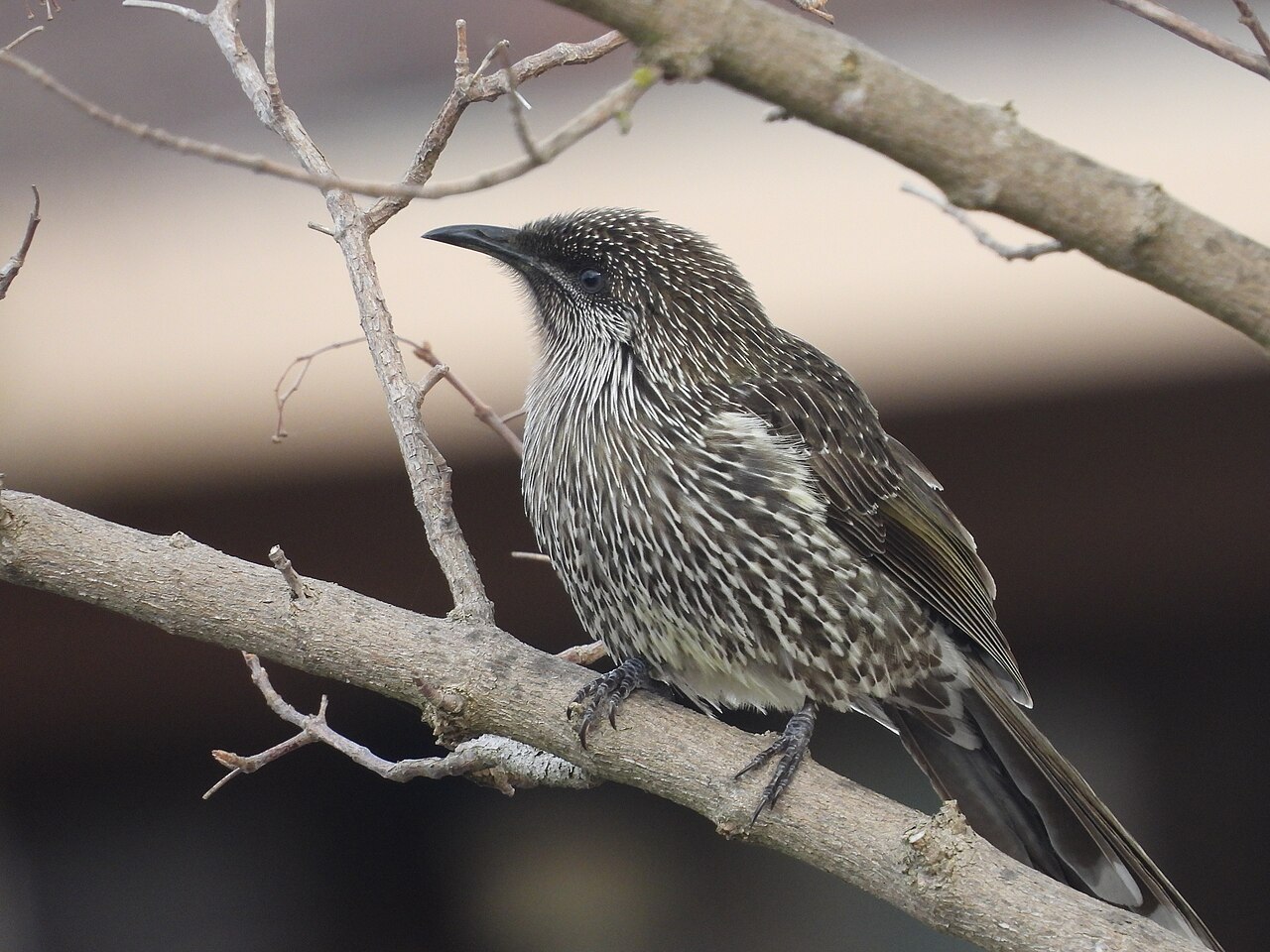
The Little Wattlebird is the wattlebird without wattles: the smallest of the genus, a grey-brown, heavily streaked bird with a long tail and a silvery ear streak, which sets the tone in the banksia heath and coastal gardens of south-eastern Australia and Tasmania with an improbably loud, barking squawk. In flight it gives itself away by a rufous patch in the primaries — the golden wing its scientific name records.
Voice
Loud, hoarse and strident, audible half a street away: a barking cookay-cok or a blaring rattle that old Australian field guides rendered as 'fetch the gun'. It repeats such calls continuously from a high branch or a telephone wire, bill wide open and tail cocked. It also has a soft, throaty chatter heard only at close range, between bouts of feeding.
Recording: Romuald Mikusek — CC BY-NC-SA 4.0 · Hordern Vale, Colac Otway Shire, Victoria, Australia · xeno-canto
Identification
A large, slim honeyeater of twenty-six to thirty centimetres and just over sixty grams, with a long tail and a slightly decurved dark bill. The whole plumage is grey-brown, the underparts densely streaked white and silver-grey, so that at a distance the bird looks washed-out and restlessly striped. A silvery-white streak runs across the ear coverts. The eye is blue-grey to grey-brown. Wattles are entirely absent — unlike Red and Yellow Wattlebird — and there is no yellow on the belly. It shows its clearest mark only in flight: a warm rufous patch in the primaries that lights up at every wingbeat. Juveniles are duller, less streaked and brown-eyed.
Confusion species
Western Wattlebird (Anthochaera lunulata) is the nearest relative and was until recently lumped with it; that bird lives only in south-western Australia, while this one runs from South Australia eastwards and through Tasmania — there is no overlap, and geography settles it. For anyone who does see both: the western bird is slightly trimmer and finer-headed, with a red-brown rather than blue-grey eye and a smoother, less streaked face. Red Wattlebird (Anthochaera carunculata) is distinctly larger, with a short red wattle below the eye, red cheeks and a yellow belly patch. Yellow Wattlebird (Anthochaera paradoxa) of Tasmania is larger again, with long yellow wattles and a bright yellow belly; in Tasmania that is the pair to separate. Regent Honeyeater (Anthochaera phrygia) is smaller and black scaled with yellow.
Habitat
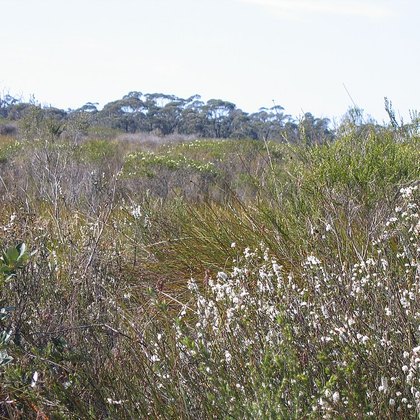
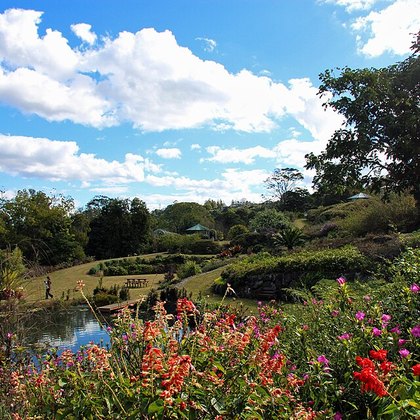
Dry, open country along and behind the coast: banksia heath, sandplain heath, tea-tree scrub, open eucalypt forest and woodland. It likes places with plenty of flowering shrubs at eye level, and is therefore often the commonest large honeyeater in town parks, gardens, golf courses and weedy ground with lantana and wild tobacco as well.
Where the bird is most often found, arranged by main group and formation.
Range and movements
The coast and near-inland of south-eastern Australia, from about south-eastern Queensland through New South Wales and Victoria into South Australia, plus Kangaroo Island and the whole of Tasmania. Three subspecies are recognised: the mainland form, the Kangaroo Island form and the Tasmanian one. It is largely sedentary but wanders locally with the flowering of banksia and eucalypt, appearing suddenly in numbers in gardens where it had been absent for months.
- Resident
- dark = core range, pale = thinly spread
Where and when to look
On coastal heath or in a garden with banksias you will hear it long before you see it, and even then it often stays half hidden. Wait until it flies from bush to bush: the rufous wing patch is the only character that is genuinely certain at range. In Tasmania it is the small one of the two wattlebirds — no yellow wattle along the jaw and no yellow on the belly makes it this species.
Conservation
Least Concern (LC) and listed as secure in every Australian state. It adapts well to people: gardens with banksia and grevillea, waste ground and parks all feed it, and in many coastal towns it has become one of the commonest large birds. The only real pressure is the loss of coastal heath to housing, and locally too-frequent fire, which removes the older flowering shrubs it depends on.
Scientific name
Anthochaera chrysoptera | (Latham, 1801)
John Latham described the species in 1801 as Merops chrysoptera, among the bee-eaters; because Vigors and Horsfield moved it in 1827 to their new genus Anthochaera, author and date stand in parentheses. chrysoptera is Greek for 'golden-winged', from khrysos, gold, and pteron, wing — after the rufous primary patch. Anthochaera itself means 'flower-lover', from anthos, flower, and khairo, to enjoy. Both the Dutch 'lelhoningeter' and the English wattlebird are misleading for this species, since it is precisely the one that carries no wattles; in New South Wales it was long called the brush wattlebird, after the scrub it lives in.