All species › Gannets and cormorants › Cormorants and shags › Little Pied Cormorant
Little Pied Cormorant | Microcarbo melanoleucos
Kleine bonte aalscholver | Cormorán piquicorto
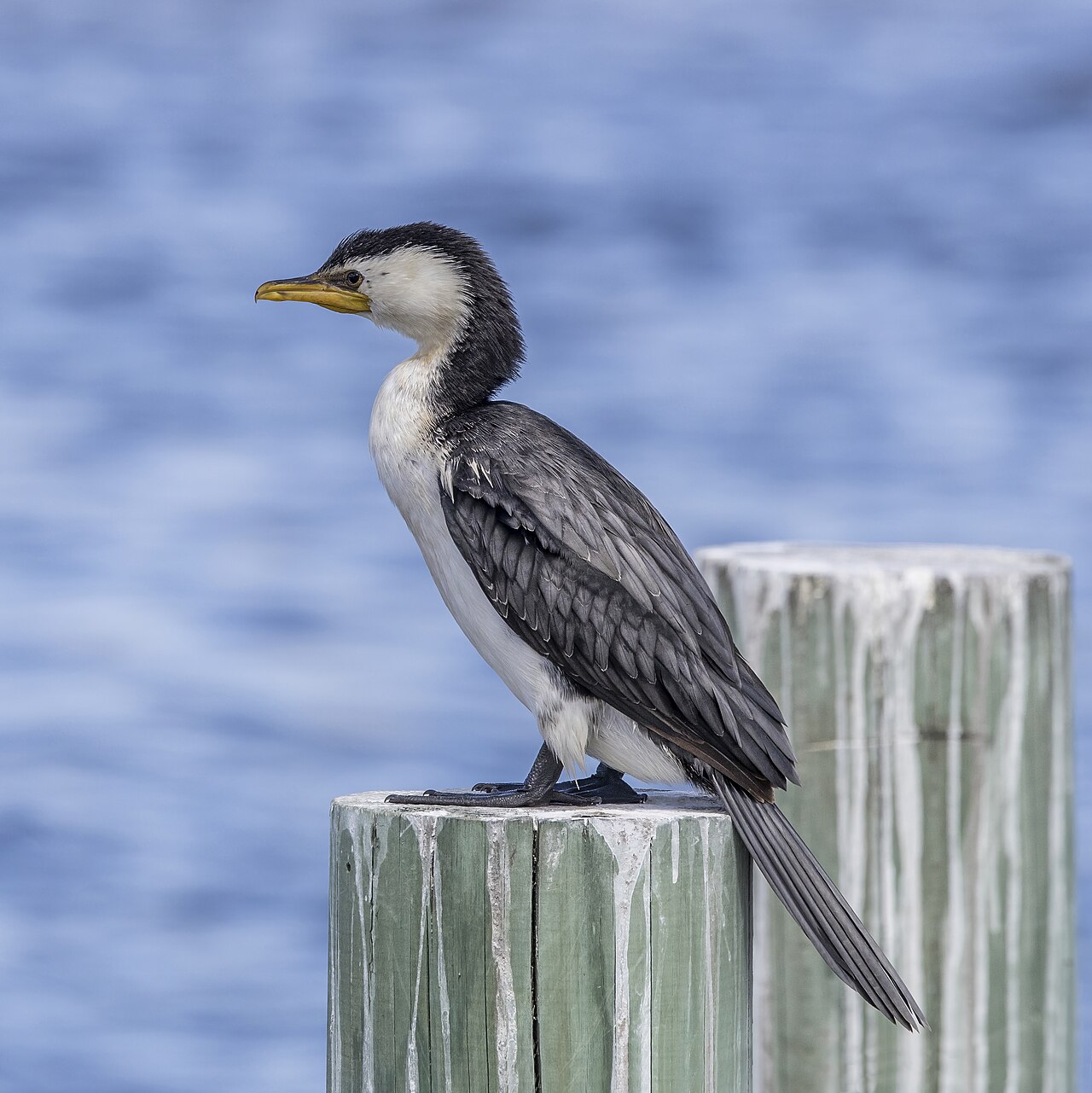
The Little Pied Cormorant is the smallest and the commonest cormorant of Australia and New Zealand, and the only one with a short, stout yellow bill. It fishes shallow water only, down to a farm ditch or a stock dam, and afterwards sits in the sun with its tail cocked.
Voice
Away from the colony it is silent; at a breeding site the male coos in two or three syllables, a dull oo-hoo-hoo that belongs to courtship. Coming back to the nest the pair exchange a greeting of short notes that fade away: uh, uh, uh, uh. Beyond that it hisses and growls when disturbed, more sibilant than loud. A bird fishing on open water is never heard at all.
Recording: nick talbot — CC BY-NC-SA 4.0 · Tweed Heads South, New South Wales, Australia · xeno-canto
Identification
A small cormorant of about sixty centimetres, black above and white below, with white cheeks and throat and white running up over the eye. The bill is short, stout and yellow with a dark ridge, the eye brown, the skin at the base of the bill yellow, and the legs and feet black. The tail is proportionately long, longer than in the other cormorants of the region, and the wings are shorter and broader. In New Zealand, alongside the usual pied birds, there are wholly black birds with a white throat and, in about one bird in twenty, an intermediate with black-and-white blotching on breast and belly. Juveniles lack the white above the eye and are sometimes stained rusty by iron in the water.
Confusion species
Australian Pied Cormorant (Phalacrocorax varius) is markedly larger, with a far longer bill, an orange-yellow patch before the eye and black thighs. Little Black Cormorant (Phalacrocorax sulcirostris) is the same size but all black, with a slim grey bill. Great Cormorant (Phalacrocorax carbo) is bulky, with a yellow throat patch and a heavy hooked bill. With the black New Zealand form the short yellow bill is all that is left to go on; use that and not the colour of the body.
Habitat
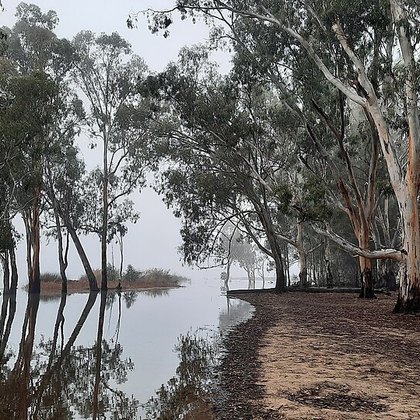
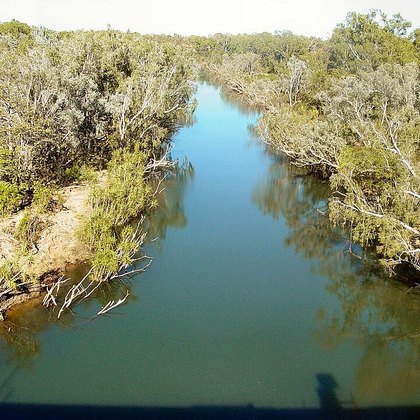
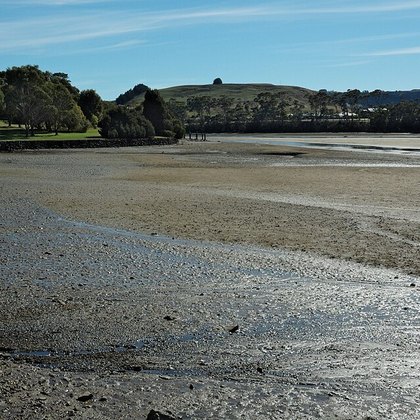
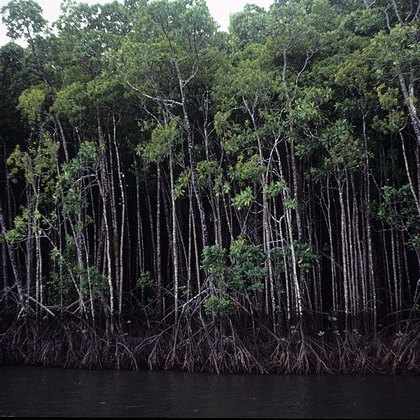
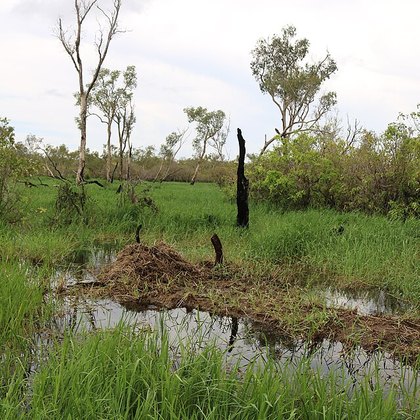
Fresh and salt alike, and shallow above all: lakes, ponds, stock dams, creeks, slow rivers, drains and ditches, and on the coast estuaries, harbours, lagoons and mangrove. It needs no great sheet of open water and fishes where a larger cormorant cannot work. It does want a post, a jetty or a branch to dry on.
Where the bird is most often found, arranged by main group and formation.

Range and movements
Throughout Australia and throughout New Zealand, and on into New Guinea and Indonesia. On the Chathams, the Snares, Auckland and Campbell Islands it is no more than a vagrant. It does not migrate, but young birds wander widely, and in inland Australia it follows the filling and drying of waters. In New Zealand it has spread far inland from the coast, onto farm drains and town ponds.
- Resident
- dark = core range, pale = thinly spread
Where and when to look
On any pied cormorant look at the bill before the plumage: short, stout and yellow settles the species at once, black form included. On a harbour post it often sits with the long tail angled upwards, a posture the larger species do not adopt. Look for it on narrow water — a drain or a stock dam — where the other cormorants do not go.
Conservation
Least Concern (LC), common and secure in every Australian state and in New Zealand. Stock dams, reservoirs and fish ponds have carried it forward inland. Locally birds drown in gill nets and fyke nets, and at colonies disturbance and the felling of old shoreline trees count.
Scientific name
Microcarbo melanoleucos | (Vieillot, 1817)
Vieillot described the bird in 1817 as Hydrocorax melanoleucos; because it was later moved to another genus, author and year stand in parentheses. The genus Microcarbo was introduced by Bonaparte in 1856, from Greek mikros, 'small', and Latin carbo, 'charcoal', the old name for the cormorants. melanoleucos means 'black-and-white', from Greek melas and leukos. The type locality is given as 'Australasie'; Mathews restricted it to New South Wales in 1912.