All species › Penguins › Penguins › Little Penguin
Little Penguin | Eudyptula minor
Dwergpinguïn | Pingüino azul
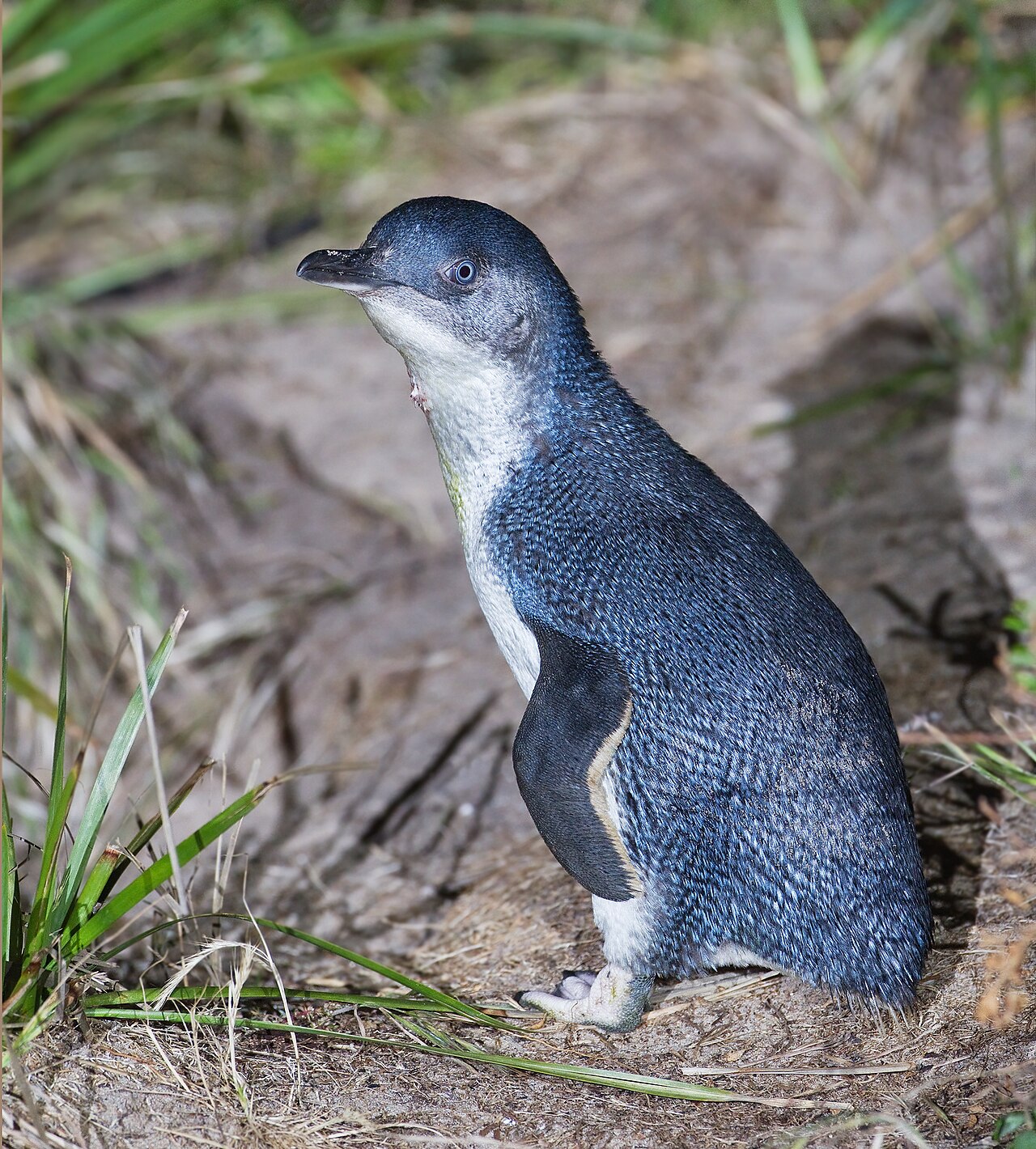
The Little Penguin is the smallest penguin in the world: a stocky bird of barely a kilogram, slate-blue above and white below, at sea by day and ashore only after dark. Anyone who hears it before seeing it hears barking: a colony at night sounds like a kennel full of small dogs.
Voice
At sea it gives a short barking contact call as it surfaces or comes ashore. Everything loud comes from land and out of the dark: at the burrow there is a hard braying aa-oo-aa ending in a wheezing intake of breath, with deep growls and snarls between neighbours. In display a pair brays in duet, heads up and flippers back.
Recording: David Boyle — CC BY-NC-SA 4.0 · Point Gap, Chatham Island, New Zealand · xeno-canto
Identification
A small, stocky penguin of a third of a metre, slate-blue to blue-grey above, cutting sharply to white from the chin, with short flippers and a heavy dark hooked bill. The eye is blue-grey to pale grey, legs and feet dull pink with dark soles. Young birds are brighter and bluer than adults, which look duller grey after the moult. On the water it lies low, only head and back above the swell, and dives without a splash.
Confusion species
Within this area confusion with another penguin is barely possible: every other species is at least half again as large and carries yellow or orange on the head. Fiordland Penguin (Eudyptes pachyrhynchus) comes ashore on the same south-western New Zealand coasts, but is twice the weight, black rather than blue, and has a yellow eyebrow stripe. Yellow-eyed Penguin (Megadyptes antipodes) is nearly twice as long with a yellow band round the nape. At sea a diving Little Penguin can suggest a young shag at range; but it lies lower, barks, and never takes flight. Note also that the Australian and New Zealand lineages differ genetically — some authors split the Australian birds as Eudyptula novaehollandiae — but in the field they cannot be told apart.
Habitat
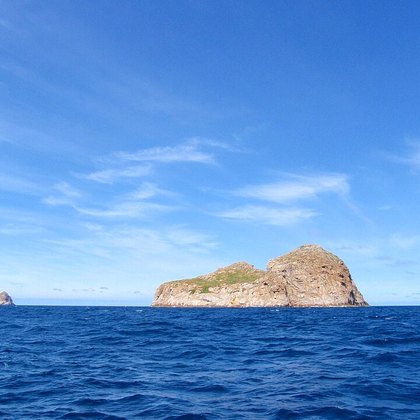
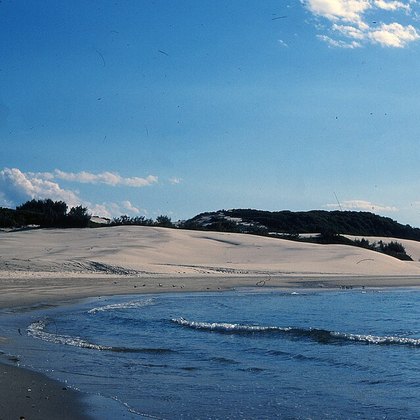
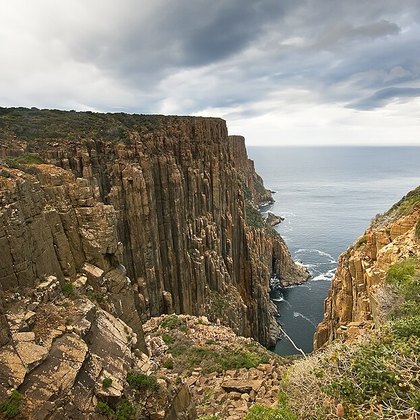
Shallow inshore water and the continental shelf at thirteen to twenty degrees, where it forages by day on schooling fish and squid and dives to a few tens of metres. Ashore it digs a burrow of a good half metre in dune sand or peat, or takes a crevice among boulders, a space under coastal shrubs, a nest box or the crawl space under a beach house. Colonies are nearly always on islands and headlands, up to a few hundred metres inland.
Where the bird is most often found, arranged by main group and formation.
Range and movements
The whole cool southern coast of Australia, from Penguin Island near Perth through South Australia, Victoria and Tasmania to Montague Island in New South Wales, with Phillip Island the best known and one of the largest colonies. In New Zealand along the coasts of the North Island, South Island, Stewart Island and the Chathams, concentrated in the Hauraki Gulf, Wellington Harbour, the Marlborough Sounds, Cook Strait, the West Coast, Fiordland and Oamaru. It is absent from Norfolk Island.
- Resident
- Breeding (summer)
- Passage
- dark = core range, pale = thinly spread
Where and when to look
Go at sunset to a colony with a viewing place — Phillip Island in Victoria, Penguin Island in Western Australia, the blue penguin colony at Oamaru — and wait until the light has nearly gone: the birds come out of the surf in parties only in the last of the dusk and then walk up the beach in a line. Use no flash and no white torch; red light disturbs them least. Elsewhere along the coast the barking at night gives away a colony in the dunes before you find a burrow.
Conservation
Least Concern (LC), still with hundreds of thousands of birds worldwide, but the New Zealand assessment is 'Declining' and several mainland colonies have gone. On land introduced predators are the problem: dogs and foxes can kill dozens of birds in a night, cats, ferrets and stoats take chicks from burrows. At sea birds drown in set nets, and along coastal roads they are run over on the way to the burrow. The sea itself weighs ever heavier: warm summers and shifting fish stocks produce thin chicks and wrecks of starved birds.
Scientific name
Eudyptula minor | (Forster, 1781)
Johann Reinhold Forster described the bird in 1781 as Aptenodytes minor, from material taken in Dusky Sound in Fiordland; because it was later moved to another genus, author and year stand in parentheses. Bonaparte introduced the genus Eudyptula in 1856 as a diminutive of Eudyptes, from Greek eu, 'good', and dyptes, 'diver' — roughly 'little good diver'. minor simply means 'smaller'. The Maori name korora and the Australian 'fairy penguin' live on beside the official name.