All species › Passerines › Accentors › Dunnock
Dunnock | Prunella modularis
Heggenmus | Acentor común
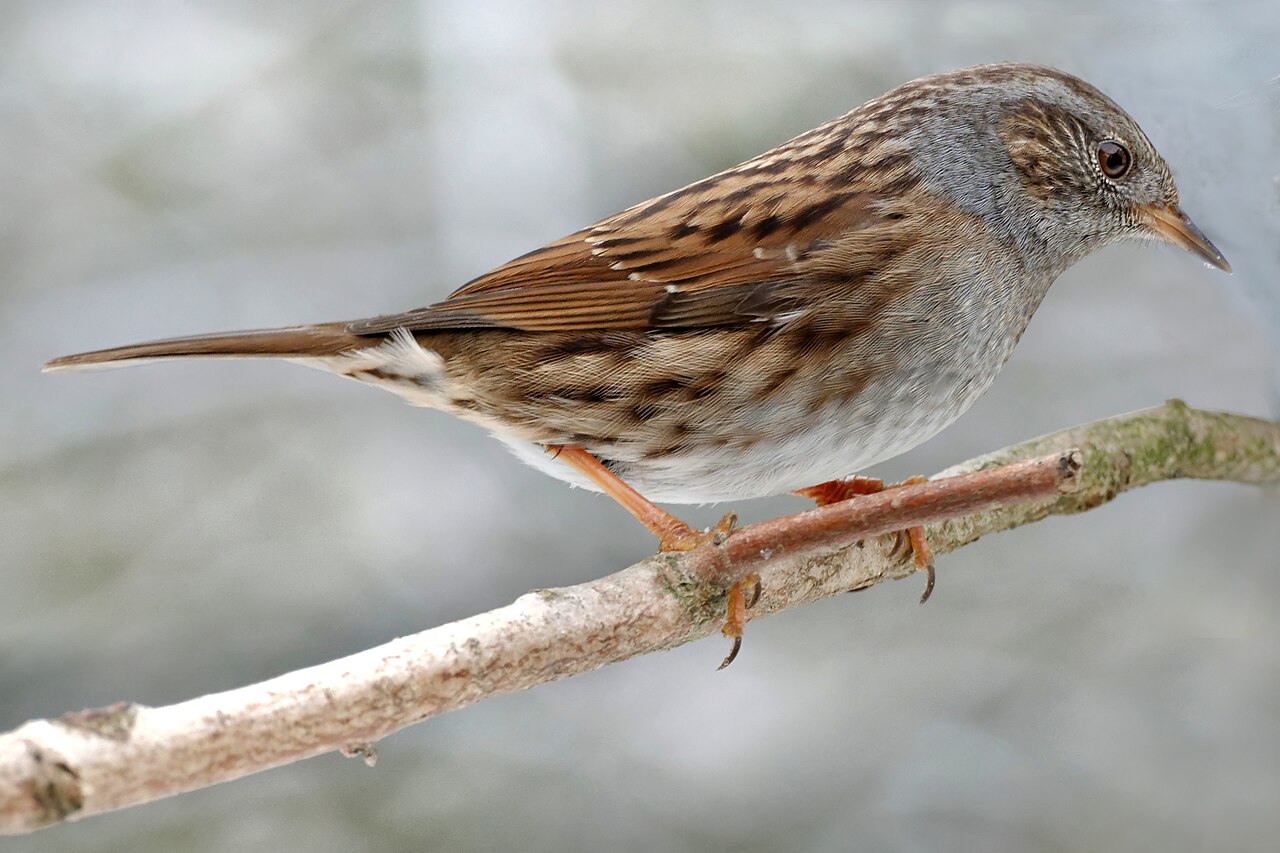
The Dunnock is the least conspicuous of all the birds the acclimatisation societies turned loose in New Zealand, and among the best established: a grey-brown, streaked little bird that shuffles silently under the hedge. It came from England between 1865 and 1896, in the belief that it would clear the insect pests out of the orchards. It is now everywhere in the south, out to the subantarctic islands.
Voice
What gives it away in New Zealand is a high, thin and piercing tseep, one note at a time, heard above all in autumn and winter from March to August in gardens, along fences and in scrub. The song is a short, hurried, slightly reedy warble, built like a Common Blackbird's but far thinner and without the fluted close; the bird delivers it from a fence post, a hedge top or a wire, and starts up in spring from August on.
Recording: Raoul Kima — CC BY-SA 4.0 · Oldenburg, Niedersachsen, Germany · xeno-canto
Identification
A small, slightly built bird of fourteen centimetres, with a fine black insect bill instead of a sparrow's cone. Head, throat and breast are slate grey, the back and wings warm brown with black lengthwise streaks, the flanks brown-streaked and the legs orange-brown. The sexes look alike. The way it moves is as diagnostic as the plumage: it shuffles over the ground with bent legs and quivering wings, always within a hop of cover, and rarely flies further than the next bush.
Confusion species
A female House Sparrow (Passer domesticus) is the commonest mistake: bulkier, with a heavy pale conical bill, a pale brow stripe and no grey on head or breast. New Zealand Pipit (Anthus novaeseelandiae) stands high on its legs, pumps its tail and walks in the open, not under the hedge. A female Eurasian Chaffinch (Fringilla coelebs) shows two white wing bars and white outer tail feathers, both of which the Dunnock lacks.
Habitat
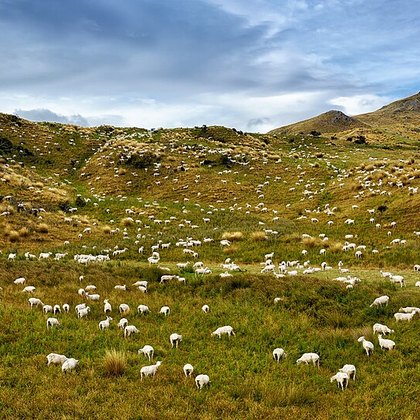
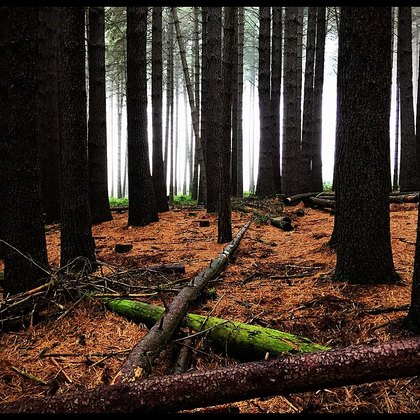
Gardens, parks and orchards, hedged and shelter-belted pasture, manuka and matagouri scrub, young pine plantations and the rough edges of native forest. It asks for no more than a dense low layer with bare ground beneath. In New Zealand it runs from sea level to sixteen hundred metres, and on the Auckland, Campbell and Antipodes Islands it holds on in tussock (grassland of loose, tall clump-forming grasses, especially in New Zealand) and megaherbs, far outside anything it knows in Europe.
Where the bird is most often found, arranged by main group and formation.



Range and movements
Across the whole country, but very unevenly: numerous on the South Island and in the south of the North Island, scarce north of the Waikato and all but absent from Auckland city. It is also established on the Chatham Islands and on the subantarctic Auckland, Campbell and Antipodes Islands. In Australia it was released repeatedly but never took hold. It does not migrate; it stays within a few hundred metres for life.
- Resident
- dark = core range, pale = thinly spread
Where and when to look
Look for it not in the air but on the ground, in the band of shade under a hedge or a heap of prunings, and watch for something small and dark that shuffles away rather than flying off. In winter the high tseep is the best handle: follow it and wait for the bird to come out onto the edge of cover.
Conservation
Least Concern (LC), and established in New Zealand as an introduced bird. It does next to no harm: it eats small invertebrates and seed almost exclusively, nests in exotic scrub that is there anyway, and no case of it displacing a native bird is known. Of the rare instances in which a released European songbird has turned out to be harmless in New Zealand, this is the clearest. Its brood parasite stayed behind: no New Zealand cuckoo lays in its nest.
Scientific name
Prunella modularis | (Linnaeus, 1758)
Linnaeus described the bird in 1758 as Motacilla modularis, among the wagtails; because it later moved to another genus, author and year stand in parentheses. The genus Prunella was introduced by Vieillot in 1816, after German Braunelle, a diminutive of braun, 'brown'. modularis is Latin for 'singing' or 'modulating', from modulari. The type locality is Sweden. The Dutch name, heggenmus, refers to its habit of foraging under hedges.