All species › Passerines › Rhabdornis, starlings and mynas › Common Myna
Common Myna | Acridotheres tristis
Treurmaina | Miná común
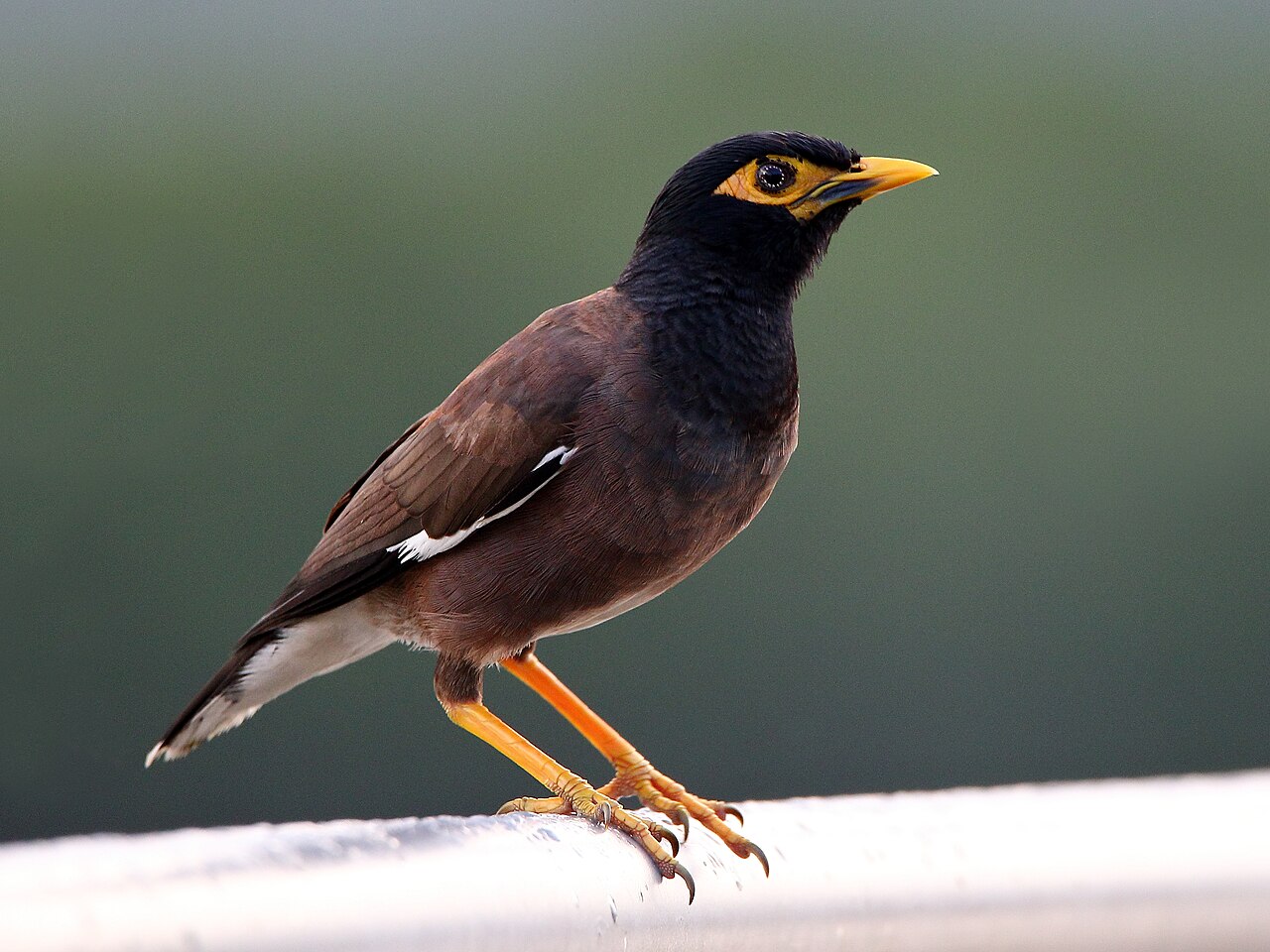
The Common Myna has become the bird of the Australian city: brown with a black hood, bright yellow bill and legs and a bare yellow patch behind the eye, loud and everywhere people live. It was released here twice, around 1862 at Melbourne and in 1883 in the Queensland canefields, and now stands on the list of the hundred worst invasive species in the world.
Voice
The territorial call is a loud, far-carrying chock-ork chock-ork, delivered from a lamp post or ridge line while the bird bobs its head. Around it lies a stock of growls, scratches, high squeaks and bell-like notes strung together without end. Before dropping into the roost a group raises a collective racket audible streets away; in a quarrel comes a harsh, shrill screech.
Recording: Ujjal Kishor De — CC BY-SA 4.0 · Kumarghat, Unakoti Tripura, PRTI, India · xeno-canto
Identification
A stocky brown bird of twenty-three to twenty-six centimetres, with a glossy black head, neck and breast cut sharply against the vinous brown body, and a bright yellow bill, yellow legs and a bare yellow patch of skin behind the eye. In flight a large white panel in the primaries leaps out, and the tail carries broad white tips. The sexes are alike. Young birds are duller, with a browner hood, a pale yellow bill and at first whitish skin around the eye. It walks in short, purposeful steps.
Confusion species
Noisy Miner (Manorina melanocephala) is the great trap and carries almost the same name: it is grey rather than brown, native, and also has a yellow bill and yellow skin around the eye, but lacks the black hood and the white wing panel. Yellow-throated Miner (Manorina flavigula) of the dry interior is paler still. Common Starling (Sturnus vulgaris) is smaller, black and spotted, with no white in the wing.
Habitat
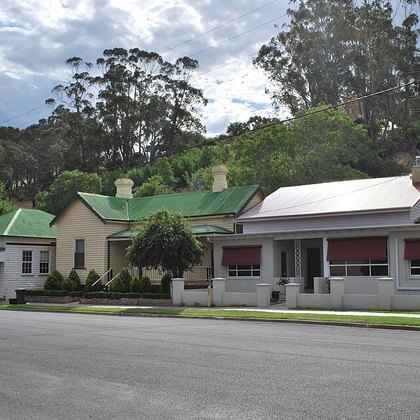
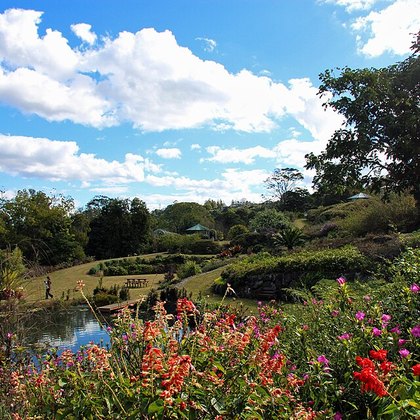
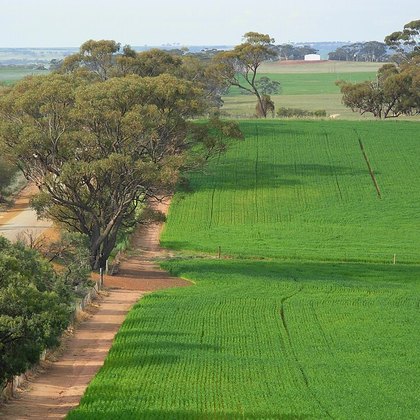
Town and village, gardens and parks, cropland and orchard, tips and sewage ponds, and any place where food is spilt: school grounds, footpath cafes, car parks, stock feeders. It nests in roofs, wall cavities, ceilings, street lighting and tree hollows. It barely uses closed native forest, but works its edges along roads and settlement.
Where the bird is most often found, arranged by main group and formation.
Range and movements
In Australia along the east and southeast coast, centred on Sydney, Brisbane, Canberra and Melbourne with separate populations in Queensland; it spreads along roads and settlement rather than through bush. In New Zealand only on the North Island and its offshore islands, north of about forty degrees south — roughly the Marton to Waipukurau line — with the highest densities in Northland. The volcanic plateau and the large forests are empty.
- Resident
- dark = core range, pale = thinly spread
Where and when to look
Sit in a car park or by a footpath cafe in the morning and watch a pair work the ground; Common Mynas pair for life and almost always forage in twos. To fix the difference from Noisy Miner, watch the flight: only the myna shows a large white wing panel. At dusk the racket points out the roost tree.
Conservation
Least Concern (LC), and here the only question is the harm it does. It takes over nest hollows and drives out rosellas, kookaburras and even galahs, destroying eggs and young in the process; Australian surveys have repeatedly named it the country's worst bird pest. Councils and volunteer groups trap it in cage traps, with local success but no lasting effect on overall numbers. In New Zealand the demonstrated damage to native birds has proved smaller than long assumed.
Scientific name
Acridotheres tristis | (Linnaeus, 1766)
Linnaeus described the bird in 1766 as Paradisea tristis, among the birds of paradise; because it later moved to another genus, author and year stand in parentheses. The genus Acridotheres was introduced by Vieillot in 1816, from Greek akris, 'locust', and theras, 'hunter'. tristis is Latin for 'sad' or 'gloomy', after the dull colour — hence the Dutch name as well ('mourning myna'). The type locality is Pondicherry in southern India.