All species › Gannets and cormorants › Cormorants and shags › Campbell Shag
Campbell Shag | Leucocarbo campbelli
Campbellaalscholver | Cormorán de la Campbell
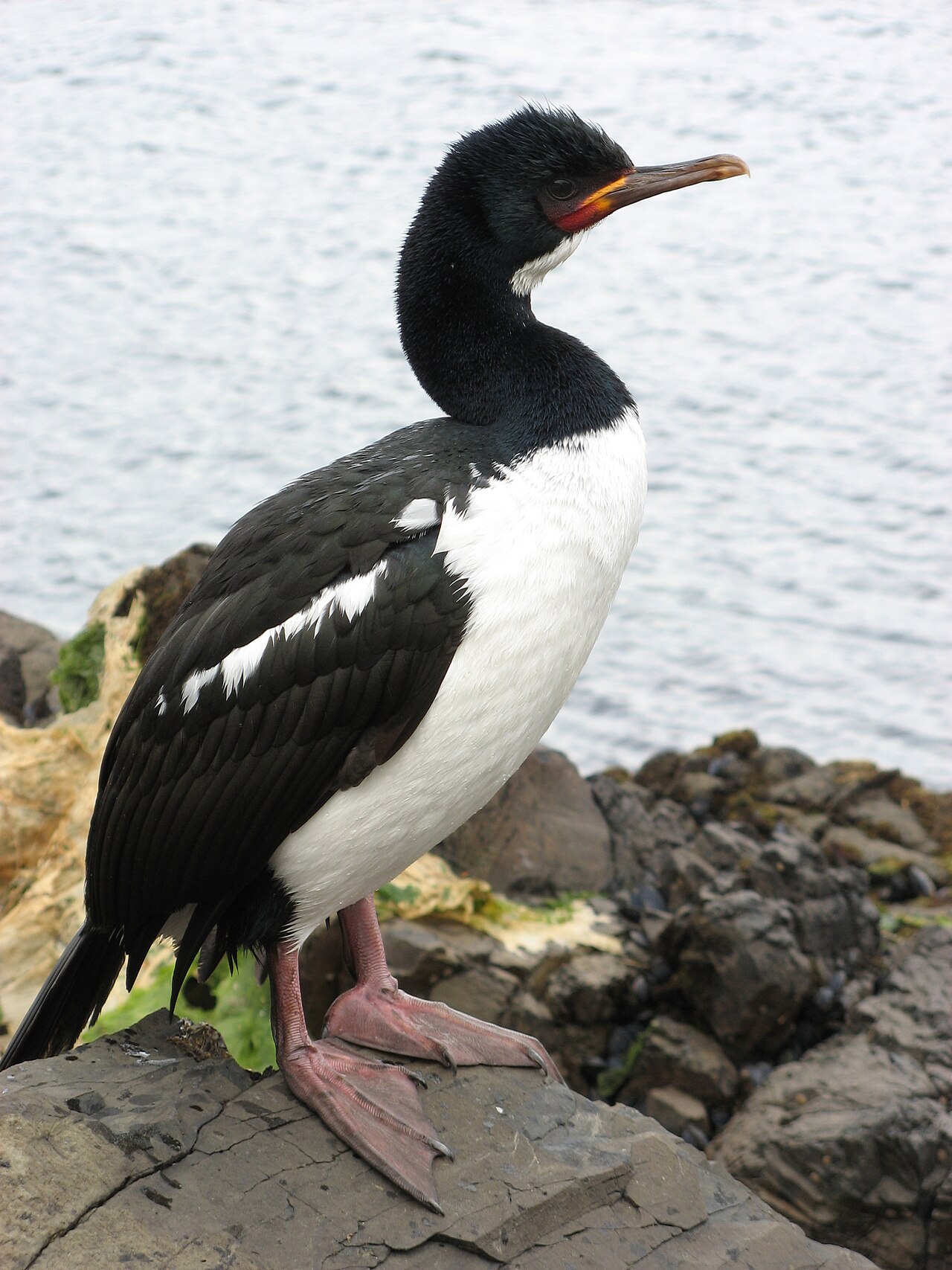
The Campbell Shag is the blue-eyed shag of Campbell Island, the southernmost of New Zealand's subantarctic islands, and breeds nowhere else. It is the smallest and lightest of the group: black with green and blue gloss on head and neck, white below, and with a yellow line above the gape that grades to red underneath.
Voice
Away from the colony it is silent. At the colony the male barks in display — a hard, short ark! ark! with the bill raised — with a dry ticking rattle between. The female stays mute or puffs softly. In a sea cave, a favoured nest site for this species, that barking rings off the walls and carries far across the water.
No recording with a suitable Creative Commons licence has been found for this species yet; what to listen for is described below.
Identification
A medium marine shag of a little over sixty centimetres and one and a half to two kilos, so distinctly lighter built than most relatives. Head and neck are black with a metallic green and blue gloss, the underparts white, and a white bar crosses the wing. In breeding condition a tall black crest rises on the head, the facial skin turns dark purple to red-orange, and the best feature is the yellow line above the gape grading to red below. The feet are pale pink. There are no knobs above the bill base. Young birds are dull brown where the adults are black, crestless and with pale facial skin.
Confusion species
Auckland Shag (Leucocarbo colensoi) is all but inseparable and the same length, but heavier built and with a magenta-pink eye ring instead of the yellow-to-red gape line; it breeds some three hundred kilometres further north-west in the Auckland Islands, and the two do not meet. Bounty Shag (Leucocarbo ranfurlyi) is considerably larger with orange-yellow facial skin; Imperial Shag (Leucocarbo atriceps) on Macquarie and New Zealand King Shag (Leucocarbo carunculatus) in the Marlborough Sounds carry orange caruncles above the bill that are absent here. Chatham Shag (Leucocarbo onslowi) belongs to the Chathams and Stewart Island Shag (Leucocarbo chalconotus) to the Otago coast. In this group the island you are standing on is the decisive character. Pitt Shag (Phalacrocorax featherstoni) is grey rather than pied and sits in a different genus.
Habitat
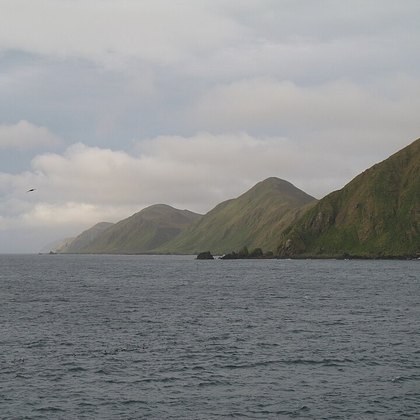
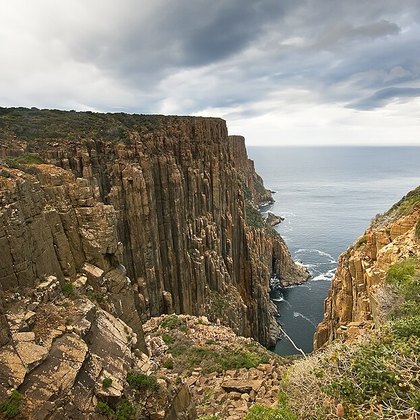
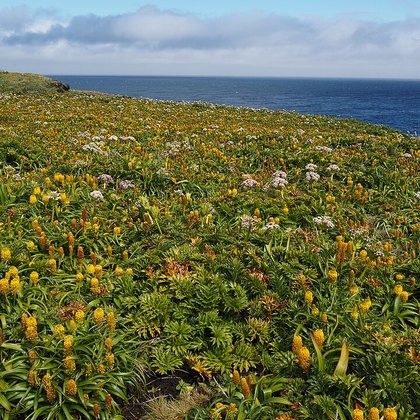
Shallow, cold coastal water around Campbell Island, where it dives to the bottom close in under the rock coast. It breeds from November to February in colonies of up to about a hundred and fifty nests, in sea caves and on cliff ledges; the nests are cones of weed, grass and guano. The tussock slopes (grassland of loose, tall clump-forming grasses, especially in New Zealand) above the colonies serve for resting and drying.
Where the bird is most often found, arranged by main group and formation.
Range and movements
Campbell Island only, with its surrounding rocks and islets — Dent, Jeanette Marie, the Courrejolles Peninsula — some seven hundred kilometres south of the South Island. It does not migrate and is hardly ever recorded beyond island waters. It does not occur on mainland New Zealand.
- Resident
- dark = core range, pale = thinly spread
Where and when to look
Reachable only on a subantarctic cruise. Run the northwest coast off Northwest Bay and the Courrejolles Peninsula and look for birds on the low ledges and in the mouths of the sea caves; the barking gives away an occupied cave before the birds appear. Put the scope on the gape: yellow grading down into red, with a smooth bill base and no knobs, settles the species.
Conservation
Vulnerable (VU), again mainly for the extremely small breeding range rather than any clear decline; nationally the species rates as Naturally Uncommon and numbers appear stable. The last broad estimate dates from 1975 and came to about two thousand pairs and eight thousand birds, possibly an undercount because the breeding season is spread over months. The introduced predators are gone: feral cats had disappeared by the late 1980s and Norway rats were eradicated in 2001, at the time the largest rat eradication in the world. Brown Skuas take the occasional egg or chick, but that weighs little; the real risk is that one severe storm, oil spill or disease could reach the whole species at once.
Scientific name
Leucocarbo campbelli | (Filhol, 1878)
Filhol described the species in 1878 as Urile campbelli; the move to Leucocarbo puts author and year in parentheses. Henri Filhol was naturalist to the French expedition that observed the 1874 transit of Venus from Campbell Island, and the epithet simply refers to that island, itself named after the Sydney trading house Campbell & Co. The genus Leucocarbo (Bonaparte, 1857) means 'white cormorant', from Greek leukos and Latin carbo. The type locality is Campbell Island.