All species › Birds of prey › Kites, Old World vultures, eagles and hawks › Black-breasted Buzzard
Black-breasted Buzzard | Hamirostra melanosternon
Buizerdwouw | Milano pechinegro
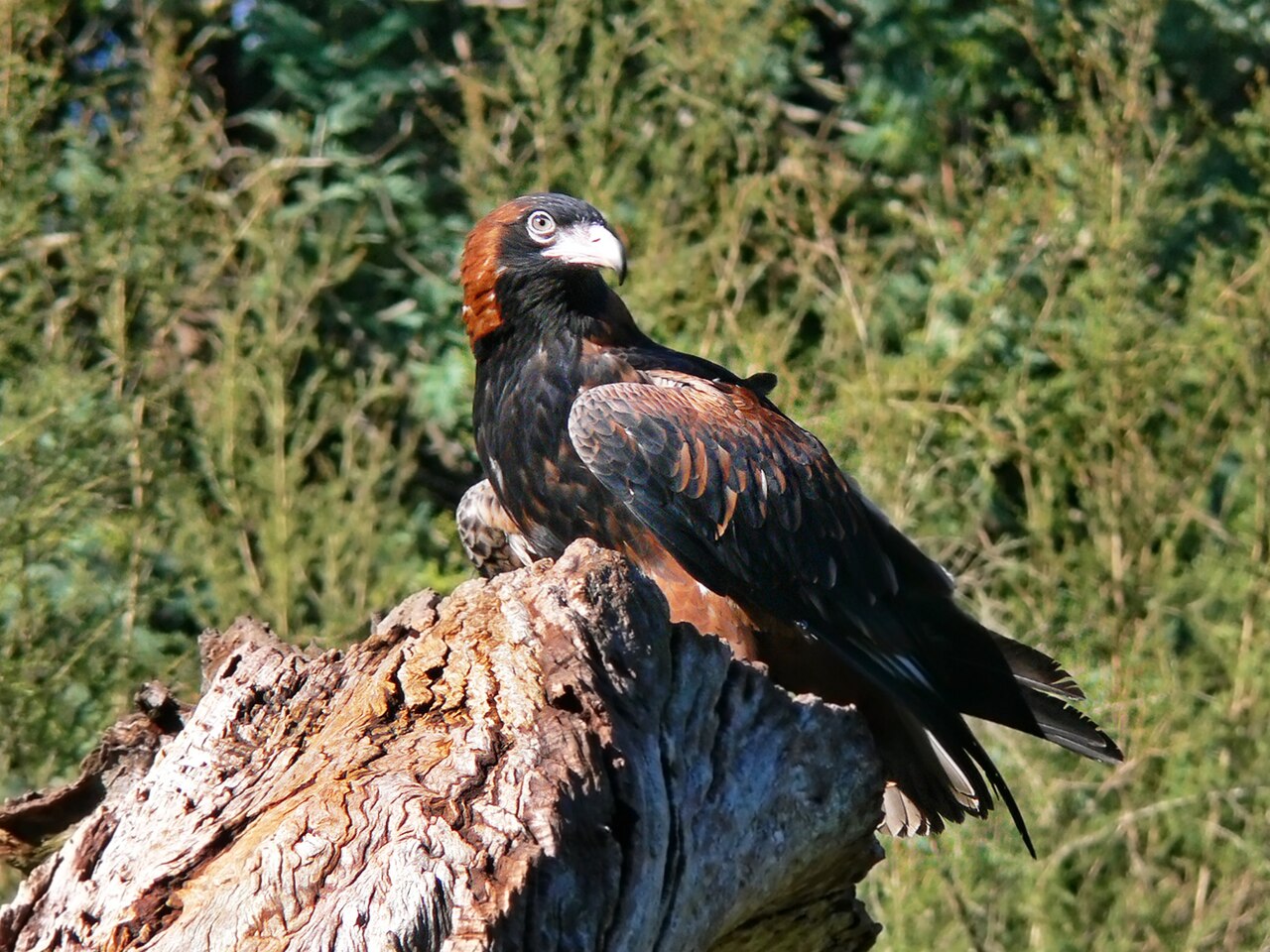
The Black-breasted Buzzard is Australia's heaviest kite and a bird of the dry interior: a large dark raptor with a very short, square-cut tail and two big white bull's-eyes low in the wing. It is one of the few birds in the world known to use tools — it breaks emu eggs by dropping stones on them.
Voice
Largely silent, like most large raptors of the interior. Only at the nest does it become audible, with a series of yelping, barking notes and a softer piping whistle between partners. Away from the breeding territory you must find it by eye; sound plays no real part in the field.
Recording: Dan Ashdown — CC BY-NC-SA 4.0 · Florina, Katherine Municipality, Northern Territory, Australia · xeno-canto
Identification
A heavy dark raptor of half to six-tenths of a metre with a wingspan around a metre and a half. The silhouette is almost all wing: the tail is very short and cut off square, so that it barely projects behind. The long nape feathers can be raised into a short crest. There are two plumage forms: light birds have a sandy-brown breast, dark birds a blackish-brown to black one. Both show the decisive mark: a large white patch at the base of the primaries, like a bull's-eye in each wing, visible from above and below. It sails with the wings in a clear V, rocking slowly from side to side. The female is noticeably larger.
Confusion species
Wedge-tailed Eagle (Aquila audax) shares the interior and the V, but is far larger, has a long wedge-shaped tail and lacks the white bull's-eyes entirely. Square-tailed Kite (Lophoictinia isura) also has a square-cut tail, but is slim, pale-faced and shows at most a vague pale window rather than a sharply drawn white patch. Black Kite (Milvus migrans) is far more lightly built and has a forked tail. Whistling Kite (Haliastur sphenurus) is paler and shaggier, with a long rounded tail and a pale M instead of two round patches.
Habitat
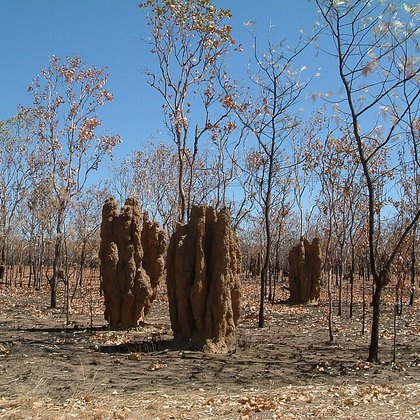
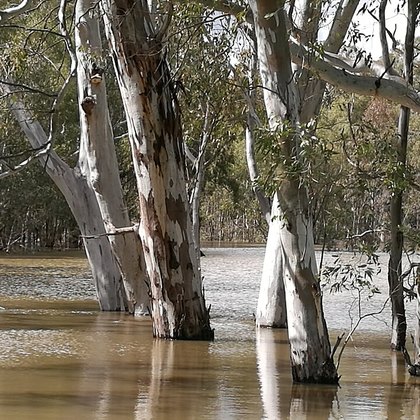
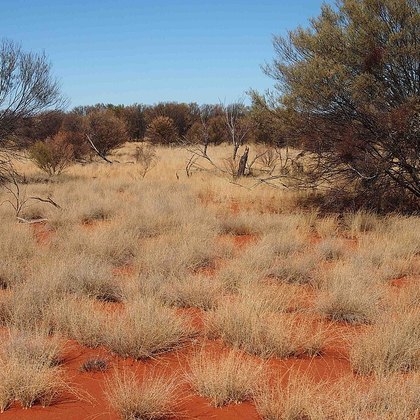
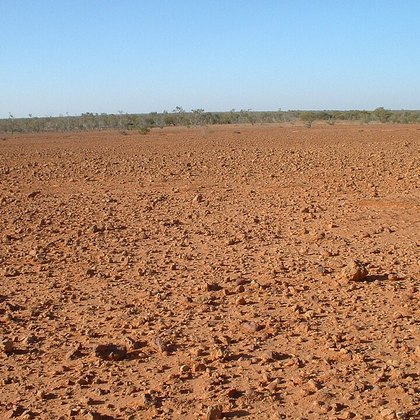
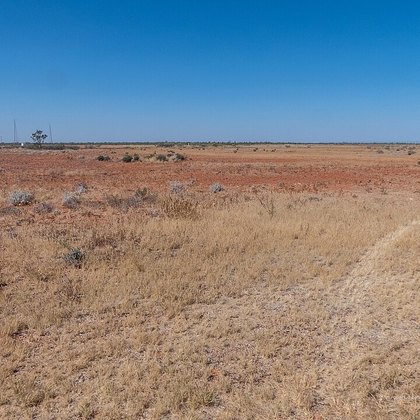
Lightly timbered plains, open country and tree-lined watercourses through inland Australia, in semi-arid and arid country: mulga (acacia scrub of the dry interior, dominated by Acacia aneura) and acacia scrub, eucalypt savanna, Mitchell grassland and gibber plain (stony desert with a pavement of polished stones), and above all the strips of trees along creeks that provide the only tall nest sites in the landscape. The nest is a platform of large dry sticks in a tree along such a watercourse.
Where the bird is most often found, arranged by main group and formation.
Range and movements
Endemic to Australia, centred on the north and the semi-arid to arid centre; in the east and south it rarely reaches the coast or near-coast. It breeds through almost all its range, but rarely east of about longitude one hundred and forty-eight degrees. It is absent from Tasmania and does not occur in New Zealand. It is nomadic, shifting with rain and drought and breeding where enough water has fallen.
- Resident
- Winter
- dark = core range, pale = thinly spread
Where and when to look
Drive an inland highway and watch the large raptors at kangaroo and stock carrion; the very short tail is obvious even on a perched bird. The moment it lifts, the two white bull's-eyes light up in the wing — a mark readable at hundreds of metres that makes every other consideration unnecessary. Search further along the lines of trees on inland creeks, because that is where the nest stands.
Conservation
Least Concern (LC): the range covers half the continent and no national decline has been demonstrated. Even so it is thinly spread everywhere, and the pressure points are concrete: the loss of large old nest trees along inland creeks through grazing and failed regeneration, degradation of hunting ground by intensive stock grazing, secondary poisoning during rabbit control with 1080 and pindone, and collisions at carrion on the road. Because it works so low and so readily along roads, that last weighs more heavily than for most raptors.
Scientific name
Hamirostra melanosternon | (Gould, 1841)
Gould described the bird in 1841 as Buteo melanosternon, so at first among the buzzards; the later move to a genus of its own puts author and year in parentheses. The genus Hamirostra was introduced by Thomas Brown in 1846 and combines Latin hamus 'hook' with rostrum 'bill'. melanosternon is formed from Greek melas 'black' and sternon 'breast' and describes the dark morph; the English and Spanish names follow that. The type locality is the interior of New South Wales. The Dutch name catches the bird's double nature exactly: a kite by descent, but with the heavy build of a buzzard.