All species › Passerines › Thrushes and allies › Bassian Thrush
Bassian Thrush | Zoothera lunulata
Tasmaanse goudlijster | Zorzal lunado
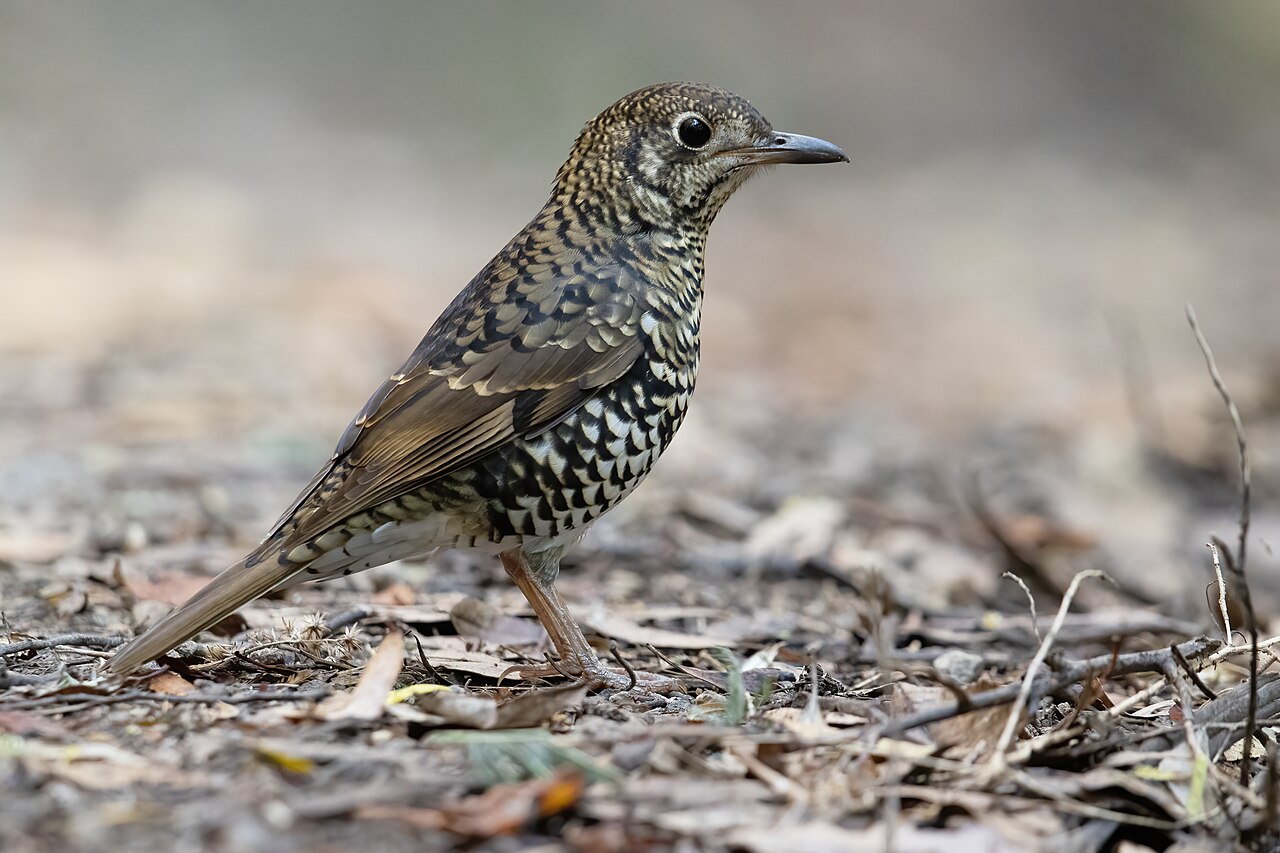
The Bassian Thrush is the thrush of the damp forest floor: a solid, scalloped brown bird that stands motionless among the ferns until you almost tread on it and then flies off low, flashing a broad dark band across the white underwing. It is native to southeastern Australia and Tasmania, and between its markings and its stillness it is seldom seen, although common.
Voice
The song is three drawn-out clear whistles: a level note, then one that rises slightly, then a level one again, with silences between them longer than the notes themselves. It sings mainly at dawn and on dark overcast days, from low in the forest. Beyond that there is a thin high seep as a contact note and a soft clucking in alarm; louder than that it rarely gets.
Recording: Phil Gregory — CC BY-NC-SA 4.0 · Upper Barron, Tablelands Regional, Queensland, Australia · xeno-canto
Identification
A heavy forest-floor thrush of twenty-seven to twenty-nine centimetres and about a hundred grams, olive-brown to warm brown, with dense black crescent-shaped feather edges over back, rump and head that make the plumage look scaled. The underside is white with the same dark scallops, and the eye has a white ring. In flight a broad dark diagonal bar crosses the white underwing. The sexes are alike; young birds show pale streaks on the shoulder. On the ground it stands upright and very still.
Confusion species
Russet-tailed Thrush (Zoothera heinei) overlaps in the rainforest of southeastern Queensland and northeastern New South Wales: slightly smaller, rustier above, with a shorter tail carrying broader white tips, and a wholly different call — a sustained two-pitched whistle. Spotted Quail-Thrush (Cinclosoma punctatum) of drier forest is spotted rather than scalloped and the male has a black throat. A female Common Blackbird is plainer brown and has no scalloping.
Habitat
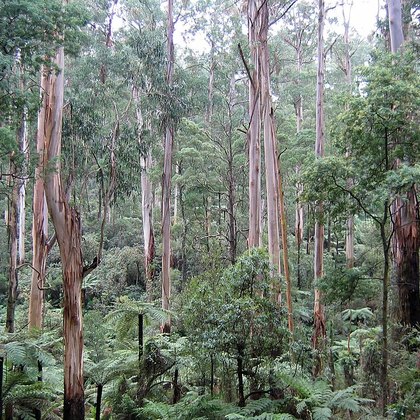
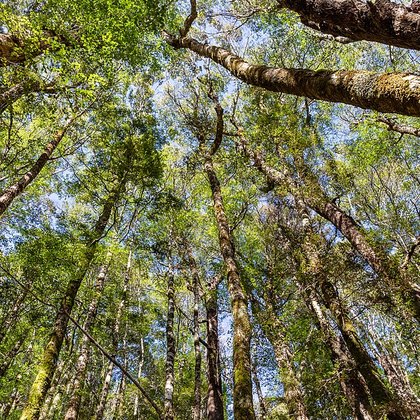
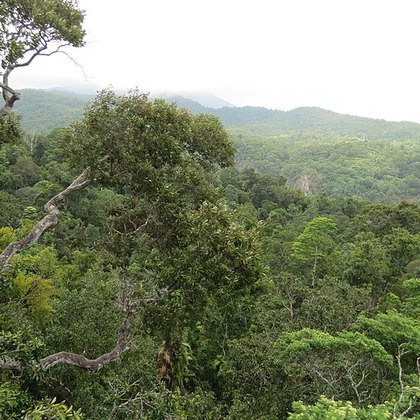
Wet eucalypt forest with tree ferns, damp creek gullies within dry eucalypt forest, southern beech forest on Tasmania and in the ranges, and the rainforest of the Atherton Tablelands. It needs a thick layer of leaf litter and a closed canopy keeping the floor damp. In winter it drops to lower and drier ground on Tasmania and in the Alps.
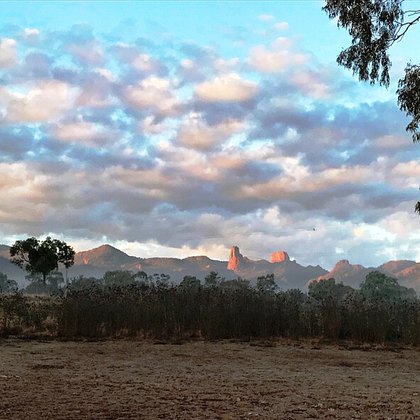
Where the bird is most often found, arranged by main group and formation.
Range and movements
From the Atherton Tablelands in northern Queensland — which hold a separate, isolated population — south through the coastal forests and the Great Dividing Range, across Victoria and southeastern South Australia to Kangaroo Island, and throughout Tasmania and the Bass Strait islands. It is resident and moves little. Note that the New Guinea birds are now usually kept apart; here the name refers to the Australian bird.
- Resident
- dark = core range, pale = thinly spread
Where and when to look
On a grey, wet morning walk a forest track along a creek very slowly and watch the ground three to ten metres ahead; the bird only moves when you stand still. If you hear the three-part whistle, stop and wait for it to repeat, because it sings from a fixed perch. If something flushes low, look for the broad dark bar under the wing.
Conservation
Least Concern (LC), with a large continuous range and no sign of a national decline. Locally the loss of damp forest with deep litter presses numbers down, and the severe fires of recent years have burnt large stretches of habitat in Victoria and New South Wales. Foxes and feral cats take a bird that spends so much time on the ground easily enough; on Tasmania that matters less.
Scientific name
Zoothera lunulata | (Latham, 1801)
Latham described the bird in 1801 as Turdus lunulatus; because it later moved to another genus, author and year stand in parentheses. The genus Zoothera was introduced by Vigors in 1832, from Greek zoon, 'animal', and theras, 'hunter'. lunulata comes from Latin lunula, 'little moon', after the crescent edges that scale the whole plumage. The type locality is New South Wales.