All species › Passerines › Fantails › Australian Rufous Fantail
Australian Rufous Fantail | Rhipidura rufifrons
Australische vuurstuitwaaierstaart | Abanico rojizo
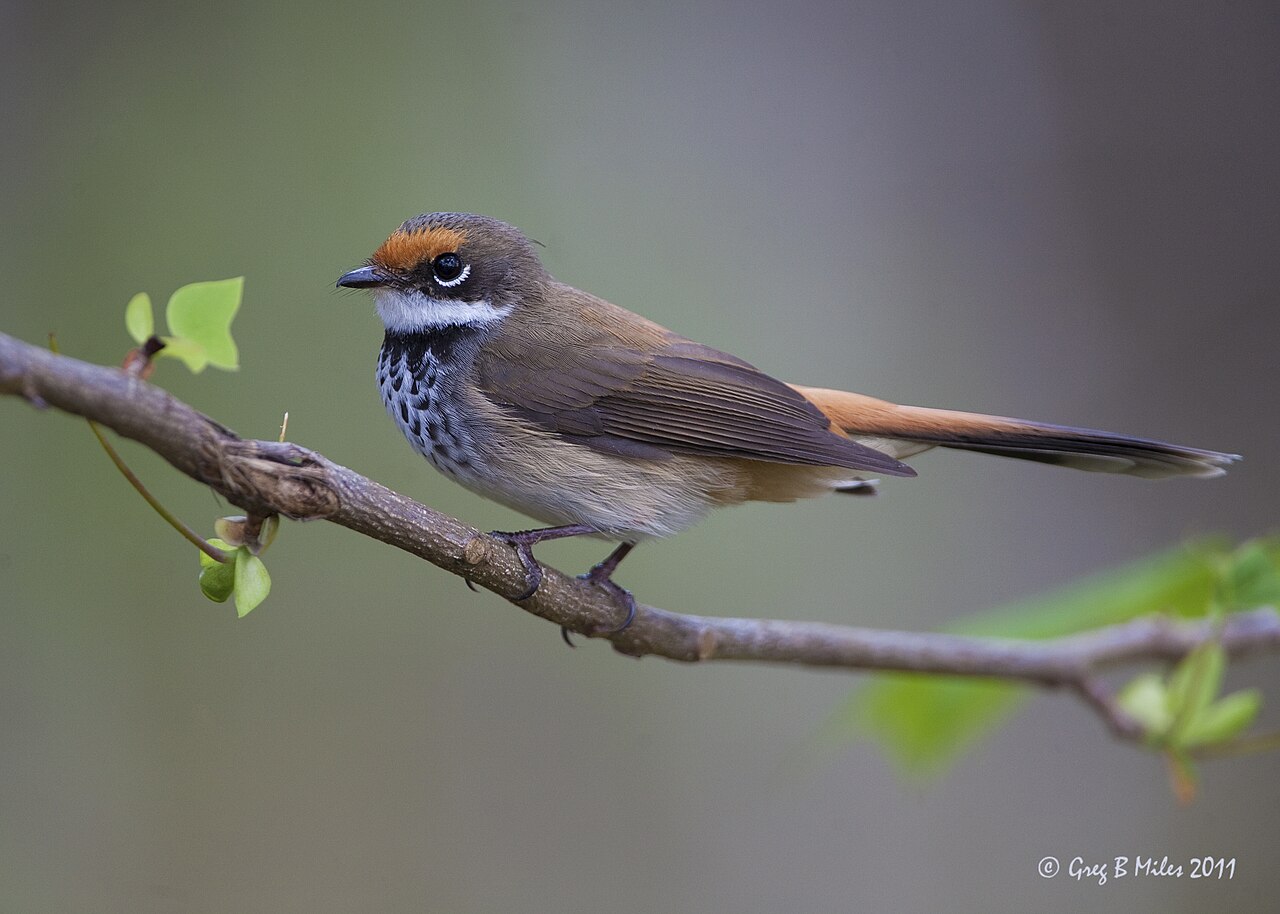
The Australian Rufous Fantail is the only true migrant among the Australian fantails: it breeds in summer in the moist forest gullies of south-eastern Australia and moves north in autumn to the tropics and New Guinea. Thanks to that migration many Australians meet it once a year — as a glowing rufous scrap of a bird that suddenly appears in a city garden, a car park or a courtyard and is gone again the next day. The warm rufous rump and tail base are its signature.
Voice
A high, reedy and rapid voice: a series of thin squeaky notes climbing steadily in pitch and then stopping abruptly, usually too fast for the individual notes to be counted. Alongside it comes a sharp dry 'chik' or 'chek', used also as an alarm and often the first thing one hears. The song is weak and carries little, so in a noisy forest gully it is easily lost beneath the sound of water and wind.
Recording: Romuald Mikusek — CC BY-NC-SA 4.0 · Katoomba, Blue Mountains City Council, New South Wales, Australia · xeno-canto
Identification
A small bird of just over fifteen centimetres that never sits still: the long tail is continually fanned and swung sideways as it tumbles through the undergrowth. The decisive character is the colour at the rear: rump and tail base are warm rufous and contrast sharply with the dark remainder of the tail, which carries pale tips. Forehead and brow are rufous too. The throat is white, below it a clear band of dark crescent-shaped spots crosses the breast, and the belly is white to pale cream. The back is grey-brown with an olive wash. Male and female are alike; young birds are duller with a vaguer breast band.
Confusion species
The hardest candidate is Arafura Fantail (Rhipidura dryas) of the tropical north, until recently treated as a subspecies of this bird and therefore carrying the same ground pattern. That species is paler and whiter below, has a narrower and vaguer breast band and rather more rufous on the tail base, but is present in the north all year whereas this one only winters there — in the overlap months a bird without a photograph often cannot be named firmly. Grey Fantail (Rhipidura albiscapa) is exactly the same size and just as restless, but lacks rufous entirely: rump and tail base are grey-brown, and it has two clear white wingbars which in the Rufous Fantail are absent or faint. Northern Fantail (Rhipidura rufiventris) is larger, darker and moves its tail far less. Young birds of this species with a faint breast band are sometimes taken for Grey Fantail; the rump remains the answer.
Habitat
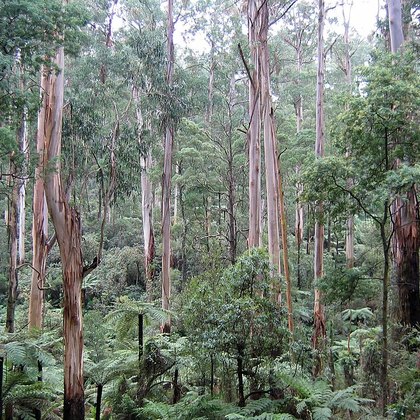
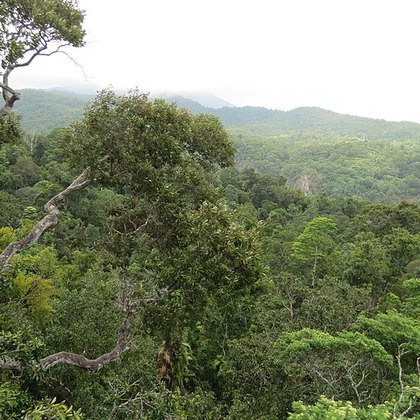
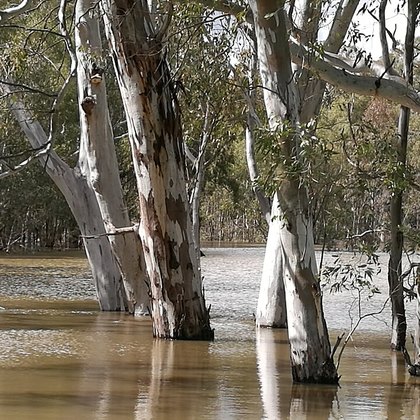
In the breeding season moist, shaded forest with a dense understorey: the fern gullies of wet eucalypt forest, the edges and interior of rainforest, and the forest along creeks and rivers. The bird forages low, to a few metres above the ground, taking insects in short agile sallies or flushing them from foliage by flashing tail and wings. On migration it is far less particular: it then turns up in mangrove, gardens, city parks, plantations and even the courtyards of office blocks, anywhere with a little shelter.
Where the bird is most often found, arranged by main group and formation.
Range and movements
Breeds along the east coast of Australia from north-eastern Queensland to Victoria and south-eastern South Australia, concentrated in the coastal strip and the adjoining ranges; in the north part of the population also breeds in rainforest and stays there all year. The southern breeders leave in March and April and move north to north Queensland, the Northern Territory and New Guinea, returning in September and October. That migration runs on a broad front over the east coast and produces the familiar wave of birds in the cities; large numbers are killed each year striking the glass of tall buildings.
- Resident
- Breeding (summer)
- dark = core range, pale = thinly spread
Where and when to look
In the breeding season look low in a moist, dark forest gully and listen for the thin climbing series of squeaks; the bird often comes out of its own accord to see who is passing. In March, April, September and October it pays to look in town instead: any fantail that turns up in those weeks in a garden or courtyard in Sydney or Brisbane deserves a glance at the rump. One second is enough — in good light the rufous at the rear is unmistakable and separates it at once from Grey Fantail.
Conservation
Least Concern (LC) as a separate species. The Rufous Fantail in the broad sense was long one widespread species from Australia to Micronesia; since the Australian birds were split off this has proved a common and numerous bird. The main concerns are local: loss of the moist forest gullies in which it breeds, and collisions with glass during migration, which kill many birds each year in the large east-coast cities and against which screening or marking windows is the only practical measure.
Scientific name
Rhipidura rufifrons | (Latham, 1801)
John Latham described the species in 1801 as Muscicapa rufifrons, from a bird taken near Sydney; as it was later moved to another genus, author and year stand in parentheses. The genus Rhipidura was introduced in 1827 by Nicholas Vigors and Thomas Horsfield and combines Ancient Greek rhipis ('fan') with oura ('tail'). The epithet rufifrons is Latin for 'red-fronted', after the rufous forehead — a less striking character than the rump, but it was what Latham saw on his skin. The English name Australian Rufous Fantail and the Dutch Australische vuurstuitwaaierstaart both carry the qualifier 'Australian' since the Pacific forms were split off; the Dutch name moreover takes the rump instead of the forehead, which for field use is the better choice. The Spanish abanico rojizo keeps it simple at 'rufous fantail'.