All species › Passerines › Whistlers and allies › Australian Golden Whistler
Australian Golden Whistler | Pachycephala pectoralis
Gouden fluiter | Silbador dorado
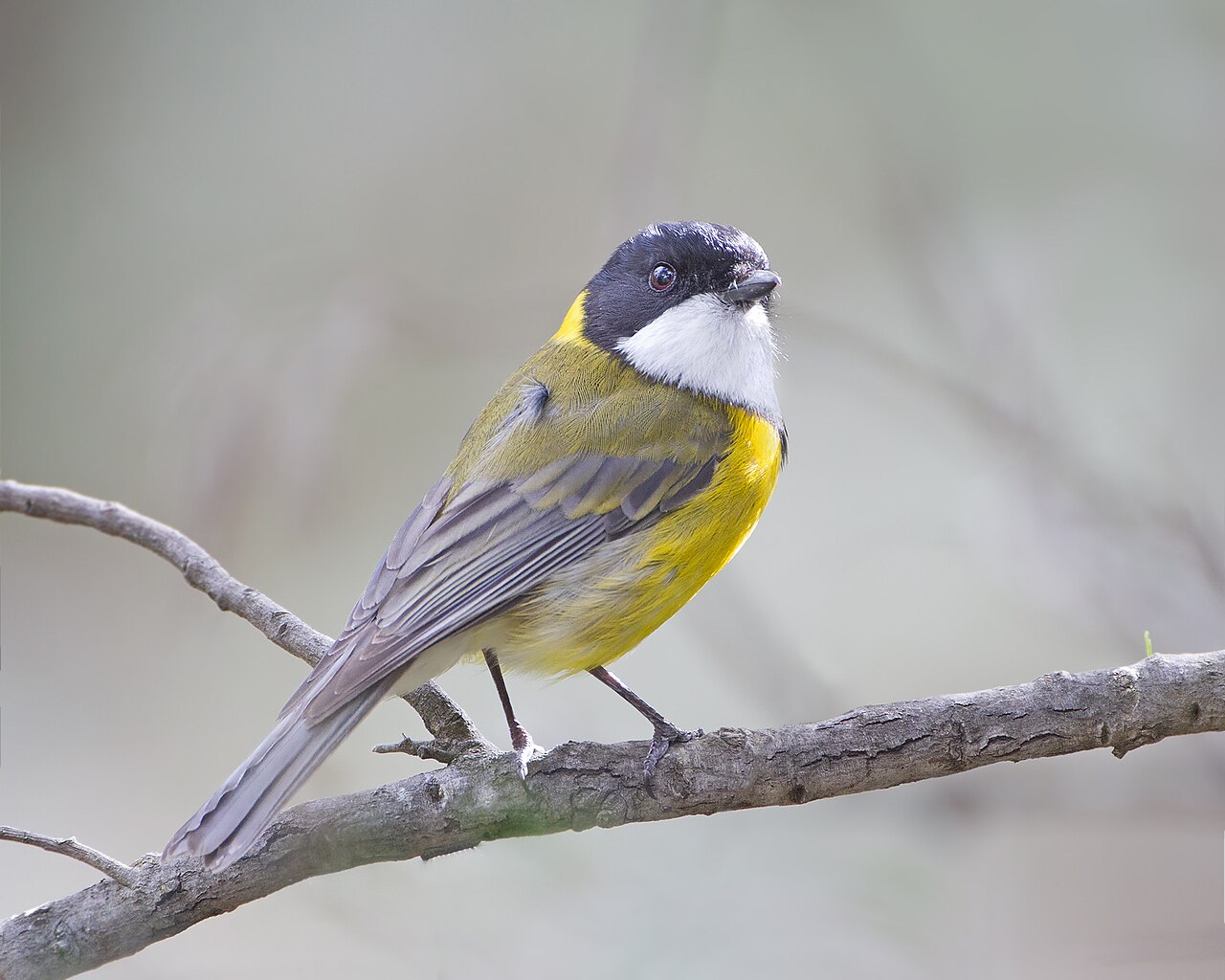
The Australian Golden Whistler is the best-known whistler of Australia and one of the continent's most striking songbirds: a male with a black head, a white throat, a broad black breast band and brilliant golden-yellow underparts, delivering a loud, ringing series of whistles from deep in the shrubbery. The female, by contrast, is so muted a grey-green that anyone meeting the pair separately might easily take them for two species.
Voice
A characteristic sound of the Australian bush: a series of clear, rising whistles ending in a sharp, whipcrack note — often written as 'wit-wit-wit-wit-CHOK'. The bird sings persistently and at length from cover, and responds to loud noises: a thunderclap, a slammed car door or a cough can set a whole gully singing. Besides the song there are single plaintive notes and a soft churring contact call.
Recording: Romuald Mikusek — CC BY-NC-SA 4.0 · Sherbrooke, Yarra Ranges Shire, Victoria, Australia · xeno-canto
Identification
A compact, short-tailed songbird of sixteen to eighteen centimetres with a heavy hooked black bill and a strikingly round head. The male has a jet-black head and face, a sharply defined white throat patch, a broad black breast band below it, and otherwise golden-yellow underparts running up into a yellow nape collar; the back is olive-green and the wings and tail are dark. The female is entirely different: plain grey-green to olive-brown, pale below, with faint streaking on the chest and usually a hint of yellow under the tail. The species is strongly divided into forms: Tasmanian females are distinctly yellower, males in south-western Australia are duller, and across the range the width of the breast band and the shade of the yellow differ noticeably between subspecies.
Confusion species
Mangrove Golden Whistler (Pachycephala melanura) is the hardest: the male closely resembles this one, but is smaller, with a heavier bill, a shorter tail, a broader and deeper yellow nape collar that almost meets the black breast band, and a smaller white throat patch. Habitat decides it: Mangrove Golden Whistler sits almost exclusively in mangrove, this species almost never. The female causes most confusion: the female Rufous Whistler (Pachycephala rufiventris) is clearly dark-streaked below with rusty flanks, the female Olive Whistler (Pachycephala olivacea) is larger and carries a finely scalloped white throat, and Grey Whistler (Pachycephala simplex) is smaller, plainer still and stays in the tropical north. Gilbert's Whistler (Pachycephala inornata) has no yellow at all and no black breast band.
Habitat
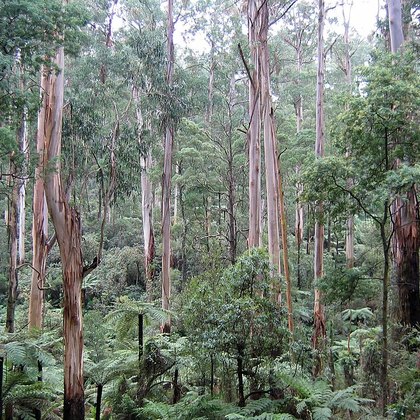
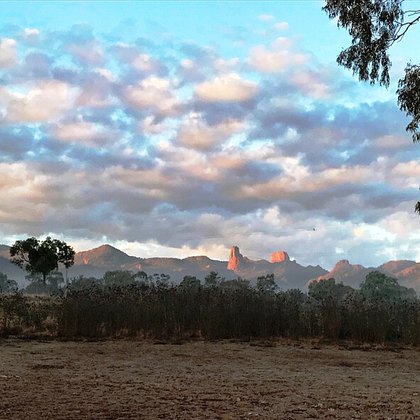
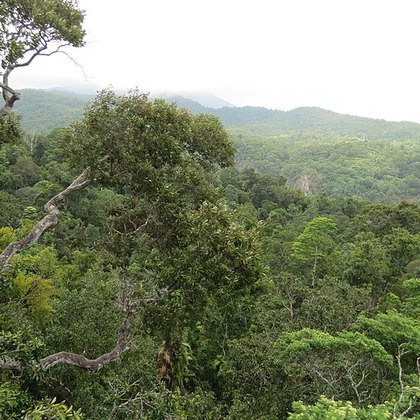
Broad: wet and dry eucalypt forest, woodland, rainforest edges, mallee (low, multi-stemmed eucalypt scrub of dry southern Australia), coastal scrub, acacia thicket and — unlike most relatives — well-planted gardens and parks as well. The bird forages mainly in the mid-storey and shrub layer, gleaning insects, spiders and berries from leaf and twig, usually alone or in pairs. Dense cover at shrub height is the one firm requirement.
Where the bird is most often found, arranged by main group and formation.
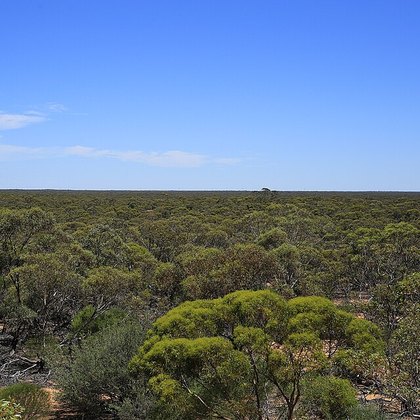
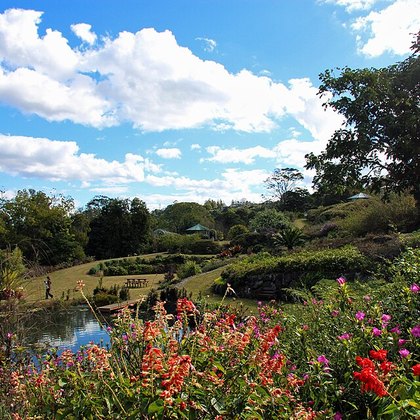
Range and movements
Virtually all non-desert Australia: the whole east coast from Cape York to Victoria, Tasmania, and a separate population in south-western Western Australia, with the woodlands of the Nullarbor margins and the Eyre Peninsula in between. The species is absent from the arid interior. In the south-east it is partly migratory: some breeders leave the high and southern forests in winter and move north or down to lower coastal country, while elsewhere the same birds stay all year.
- Resident
- dark = core range, pale = thinly spread
Where and when to look
Do not look for the bird, listen for it — and then make a noise yourself: a sharp clap of the hands often brings an immediate answer. Once the male is in view it is unmistakable; with a muted grey-green bird, check the heavy hooked bill and the round head, which separate any whistler from warbler-like birds, and then the streaking on the chest to rule out a female Rufous Whistler.
Conservation
Least Concern (LC). What was long treated as one enormous species across the Indo-Pacific, with dozens of island forms, has been split; the name Pachycephala pectoralis is now confined to Australia. The Australian bird is common and widespread, the main pressure being loss of the shrub layer to grazing, urban expansion and severe bushfire.
Scientific name
Pachycephala pectoralis | (Latham, 1801)
John Latham described the bird in 1801 as Muscicapa pectoralis, from a specimen out of New Holland; Gregory Mathews restricted the type locality in 1920 to Port Jackson at Sydney. The epithet pectoralis is Latin for 'of the breast' and refers to the broad black breast band. The genus Pachycephala was introduced in 1827 by Nicholas Vigors and Thomas Horsfield, from Ancient Greek pakhus ('thick') and kephalē ('head'). The Dutch gouden fluiter, the English Australian Golden Whistler and the Spanish silbador dorado all take the colour of the male; the English name has carried the qualifier Australian since the split.